Coming May 1 to an online merchant and bookstore near you.

Born Under a Bad Sign is available for preorder through bookstores and online at Amazon, Apple Books, Barnes & Noble and Kobo.
Coming May 1 to an online merchant and bookstore near you.
Born Under a Bad Sign is available for preorder through bookstores and online at Amazon, Apple Books, Barnes & Noble and Kobo.
The tide is shifting. The debate over global warming has moved from theoretical to practical. As in, what is the cost of climate change to businesses and, eventually, to all of us?
Real estate agents find themselves at the heart of the issue. Anything that affects property values affects their livelihood. So it’s encouraging to see a call to action from one of their own.
Craig Foley, chair of the National Association of Realtors’ Sustainability Advisory Group, says that ignoring the impact of climate change on real estate has serious business implications. “Particularly in coastal areas, members have told me both they and their clients are worried about declining property values and buyer interest.” The piece, entitled “We Don’t Have 50 Years to Wait,” appears in the March/April 2019 issue of Realtor magazine.
In case you think that’s the hype of tree-huggers, Foley backs his observation with well-credentialed statistics. “Researchers at the University of Colorado at Boulder and Pennsylvania State University compared properties that are similar except for their proximity to the sea and found that the more exposed homes sold for 6.6 percent less than the others during the sample period from 2007 to 2016.”
Foley ends his commentary with this thought: “As I see it, we can’t afford to be on the wrong side of history on climate change.”
That captures a core issue of Permanent Vacation, a novel in which the protagonist, real estate agent CW (Candace) McCoy, discovers that encouraging construction in a flood zone is a sure way to sink a career.
You can read Foley’s commentary here. If you buy or sell real estate and have a comment on this or any other issue, you’re welcome leave it here as well.
The dark lord of marketing is back, and he’s aiming his talents at politics. Can civility survive?
 Brinker, the antihero of Mr. Mayhem, has lost his magic. The agency’s CEO wants him to ace the competition. His former girlfriend wants him in detox. And as rival advertising executives disappear, an ambitious state trooper wants him in jail.
At this rate, the PR whiz who turned a serial killer into a national brand may have to vanish himself.
Throw in toxic waste, a nude car wash and a gun-toting presidential candidate and the czar of PR will have to spin some potent magic to escape the snare of lies and greed that threatens to destroy his job, his sanity and the love of his life.
In Mr. Magic, the ad world struggles to cope with Brinker’s insatiable lust for sex, satire and PR events that push the boundaries of legality and taste. The second outing for the defrocked journalist is available through Amazon, Apple Books, Barnes & Noble, Kobo and by special order at bookstores everywhere.
Sometimes reality catches up with fiction.
Yesterday, a Florida Senate committee advanced legislation that would require the state to plan for rising seas. The action comes after storm surge has repeatedly flooded parts of Miami and threatened its infrastructure.
 The proposed legislation is unique in that it avoids the politically divisive issue of climate change and addresses the economic aspect of rising sea levels.
Lawmakers aren’t alone in considering the financial impact of coastal development. The economics, and ethics, of building in flood zones form the central premise of Permanent Vacation, a novel set in a fictionalized version of Sarasota and Bradenton, Florida, both of which border the Gulf of Mexico. Central to that issue is whether governments should encourage or discourage behavior that puts people and property at risk.
Permanent Vacation is available from Amazon, Apple Books, Barnes & Noble, Kobo and Smashwords. You can read the story about Florida lawmakers here.
The measles are back with a vengeance, and so are the protests.
So far this year, the Centers for Disease Control and Prevention is tracking six outbreaks affecting more than 100 people, with 68 cases in the Pacific Northwest alone, according to the CDC, Associated Press and Washington Post.
Yet despite the demonstrable success of vaccines—the near worldwide eradication of polio a case in point—anti-vaccination fervor is spreading like a virus. Some lawmakers are pushing legislation that would allow parents to opt out of childhood vaccinations, a move that could jeopardize not only the health of their children but others with whom they come into contact.
 None of this is new. In 1897, Dr. Richard Slee, founder of the firm that would evolve into the U.S. operations of biologics company Sanofi Pasteur, faced a similar backlash when he introduced to the United States a vaccine to prevent smallpox.
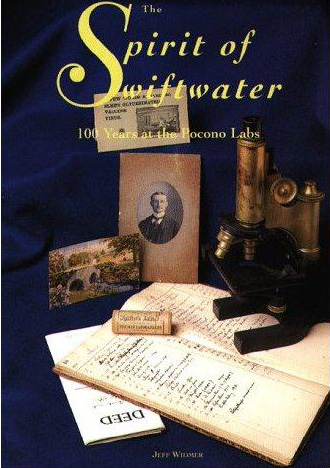
The story of his struggle is told in The Spirit of Swiftwater, a chronicle of the fight to eradicate vaccine-preventable disease in the 20th Century. The story is a timely reminder of the efficacy and controversy of this form of medicine:
The new science of immunology had proven vaccines could save lives. It had progressed quickly from the late 1700s, when British physician Dr. Edward Jenner discovered that smallpox could be prevented by inoculating people with the substance from cowpox lesions. The vaccine worked. According to the New York City Health Department, the death rate from smallpox in 1869 was 21.9 per 100,000 people. In 1876, New York’s Vaccination Corps fanned out to inoculate the city. The following year, the death rate per 100,000 people had dropped to 0.18.
 That did little to convince parents who’d heard reports that bacteria from the lesions had caused serious infections in some children.
Even with a tacit endorsement from the federal government, the fledgling biologicals industry still faced a daunting problem not related to finance — a public backlash against vaccination. Despite the reduction in mortality that immunization had brought to the nation, not all of its citizens were convinced this was good public policy, or even effective health care.
In 1908, a medical doctor from Niagara Falls, New York, J. W. Hodge, wrote that compulsory vaccination was “the crime of the century,” citing evidence that the process not only violated an American’s freedom but that it was ineffective. “The accumulated experience of more than one hundred years has conclusively demonstrated that vaccinia neither prevents smallpox nor mitigates that disease when it attacks the vaccinated.”
Slee countered those attacks and others in a letter to the Bergen County, New Jersey, Medical Society in 1910:
The growth of the anti-vaccination societies in this country is largely due to the undeniable fact that the protection by vaccination was sometimes followed by results that were more serious than would be a mild attack of smallpox. We are now passing through the transition state, so to speak, and in a short time physicians will begin to realize that the regulations of the government are wise and that the failures from time to time are more than offset by the undeniable elimination of many severe and unpleasant sequelae [an abnormality following a disease, like paralysis following polio].
Unless lawmakers take the decision out of the hands of the experts.
[Measles vaccine doesn’t cause autism, says a decade-long study of half a million people.]
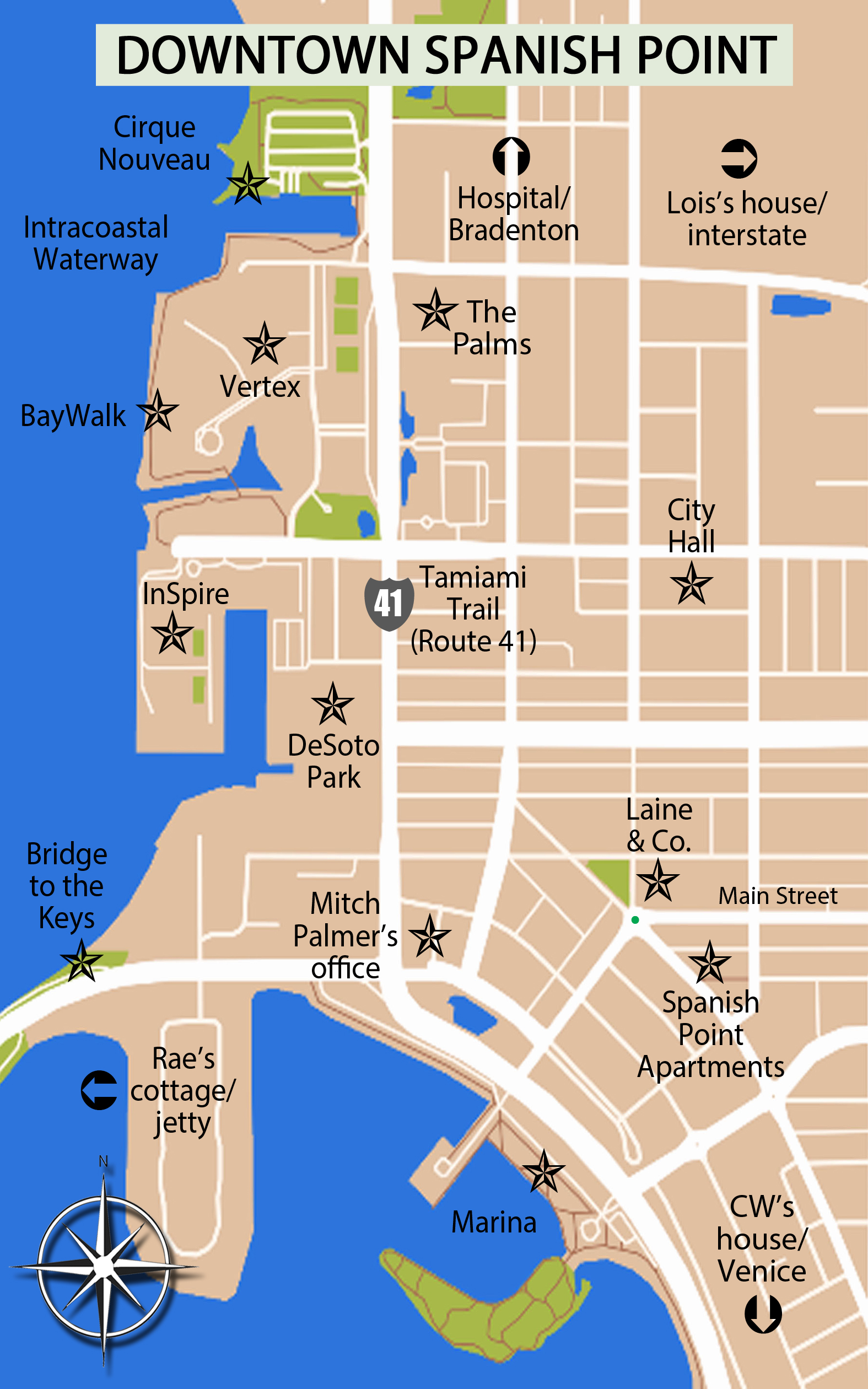
Readers of the CW McCoy series of crime novels are treating the books like a treasure hunt. Many have fun comparing the scenes with places they know in Sarasota and Manatee counties. Some locations correspond, like the infamous Route 41, aka the Tamiami Trail. Others are inventions created to simplify the landscape for people living beyond the borders of Florida.
If you are reading the latest book, Permanent Vacation, you’ve discovered something new to the series: a map that guides visitors around downtown Spanish Point, the fictional mashup of the cities of Sarasota and Bradenton.
For readers who haven’t ordered a copy and are curious about the geography depicted in the first three novels–Peak Season, Tourist in Paradise and Curb Appeal–here’s a full-color version of the map. (The print edition features a black-and-white image.) Click here for a downloadable PDF file.
Published by Allusion Books, Permanent Vacation is available from Amazon, Apple Books, Barnes & Noble, Kobo and Smashwords, and by request from bookstores everywhere.
Happy trails.
In the luxurious resort town of Spanish Point, Florida, sea levels are rising. So is the body count. Both threaten the real estate industry, and its agents. Including a former detective who’s jumped in over her head.
 In her fourth outing (after Peak Season, Tourist in Paradise and Curb Appeal), CW (Candace) McCoy relishes a fresh start—a new agency, a stellar property and a second chance at love. But opportunity turns tragic as she confronts the city elite and their web of deception and greed.
CW knows who’s guilty. She just has to prove it—before someone sends her on a permanent vacation.
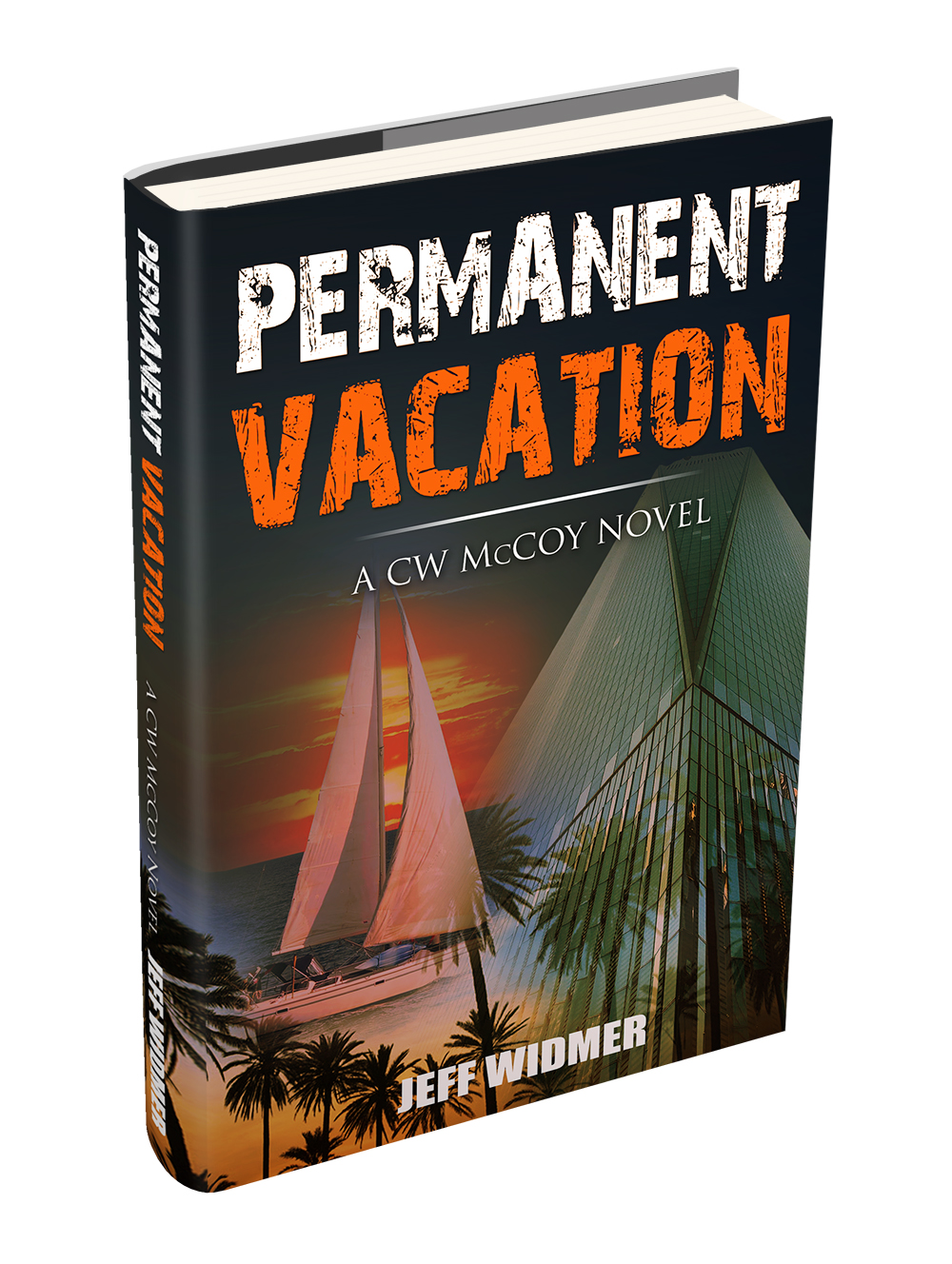
Join her on a wild ride through a rising tide of crime and corruption in Permanent Vacation. The book is available from Amazon, Apple Books, Barnes & Noble, Kobo and Smashwords, and by request from bookstores everywhere.
Florida’s detective turned real estate agent returns to determine if you really can fight city hall.
In the tony beach-side town of Spanish Point, CW (Candace) McCoy tackles a crime waves that’s rising faster than the tide. But that’s not her biggest dilemma, as trouble comes in threes. Will she keep her job? Can she choose between Tony and Mitch? And will she ever see Walter again?
Permanent Vacation, the fourth in the crime series, launches Dec 12, but you can preorder the ebook from Amazon, Barnes & Noble, Apple Books, Kobo and Smashwords.
Months after D-Day and all’s quiet on the Western Front. The parades are over, the stories told. The parachutists who reenacted their jump over France landed safely. The Yanks came marching home and Americans moved on to other issues.
But things weren’t this calm in 1944, when days after the Allied invasion of Europe at Normandy, the danger ran as high as the tide on the beaches of Utah and Omaha.
The French town of Cherbourg, overlooking Omaha Beach, still lay in German hands. German gunners manned the Channel Islands between England and France. And E-boats tried to torpedo their way into French harbors to reinforce the German army.
On a day of gray skies and choppy seas, PT 512 set sail from its base in England toward the French coast to survey the damage and observe the German gun placements. Sixteen young men, some just out of high school, took the 80-foot wooden boat across the channel into enemy waters.
 My father, Radioman 3rd Class Robert Widmer of Stroudsburg, Pennsylvania, was on board PT 512 that blustery day in June. He and his crew had seen the bodies washing onto shore, the firefights with E-boats and the bigger German R-boats. They knew there would be high-ranking officers on board their vessel that day, maybe even a general, to observe the beaches. What they didn’t know was that instead of a routine patrol, they’d be taking the supreme Allied commander, Gen. Omar Bradley, and other Army and Naval brass for a ride.
Dwight D. Eisenhower came aboard early, smiled at the men and assumed a position behind the cockpit in the middle of the boat. “We were topside, except for the motor macs (the motor machinist mates),” my father said. “It was very crowded. And we were extremely nervous. Ike was very talkative. He said the usual things: ‘Where are you from, sailor?’ But it was obvious he was the boss. He had that bearing.”
Once they got underway, the talk subsided.
“Most of the brass stood behind the cockpit — it was protected from the waves splashing over the bow,” he said. “They tried to stay dry and hold on.”
With three Packard marine engines, the PT (patrol torpedo) boat could hit speeds of 45 knots, fast enough to lift the bow from the water. They raced across the channel to Cherbourg, then north to the beaches.
The view of Omaha sobered everyone. “It looked like plowed land from the bombardment. It was filled with damaged vehicles and landing craft.”
Over the next few weeks, four PT squadrons formed the Mason Line around the beaches, keeping the Germans in the harbors and preventing their country from attacking the beachhead and resupplying their troops. “No single German convoy got through that line from the invasion on,” my father said.
The squadrons lost two boats.
Like others in the armed forces, Dad wrote to his mother and father, the late Kathryn and Arthur “Shorty” Widmer. And like other letters, his were censored. His parents had to guess about the events overseas.
But on July 20, 1944, he was able to tell his folks what had happened.
“Now it can be told,” he wrote. “Shortly after the invasion began our boat and crew was bestowed quite an honor. We had several top-notch admirals and generals aboard and among them was the big boy himself — General ‘Ike’ Eisenhower. He is a very likable person and very friendly with everybody, and you can see why he is noted for his smile. He got a kick out of riding on a PT boat and we showed him plenty of speed.”
And pride.

Gen. Dwight D. Eisenhower, third from left, aboard a PT boat
My wonderful friend and fellow writer Jeanne Johansen sent me this photo of two members of her husband’s book club reading Peak Season on Florida’s Treasure Coast.
Peak Season marks the first of a trilogy of crime novels featuring real estate agent turned investigator CW (Candace) McCoy. You can find it and the other novels in the series at Amazon, Barnes & Noble, iTunes and Kobo, with the audio version at Audible.
Thank you, readers, everywhere.

Have a photo of you or your friends reading a CW or a Brinker novel? Feel free to send the image to editor (at) allusionbooks (dot) com.
 Jeff Widmer