A Not-So-Distant Warning

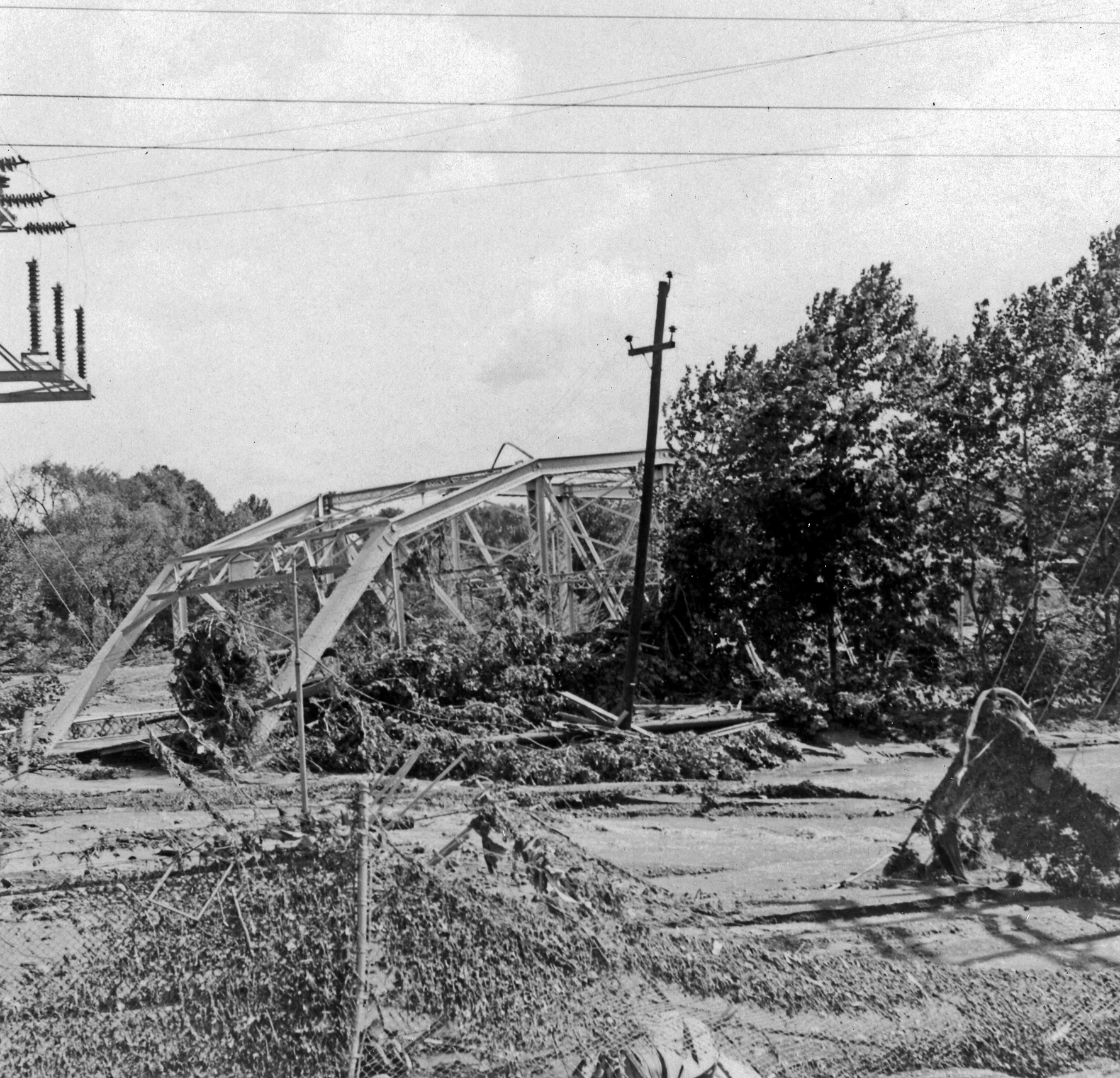
August 18, 1955 is a day that will live in infamy for people of the Northeast. That was the day the Flood of ’55 ravaged our small town. Back-to-back hurricanes Connie and Diane turned peaceful creeks into raging torrents, sweeping aside towns from Pennsylvania to Connecticut and killing hundreds, seemingly in the blink of an eye.

As a child, I don’t remember much of that time, but years later, as a journalist investigating the events of that terrible night, I was stunned by the hardship and heroism of those who survived. With the benefit of hindsight, I decided to explore their stories through a series of novels.

The first book in the trilogy, Distant Early Warning, introduces us to the Andersen family as they struggle to recover from the devastating flood. The novel, and the ones to follow—Cold Fire and Good People—portray the dreams and fears of a family, town, and country as they navigate the promise and perils of Cold War America. Distant Early Warning doesn’t only refer to the DEW Line, the system of Arctic radar stations designed to detect incoming Soviet bombers. The title serves as a metaphor for the internal system that warns us of impending danger, warnings we often ignore.

Russia, rockets, race, and repression—issues the Andersens tried to resolve in the ’50 that revisit us today. As does their struggle for mercy and hope.

Theirs is a journey from darkness to light. Follow it here. Or start with that terrible night of August 18 in this excerpt from Chapter 4.

AT TEN TO NINE, Georgia let Skippy out for a short walk, wiped the dog’s back with a dishtowel, and moved her box into the kitchen. This was Georgia’s time. Switching on the television, she settled on the couch and tried to watch Fear Strikes Out, a movie Marsh would have liked about center fielder Jimmy Piersall. But at 9:30 the lights vanished with a snap. Suddenly blind, she groped toward the telephone. It was out, too. Now there was no way to call Marsh, even if she knew where to find him. And he had taken the car.
       From the street, shouts competed with the swish of tires, then a shudder as something heavy struck the bridge, rattling the house as if the earth had broken in two. The room squeezed her heart. Inhaling through her mouth, she told herself she was responsible for the children and had to think of their welfare. Marsh said that, if the town declared an emergency, the fire chief would blow the siren, and someone would come to their rescue. She could wait for the siren, but not in this stifling dark.
       Groping through a drawer in the kitchen, she found a small flashlight, thumbed the button and, checking that Skippy was safe in her makeshift bed, traced a path upstairs. Awakened by a noise in the street, Wil emerged from his room, still dressed in his life vest and rocket pack, ready to battle whoever he imagined had attacked the house. Cradling Penny—the baby fussed but didn’t cry, the cereal settling for once—Georgia led him downstairs, where she rummaged through another drawer to find their good tapers and a box of matches. Placing the candles on the table, she opened the screen door and peered into the dark. She didn’t need a light to sense the rush of water across their yard. The town’s storm sewers were designed to handle a hard rain. Their home was not.
       Wil noticed it first. Lifting a hand to stay his questions, she listened to the tinny sound of water trickling into the house. Opening the door to the basement, she played the flashlight over a small lake, the surface foaming like root beer. The seasonal items they’d stored bumped against the bottom of the steps—boxes of clothing, Christmas decorations, a pair of lawn chairs Marsh had promised to fix. Within the time it took to identify each object, the water rose to the second step, then the third. In minutes, it would reach the kitchen, sweeping them and their possessions through the front door.
       The playpen sat a good nine inches above the living room floor. She set Penny inside and turned to her son.
       “You’re a big boy now. I need you to help Mommy move some things upstairs.”
       Slipping into her boots, assuring herself that Wil had buckled his, she tottered down the basement stairs, hanging onto the railing, calling for Wil to be careful. The water had risen so rapidly, she had to duck to see under the rafters. Playing the light over the walls, she watched as water gushed between the stones, flooding the furnace and coal bin and inching dangerously close to the fuse box. They’d used the last of their spares, and there was no way, once the power came back, she was going to wade through that water and use a penny to complete the circuit.
       Urging Wil up the stairs, she closed the door and leaned her head against it. Even with the curtains open, the windows appeared blank, the streetlamps dead. The flashlight cast a narrow cone in one direction only. There was no place to set it and see clearly enough to climb the stairs to the bedrooms. Georgia would have to hold the light and the furniture, and her hands were already slick with sweat. She and Wil were able to lift the lamps, books, and ottoman onto the dining room table. The rugs they lugged upstairs and piled into the bathtub. There would be a mess to clean before she could bathe Penny, but it was the best they could do.
       Wil hovered at her side, jittering as if he had to go to the bathroom. “Can we bring Phil upstairs?”
       Marsh had spoken to Wil about how, as people grew older, they said goodbye to their imaginary friends, but now was not the time for a sermon. Besides, the Philco had cost nearly five hundred dollars, more than a tenth of what Marsh earned at the paper, and Georgia wasn’t about to lose it. She and Wil tried to drag the television up the narrow stairwell but couldn’t shove it past the first few steps. They left it on the landing and made their way to the kitchen.
       Where was Marsh, and was he all right? And where were the firemen he was supposed to send? Wil’s bedtime prayer rang in her head.
       Now I lay me down to sleep.
       The radio had died. Rain thrummed against the roof, the sound clotting her ears. She considered leaving, but where could they go on foot? Besides, there was a house between them and the creek and a concrete retaining wall lining one side of the bank. The town must have thought it would hold the water or they wouldn’t have built it.
       I pray the Lord my soul to keep.
       Thunder rolled over the house, rattled the windows, shook the floor. Wil took her hand. Penny issued a startled cry. Lifting her from the playpen, Georgia moved to heat water for a bottle before she realized the appliances were as dead as the lights. Dumb, she thought and dutifully pushed a nipple through its plastic ring, mixed the formula with tepid water from the tap, and let it sit.
       If I should die before I wake.
       The fire sirens came on with the whoosh of a gas burner, the sound oscillating between panic and fear. It cut through her chest. The creek would ignore the warning. Georgia pictured it as a mythic creature rising on stout legs, beat its chest, thundering its demands. She, too, would not be moved. They would ride out the storm until help arrived.
       I pray the Lord my soul to take.
       The sound of rain intensified. It seemed to buckle the walls. Holding Penny and the flashlight, she instructed Wil to jam towels under the back door. That would keep some of the water at bay. The basement posed the real threat. The old stone walls could collapse. Before sealing the cellar, she ventured a last look. Clasping the light to the baby’s back, Georgia aimed at the door. With her free hand, she reached for the knob and hesitated, her fingers suspended in the beam, her body sensing the weight of something trapped below the stairs, the pressure on a dam ready to burst. As if watching herself, she grasped the handle and cracked the door.
       Even as she stumbled back, she knew she’d made a terrible mistake.

A Story for Our Time

Nearly 70 years ago, twin hurricanes devastated our small Pennsylvania community. The flooding was horrific. Overnight, the small creeks and streams we’d taken for granted became raging rivers, crushing towns under a wall of water. Some 78 people died in our area alone.

For those who survived, August 18, 1955, would change their lives.

Our house was spared, but neighbors weren’t so lucky. Days after the event, my father took me on what we’d later call the disaster tour. I remember standing in the blistering sun, a cruel irony after so much rain, to gaze at mudflats that went on for miles, the ground dried and cracked, stones protruding like skulls. Once there’d been woods and houses along the creek. Now, there was nothing but a mocking trickle of water.

I became a journalist and went to work for the local newspaper. Every few years, it would print an issue to commemorate the flood. My editor asked me to interview some of the survivors. I tried to capture their fear and faith, but there’s only so much that will fit into an article. One day, I promised myself, I’d write a truer account of those times, one that put that fear, bravery, and love in the broader context of the Cold War, told through the eyes of a family struggling with the everyday concerns of the 1950s—Communism, polio, bullies, sexual repression, mass consumerism, and the ever-present threat of nuclear war.

It took some time, but I published the first novel in 2022. Distant Early Warning tells the story of the Andersen family—Georgia the housewife, Marsh the ad salesman and fireman, and 10-year-old Wil—as they struggle with the promise and perils of mid-century America. The book takes its title from the DEW Line, a system of radar stations designed to warn America of an impending Soviet attack. The title also encapsulated the idea that all of us have a built-in personal warning system that we often ignore.

To explore the Andersens’ recovery from the flood and the paranoia of the era, I followed that novel with a sequel, Cold Fire, which takes its title from a description of radioactive fallout that. Cold to the touch, fallout burns. So, for the Anderson family, does guilt. Each member carries a secret fear—that they are responsible for the tragedy consuming their lives. Just as each will discover that they alone hold the key to surviving this brave new world. As with the DEW Line, cold fire became a metaphor of the times.

The capstone of the series, Good People, takes place as the family and the country enter the most intense period of the Cold War. Georgia yearns to break free from the isolation and grief that has gripped her for years. Marsh wrestles with a passion for possessions and the redhead next door. And ten-year-old Wil struggles with bullies, a violent cousin, and a surprising attraction to girls.

Conflicts explode as flirtations invite danger, the cousins uncover a spy, and an arsonist targets the town. Yet despite their loss, the Andersens continue to search for the goodness in others—as well as themselves.

Good People lays bare the dreams and desires of 1950s America. A story of trial and triumph, it illuminates a crucial time in history while shedding a light on our own.

Good People is on sale now. You can preview the novel here.

Second Pennsboro novel launches Aug. 18

The long awaited (at least by me) sequel to Distant Early Warning arrives today. Cold Fire continues the saga of the Andersen family as they struggle with the tragic aftermath of the Flood of ‘55. Georgia redoubles her fight to recover from unbearable grief. Marsh yearns for a safer home and the affection of his once-vibrant wife. And ten-year-old Wil retreats into the fantasy of TV to escape the confusing world of bullies, air-raid drills, and the girl next door.

There are new challenges, too, at home and abroad. While Sputnik has launched the space race, America’s conspicuous consumption has fueled a class war. Cold War paranoia pits neighbor against neighbor as word spreads of a spy in their midst. An explosion at the Russian couple’s farm, a near-fatal blizzard, and the death of a close friend threaten to shatter everyone’s peace.

Yet the Andersens’ greatest challenge has less to do with Communists than compassion. Each carries a secret fear—that unyielding fate is responsible for the tragedy consuming their lives. As each will discover that they alone hold the key to surviving their brave new world.

The launch of Cold Fire coincides with the 68th anniversary of the Flood of ’55. You can find both e-book and print versions here: https://amzn.to/44NtUMC

What people are saying about the work:

“Widmer’s writing is compelling, filled with empathy for his characters and sprinkled with gentle wit.”

— Ellen Brosnahan, The Second Mrs. Ringling

“Jeff Widmer is a master at putting the reader in the setting, and his gift for dialogue is unparalleled.”

— Jo Horne, Monica’s War

“Gripping and poignant, a satisfying and enlightening read.”

— Eric Sheridan Wyatt, In Loco Parentis

“A magnificent story. This book deserves a second read. And maybe more.”

Amy’s Bookshelf Reviews

‘This book deserves a second read! (And maybe more).’

Amy’s Bookshelf Reviews has given Distant Early Warning, my novel of the Cold War, a five-star review:

It’s an amazing plot that has multiple subplots that help the reader get to know the Andersens and the incomprehensible events that have affected their lives. The characters had a lot of depth and were very realistic. This book deserves a second read! (And maybe more). It’s definitely un-put-downable!

You can read the full text on the review site or on Goodreads. And, if you’d like to explore the effects of natural and human disasters on a family already facing the fear and paranoia of the 1950s, you can read a sample and buy the book on Amazon.

On top of the world

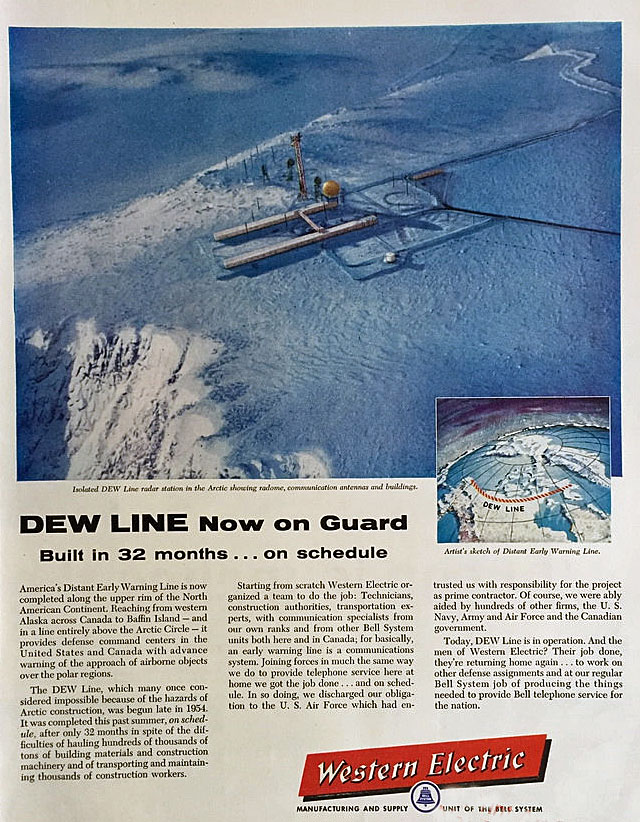
The Distant Early Warning Line was a system of 63 radar stations built across the Arctic Circle to detect Soviet bombers. Constructed by Western Electric, it extended 3,000 miles along the 69th parallel from Alaska to Baffin Island. The Arctic Institute of North America estimated it took 25,000 workers and $300 million to build the stations.

The U.S Air Force took operational control of the DEW Line on July 31, 1957, two months before the Soviet Union launched earth’s first man-made satellite, Sputnik.

This magazine ad appeared shortly after completion of the system.

Jeff Widmer’s latest book is Distant Early Warning, a novel of the Cold War.

A man for all time

The dark lord of marketing is back, and he’s aiming his talents at politics. Can civility survive?

Brinker, the antihero of Mr. Mayhem, has lost his magic. The agency’s CEO wants him to ace the competition. His former girlfriend wants him in detox. And as rival advertising executives disappear, an ambitious state trooper wants him in jail.

At this rate, the PR whiz who turned a serial killer into a national brand may have to vanish himself.

Throw in toxic waste, a nude car wash and a gun-toting presidential candidate and the czar of PR will have to spin some potent magic to escape the snare of lies and greed that threatens to destroy his job, his sanity and the love of his life.

In Mr. Magic, the ad world struggles to cope with Brinker’s insatiable lust for sex, satire and PR events that push the boundaries of legality and taste. The second outing for the defrocked journalist is available through Amazon, Apple Books, Barnes & Noble, Kobo and by special order at bookstores everywhere.

The Candidate

In honor of the current election cycle, an excerpt from my suspense/thriller, Mr. Magic. You can read the full-tilt lunacy of the role public relations plays in this and other marketing campaigns at Amazon, iTunes, Barnes & Noble, Kobo and bookstores almost everywhere.

And now, Brinker, the defrocked journalist turned PR whiz, will show you how campaigns work their magic:

On a blustery day in early April, Mary Margaret Paulson stood in an open hanger with the snow swirling like dust devils and gazed at the adoring masses. She looked every bit the presidential candidate. Perfect cheekbones, glossy red lips and a bushel of rich brown hair. Long legs in a black pencil skirt, lacy blouse and a red power jacket with shoulders big enough to carry half the states to the convention.

On the campaign trail she’d been called Chillbilly and Bible Spice for her passionate defense of religious freedom. The media mocked her. The pundits hated her. But Brinker knew one thing that many had forgotten: the woman oozed sex from every pore, and men and women alike would sacrifice their firstborn to share the air with her.

The scene resembled a campaign rally. An American flag hung behind two corporate jets emblazoned with the cement company’s logo. Paulson stood on a wooden A-Treat box behind a lectern decorated with patriotic bunting and waved like the queen on parade. A crowd of at least a thousand swelled around her, a line of police officers in reflective vests keeping protesters and supporters on opposite sides of the concrete apron. Sitting in rows of folding chairs under space heaters were local and state dignitaries, representatives from the governor’s office, county council members and the mayors of every city within a fifty-mile radius. The rest of the rabble stood in the cold, their hats declaring allegiance to Garth Brooks, the Phillies and the NRA.

Brinker focused on Paulson’s speech. In an effort to cut costs, the cement company wanted to burn hazardous waste. Residents weren’t convinced by the company’s health studies, which showed emissions would remain below EPA thresholds. His position paper had dealt with the need to balance environmental protection with economic growth. He’d reduced it to three bullet points. Paulson hadn’t gotten through the first when she veered off-message like a bike that had lost its training wheels. She ranted about liberals and intellectuals, the elite and the effete, people who were ruining the country with their bleeding hearts and costly regulations, stifling growth and free enterprise and everything that made America great.

The crowd cheered and Brinker, the PR whiz who’d turned a serial killer into a national brand, started to worry that the stunt wouldn’t backfire, that it wouldn’t create the chaos that guaranteed national coverage. Then, from across the tarmac, he heard the sound of grinding gears and smelled the belch of diesel exhaust as an ancient blue school bus tottered around the corner of the hanger and four dozen Korean woman dressed in hot pink jumpsuits piled out, Buddha at the fore, the notes of Psy’s “Gangnam Style” throbbing from a speaker on the roof.

Buddha, AKA Benjamin Kwon, community organizer and ace travel agent who helped the pursued disappear from the grid. Handing signs to the women—he’d economized by printing both sides, “Feel the Burn” on the front and, on the back, “Burn, Baby, Burn”—he marched them through the crowd, the Koreans forming a wall between supporters and protesters. As they twirled their signs and waved to the camera, Buddha broke away and headed for the perimeter.

Brinker sidled up to him. “How’s it going?”

“’Oppa oppa Gangnam style.’”

“You should run for office.”

Realizing that reinforcements had arrived, Paulson pointed at the ground with a sharply manicured finger and shouted, “This is it! Right here in little old Allentown, PA! The front lines of the battle, the home of concrete and steel that made this nation great!”

The crowd surged, one half cheering, the other half waving signs mounted on wooden stakes the size of baseball bats. Brinker could smell the blood lust as it raced through them, flaring nostrils, pumping muscles, raking their skin until they began to howl.

The handlers must have felt the massive animal coiling for a strike because two of them flanked the lectern as Paulson finished her speech with the pump of a fist and the cry of “Burn, baby, burn!”

The audience exploded, the police line collapsed. Protesters wielded their signs like clubs. Politicians ducked behind the flag. The cement company’s security force, standing respectfully at attention during the remarks, formed a firewall while the handlers hustled Paulson through the back of the hanger.

As police rushed in with batons, Buddha pulled Brinker to the sidelines. Above the roar of sirens, he said, “We have failed you, my friend.”

Brinker smiled as video crews captured the melee. “It’s all good.”

The Candidate

As an antidote to the election season, I’d like to share an excerpt from my new suspense/thriller, Mr. Magic. You can read the full-tilt lunacy of the role public relations plays in elections and other marketing campaigns at Amazon, iTunes, Barnes & Noble and Kobo, as well as bookstores everywhere.

Be sure to sign up for the Beyond the Book newsletter, at the bottom of this website’s homepage.

And now, Brinker, the defrocked journalist turned PR whiz, will demonstrate how sausage is made:

On a blustery day in early April, Mary Margaret Paulson stood in an open hanger with the snow swirling like dust devils and gazed at the adoring masses. She looked every bit the presidential candidate. Perfect cheekbones, glossy red lips and a bushel of rich brown hair. Long legs in a black pencil skirt, lacy blouse and a red power jacket with shoulders big enough to carry half the states to the nominating convention.

On the campaign trail she’d been called Chillbilly and Bible Spice for her passionate if uninformed defense of religious freedom. The media mocked her. The pundits hated her. But Brinker knew one thing that many had forgotten: the woman oozed sex from every pore, and men and women alike would sacrifice their firstborn to share the air with her.

The scene resembled a campaign rally. An American flag hung behind two corporate jets emblazoned with the cement company’s logo. Paulson stood on a wooden A-Treat box behind a lectern decorated with patriotic bunting and waved like the queen on parade. A crowd of at least a thousand swelled around her, a line of police officers in reflective vests keeping protesters and supporters on opposite sides of the concrete apron. Sitting in rows of folding chairs under space heaters were local and state dignitaries, representatives from the governor’s office, county council members and the mayors of every city within a fifty-mile radius. The rest of the rabble stood in the cold, their hats declaring allegiance to Garth Brooks, the Phillies and the NRA.

Brinker focused on Paulson’s speech. In an effort to cut costs, the cement company wanted to burn hazardous waste. Residents weren’t convinced by the company’s health studies, which showed emissions would remain below EPA thresholds. His position paper had dealt with the need to balance environmental protection with economic growth. He’d reduced it to three bullet points. Paulson hadn’t gotten through the first when she veered off-message like a bike that had lost its training wheels. She ranted about liberals and intellectuals, the elite and the effete, people who were ruining the country with their bleeding hearts and costly regulations, stifling growth and free enterprise and everything that made America great.

The crowd cheered and Brinker, the PR whiz who’d turned a serial killer into a national brand, started to worry that the stunt wouldn’t backfire, that it wouldn’t create the chaos that guaranteed national coverage. Then, from across the tarmac, he heard the sound of grinding gears and smelled the belch of diesel exhaust as an ancient blue school bus tottered around the corner of the hanger and four dozen Korean woman dressed in hot pink jumpsuits piled out, Buddha at the fore, the notes of Psy’s “Gangnam Style” throbbing from a speaker on the roof.

Buddha, AKA Benjamin Kwon, community organizer and ace travel agent who helped the pursued disappear from the grid. Handing signs to the women—he’d economized by printing both sides, “Feel the Burn” on the front and, on the back, “Burn, Baby, Burn”—he marched the women through the crowd, the Koreans forming a wall between supporters and protesters. As they twirled their signs and waved to the camera, Buddha broke away and headed for the perimeter.

Brinker sidled up to him. “How’s it going?”

“’Oppa oppa Gangnam style.’”

“You should run for office.”

Realizing that reinforcements had arrived, Paulson pointed at the ground with a sharply manicured finger and shouted, “This is it! Right here in little old Allentown, PA! The front lines of the battle, the home of concrete and steel that made this nation great!”

The crowd surged, one half cheering, the other half waving signs mounted on wooden stakes the size of baseball bats. Brinker could smell the blood lust as it raced through them, flaring nostrils, pumping muscles, raking their skin until they began to howl.

The handlers must have felt the massive animal coiling for a strike because two of them flanked the lectern as Paulson finished her speech with the pump of a fist and the cry of “Burn, baby, burn!”

The audience exploded, the police line collapsed. Protesters wielded their signs like clubs. Politicians ducked behind the flag. The cement company’s security force, standing respectfully at attention during the remarks, formed a firewall while the handlers hustled Paulson through the back of the hanger.

As police rushed in with batons, Buddha pulled Brinker to the sidelines. Above the roar of sirens, he said, “We have failed you, my friend.”

Brinker smiled as video crews captured the melee. “It’s all good.”


A Narrow Escape

When the owners of a dying ad agency ask Brinker to make the competition disappear, the PR whiz must choose between jail and the love of his life.

In Mr. Magic, the disgraced journalist struggles with the forces of greed, addiction and affection as he tries to rebuild the bonds he broke in last year’s debut novel, Mr. Mayhem. Can he carry out his assignment without vanishing himself? Chapter 1 sets the stage for the conflict to come.

(For more on Brinker, the CW McCoy series and news of the publishing world, be sure to sign up for the Beyond the Book newsletter, at the bottom of this website’s homepage.)

1.

BY THE TIME the first bullet struck the concrete wall, Brinker had run halfway across the parking garage. The second slug hit a car and set off its alarm. As he plunged down the metal stairs, he heard a third strike the blockhouse.

Stumbling out at ground level, Brinker hit the sidewalk at a dead run. A half-block later, he glanced behind to see Buddha gaining on him, the streetlights showing the big man breathing through his mouth. Rounding the corner, Brinker pressed his back against the plate glass window of an abandoned hair salon as a car roared out of the deck, blew through the traffic light and disappeared.

He was twenty yards from the ad agency in downtown Bethlehem and a million miles from safe.

Buddha waved him to keep going.

Chest heaving, Brinker held up a finger and tried to swallow. “She pulled a gun!”

Hands on his hips, Buddha bent forward and talked to the ground. “I am mindful of that fact.”

Brinker massaged a stitch in his side. “She could have killed us.”

“If you remember, I suggested you stay out of sight.”

Close to two a.m. on a bitter day in early April and Buddha wore sunglasses, a hooded sweatshirt and camo shorts. He straightened and started hopping in his high-top sneakers, his face as round as a balloon. For a moment he looked like that Korean rapper with the bowtie, the guy with the jerky dance moves.

Brinker said, “I thought you said she was drunk.”

“That would be my guess,” Buddha said. “Why else would she open fire on a pair of outstanding citizens in a public garage?”

They started walking, tracing the route Ginger Wright had taken in her flight.

“Christ almighty,” Brinker said. “I thought women only carried Mace.”

“At this point,” Buddha said, “I am more concerned about the police than her method of self-preservation.”

They stopped on Main Street with their backs to the three-story building where Brinker worked and stared at the bulk of the Hotel Bethlehem. The street that ran past the Moravian settlement toward the Hill to Hill Bridge appeared deserted, not a flicker of taillights at this hour to show where the owner of the rival ad agency had fled.

Brinker shook, from cold or adrenalin, he couldn’t tell. He gazed past the hotel with its ancient brick façade and pinprick lights in its arching windows and remembered the last time he’d gotten himself in a jam like this, when an assassin he’d hired came gunning for him in a deserted sandpit. He’d run so hard he could have swallowed a lung.

“No more,” Brinker said as they walked past wrought-iron tables and chairs to the car they’d left in front of the Italian restaurant. “You said when we got into this there’d be no violence.”

Buddha used a remote to unlock the door of the Lincoln. “It is a little late for that, my friend.”

Atomic shuffle

When we think of vacations, we think of the beach or the mountains, Europe or Mexico, a camper or cruise or condo. But if you’re a travel agent who specializes in helping the hunted drop off the grid, you might look to a few places that, while not off the beaten path, aren’t top destinations for the leisure class.

Think Chernobyl, Fukushima and a place that will keep radiating charm for centuries, Los Alamos and the neighboring town of Alamogordo, site of the Manhattan Project and the testing of the first atomic weapons.

At least that’s what the Korean expat Benjamin Kwon thinks when helping debtors, tax dodgers and advertising agency executives elude official scrutiny. Kwon , AKA the Buddha, does his vanish tricks in Mr. Magic, the second in the series of crime novels featuring a defrocked journalist turned PR whiz named Brinker, who made his debut last year in Mr. Mayhem.

What is it about those three sites that attracts the miscreants, misfits and marketing gurus? For Brinker and Buddha, two words: exclusion zone.

Established soon after the 1986 disaster, the Chernobyl Nuclear Power Plant Zone of Alienation is an evacuation area within a 30 km radius of the Chernobyl Nuclear Power Plant. Decades after the meltdown, residents have crept back into the area.

After the Tōhoku earthquake on March 11, 2011 and the ensuing tsunami, the Fukushima Daiichi nuclear meltdown made that region too hot to inhabit, yet people will always want a closer look at large-scale disaster.

Alamogordo is connected with the Trinity test, the first explosion of an atomic bomb, and the Los Alamos National Laboratory, the secret World War II facility that housed the Manhattan Project.

Dr. Beach isn’t naming any of those sites to his top 10 list of vacation destinations, but any place that’s off limits to the casual visitor might make a good place to hide.

That premise forms the backbone of Mr. Magic, a book that asks the question: how hard must a PR counselor work to spin a visit to a nuclear graveyard as adventure travel? For Brinker, that raises another question: how hard will his new boss at the ad agency press him to exile her rivals to these places?

Brinker will have to use all of the magic he can muster to keep himself from becoming the latest to disappear. You can read all about his struggle to give up sex, drugs and dirty tricks at Amazon, iTunes, Barnes & Noble, Kobo and jeffwidmer.com, as well as bookstores everywhere.

And be sure to sign up for the Beyond the Book newsletter, at the bottom of this website’s homepage.

The Buddha helps people disappear to places like Chernobyl in MR. MAGIC

The Buddha helps people disappear to places like Chernobyl in MR. MAGIC