By the Time We Got to Woodstock

August 15, 1969, capstone of a tumultuous decade. Life in the rural town of Pennsboro, Pa. is about to explode. A dam that would flood the valley pits family against family. Marchers riot. Buildings burn. Amid the chaos, two lovers risk everything to fight for their home—and a chance to command the stage at a rock festival in a farmer’s field in New York State, an event we now know as Woodstock.

I grew up in those times, in the shadow of an unpopular dam, the government’s eviction of squatters, surrounded by the sounds of peace, love, and revolution. To understand the contradiction, I wrote a novel about those two kids. The result was Born under a Bad Sign, a dramatic and nuanced portrait of love and loss in the Sixties.

It begins, as many of our stories do, with a crush. Elizabeth Reed loves photography, the river the government wants to dam, and a musician who refuses to commit. Hayden Quinn, the guitarist Rolling Stone calls the next Jimi Hendrix, feeds another obsession—to play the biggest concert of his life. He presents Elizabeth with a dilemma: stay to save her family’s farm, or follow him into the unknown.
With saboteurs targeting everyone she loves, Elizabeth faces the greatest risk of all—whether to trust her head or her heart.

You can read the full story of their struggles here. Or start with Chapter 1 and the night the world fell away.

1.
FROM BEYOND THE HILLS came a jagged flash of light. Elizabeth Reed counted five seconds before the sound rumbled across the infield of the raceway, this makeshift venue for the largest outdoor rock concert on the East Coast. Another flash, and another ripple of thunder. In an improvised call and response, the crowd echoed its approval. The tower that held the lights and PA system trembled. So did Elizabeth’s arms and legs. She let the dizziness pass and, willing her stomach to settle, tucked both cameras under her arms and climbed to the sky.
       The warm-up band had just finished, the announcer promising that Orwell, fresh off its national tour, would soon take the stage. A wall of people surged forward. Despite the scalding July heat, this was the group’s homecoming and the locals had turned out in force, thousands of ragged kids with beards and muumuus, jostling each other in a fog of beer and smoke. Two years after Monterey Pop and the festival had come of age. So had the band.
       The tower swayed enough to cause Elizabeth to question her bravado. Despite the knot in her stomach, she climbed past speakers and spotlights for a better view of the makeshift stage, a plywood floor laid across a half-dozen flatbed trailers. The platform had been hastily constructed for the festival, the biggest in Pennsylvania’s Minisink Valley and a warm-up for one she’d heard could be even bigger, next month’s Woodstock Music & Art Fair in nearby New York.
       That was the real object of the evening’s performance, a final rehearsal for Orwell and its leader, Hayden Quinn, the guitarist Rolling Stone had called the next Jimi Hendrix, the man that Elizabeth, fresh out of high school, had followed halfway across the country as the band’s unofficial photographer. It was make or break time for the group. The band’s manager, Elizabeth’s Uncle Morey, had invited the man organizing Woodstock, Michael Lang, to attend the concert. So far, she hadn’t seen anyone fitting Lang’s description.
       As the wind rose to meet the night, Elizabeth realized that, if the crowd pressed closer, the tower could tip. Since her dizziness disappeared if she didn’t look down, she focused on the distance, tracking the Delaware as it wandered between Pennsylvania and New Jersey like a nomad, flowing freely despite the government’s effort to dam the river and drown her family’s farm. With the telephoto lens, she could isolate her property, snug in the rich bottomland of the valley. Camera in hand, river and fields spread below, she felt exhausted, scared, and ridiculously happy.
       Voices below startled her. Dressed in black, two members of the security crew waved her from the tower. The yelling morphed into the sound of hammering. Against the raw wood of the stage, Tommy Reed nailed cardboard cylinders to rows of two-by-tens, preparing the fireworks for the evening’s finale. He seemed dwarfed by the munitions.
       When the sound system kicked in with a recording of “Crossroads,” Elizabeth gripped the metal pipes to maintain her balance. Despite the rush of adrenaline, her arms ached from lugging the heavy Nikons all day. With a normal lens, the weight seemed bearable. But when loaded with a zoom and a motor drive, the outfit felt as if it weighed as much as a bale of hay. Before she descended, she snapped a picture of Tommy as he wired his makeshift rig, the camera hot and slippery in her hands. Heaven help them if she dropped it on his head.
       As soon as she landed, the security officers assumed their positions in front of the stage while the roadies assembled the last of the equipment. Her older brother Robbie frowned as he arranged cymbals and tightened the drumheads, his rusty hair in a deliberately unhip buzzcut. Reaching above his head, Cordell White plugged his bass into a stack of amplifiers and plucked a few notes. Unlike Robbie, who wore his usual white T-shirt and shorts, Del had dressed for show in leather pants, a jacket of purple satin, and a high-crowned Navajo hat with a yellow plume. Both of them looked frustrated, or mad.
       Tommy caught her eye and jerked his head toward the edge of the stage. He, too, appeared angry, a look that was highlighted by chapped lips, hair the color of licorice, and a nose as sharp as a chisel. The only festive thing about him was the tie-dyed headband.
       “Hey, Cuz,” she said, drawing a face that signaled either irritation or fatigue.
       He smelled of oil and mint. As usual, he wore sunglasses so dark that she wondered how he could see to connect the fireworks. Pecking him on the cheek, she took in the rows of rockets, mortars, and Roman candles that crowded both sides of the stage and felt a twinge of concern. “Aren’t they a little close?”
       Tommy scratched his back with a screwdriver. “Close?”
       “To the band.”
       Another crack of thunder and Tommy dragged a tarp over the pods. “Wait and see.”
       As security stopped a ginger-haired man flashing press credentials, Elizabeth regained the tower. One by one, the members of Orwell wandered onto the stage to a cascade of applause. Robbie positioned his cymbals, Del and Quinn hunched over tuning pegs, and Mattie, jiggling her ample ass, asked the crowd how they were doing. As the band struck its first tectonic chord, the audience thundered their approval.
       Mattie belted out the first number with a ferocity that shook the towers, all trace of her Southern accent lost in the ricochet of sound. Robbie thrashed as if he were drowning in one of the cow ponds on the family farm. Even Del, who usually bobbed in place, stalked the boards, his face a darkening cloud.
       Quinn followed with a scorching lead that featured a collision of Bach, Thelonious Monk, and Hendrix. Shirtless now and barefoot, he played with a single-mindedness akin to religious devotion, prowling the stage, slashing his guitar, bending strings until they threatened to snap. He hammered the neck with both hands as if playing a piano, the sound a frenetic cross between Paganini and Robert Johnson, the shaman who’d sold his soul to the devil for his talent.
       From her perch, she tracked the band, feeling more than hearing the smack of the mirror as it lifted to admit the light, the whir of the motor drive as it advanced the frames. Pace yourself, she thought, or you’ll run out of film.
       Like a tsunami, the intensity of the music grew, Quinn hurtling his body into the wave of sound, his head bowed, shoulders hunched, fingers on fire. Dreadlocks flew as he reared, face twisted in ecstasy, the notes tracking across his lips. No matter how many times she’d seen the show, Elizabeth felt stunned, and not just by the acoustical acrobatics. With the flick of his fingers, Quinn guided the music from brave too anxious to calm. Elizabeth felt warmth and humor, sadness and pity, and so much in between. It astonished her that anyone could convey such emotion without the use of a single word.
       The band continued the pace, blazing through songs as if racing to an uncertain end. By the close of the set, their faces shone with euphoria and sweat. Robbie raised his sticks, caught the eye of Quinn and Del, and they miraculously finished on the same beat, even as Tommy launched the first volley of fireworks, burning the night in a shower of red and gold.
       The musicians filtered off stage, waited a beat, and returned to a swelling ovation. With a deep bow, and a nod from Mattie, they launched into one of the medleys Quinn had arranged as an encore. Even before Elizabeth traced their faces through the telephoto, she could tell that, as the music grew more frantic, they struggled to hear. Hitting the final chorus, Mattie looked over her shoulder as if she were lost in the woods. Robbie buried his head in his drum kit. Del and Quinn traded places, Del moving to the monitors along the wing while Quinn arched over the stage to listen to the PA speakers.
       The music had grown so loud that Elizabeth could barely feel the vibration through the camera body as the motor drive cranked through another roll of film, thirty-six exposures in a matter of seconds before she hunched to reload.
       This time, the band didn’t leave the stage. They bowed slightly, as if they’d expended so much energy they had little left for movement, before launching into the second encore, a reprise of their single, “Bomb Babies,” that ended in a cataclysmic version of Tchaikovsky’s 1812 Overture. Quinn had shortened the piece for maximum impact and, when he nodded, Tommy let loose with his final volley.
       From the corner of the viewfinder, Elizabeth watched the skyrockets arc into the night and explode in phosphorescent swirls. She grabbed a shot of Tommy, who timed the bursts to coincide with the downbeat. As the encore hit its crescendo, he quickened the pace, unleashing a white-hot assault that mimicked the original cannon fire. The band fed off the energy, Quinn and Robbie flailing, Del leaning dangerously close to the fireworks while Mattie spread her arms to embrace the crowd.
       Then, as Elizabeth lifted the camera to her face, the stage flashed with a blinding light and the world exploded.
But our intentions were good

Our writers’ group had a discussion this morning about the use of AI to generate content. Is it a high-tech form of plagiarism? Does the work to which it is applied constitute original art? Digitally generated voices have already rendered obsolete the narrators of audio books. Will AI do the same to writers?

To illustrate the dilemma, one of the authors said he was astonished at the accuracy and sophistication of the answers he’d received after asking Microsoft’s AI assistant to summarize the chapters of his memoir. He’s about to pitch the book to an agent and was looking for a convenient way to describe the work.

Another writer said she’d used AI to generate a summary for the back cover of her memoir and felt pleased with the result.

I’ve used AI for research but never for pitching or publication. So, when the meeting ended, I uploaded the text of my first novel and asked Microsoft’s Copilot to write a summary for an agent. It might have taken 18 seconds to get an answer. It wasn’t what I’d expected.

I’ll let you judge whether it’s appropriate. But first, some background.

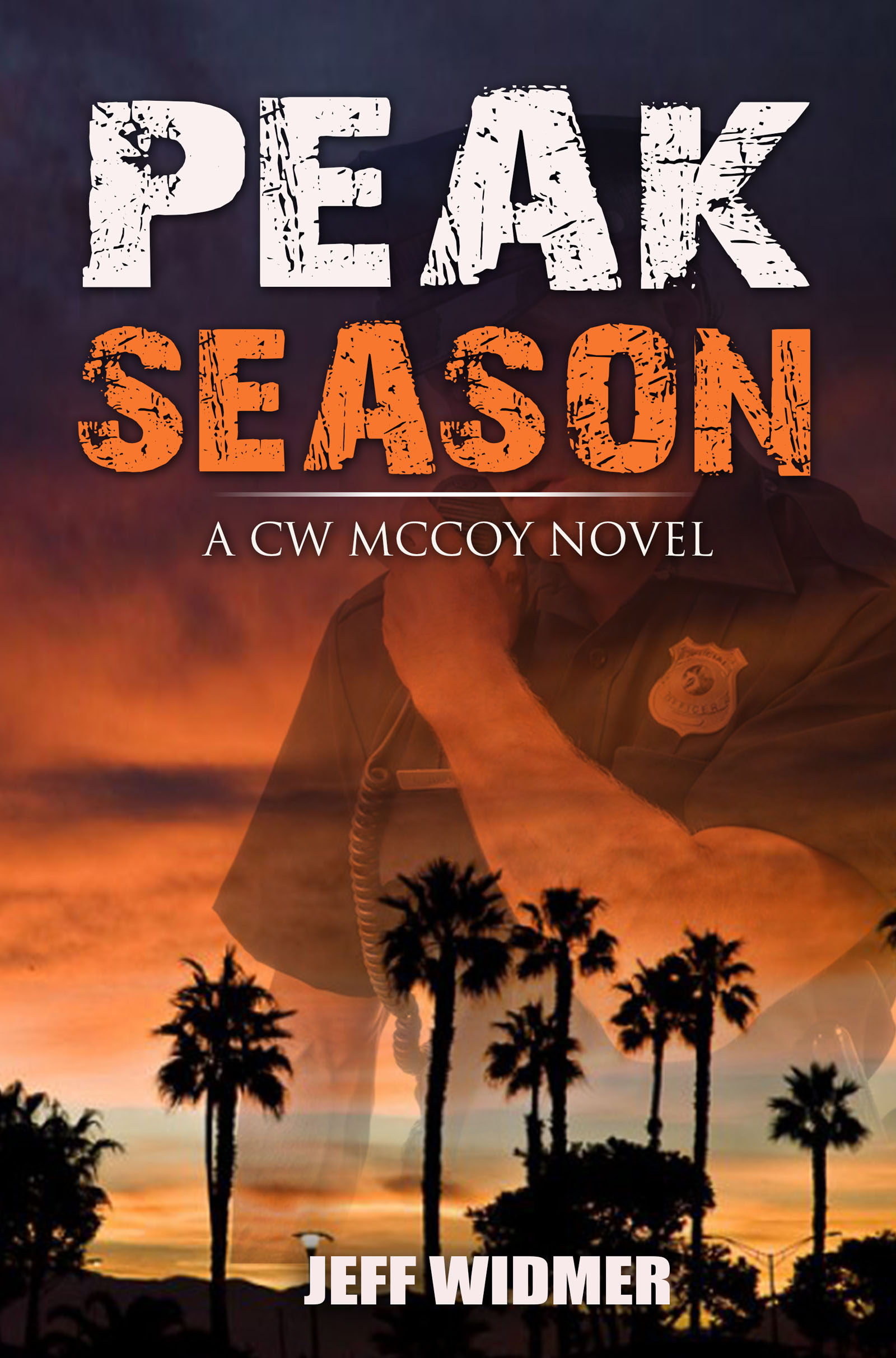
Peak Season is the first in a series of crime novels featuring a former police officer turned real estate agent and a retired state trooper who virtually lives on his boat along the Gulf Coast of Florida. It is a mystery novel, popular fiction that tackles a number of contemporary issues such as property rights and the environment.

I pitched the manuscript to a number of agents. This was before ChatGPT and other large-language models came into vogue, so my email was entirely human-generated. Here’s what I sent:

Dear [agent’s name redacted]:

She’s the wrong person in the wrong place at the wrong time.

Responding to a domestic disturbance, CW (Candace) McCoy is forced to shoot a fellow police officer to prevent the death of his wife and child. Internal affairs rules the shooting justified. CW can’t and fears she’s inherited the killer gene from her father. Refusing to carry a gun, she quits the force and escapes to Southwest Florida to sell real estate, care for the grandfather who took her in after the murder of her family, and silence the demons that threaten her new life. But even in paradise during peak tourist season, there’s no outrunning bad blood.

Original book cover

Declared dead by the courts, Bobby Lee Darby appears in CW’s office to demand the family friend clear his name in a scheme to bilk millions from investors. When CW refuses, the fugitive financier kidnaps her grandfather and triggers a chain of burglary, assault, and murder that convinces local police the former cop has gone rogue.

Racing to find Darby and her grandfather, CW must confront her violent past, risky affairs, and love-hate relationship with Florida before those personal demons turn her new-found paradise into hell on earth.

A former journalist with Dow Jones, I am the author of The Spirit of Swiftwater and other books, with an eponymous website (jeffwidmer.com) and an extensive social network.

Since you look for new voices in women’s suspense and represent [authors’ names redacted], I think the CW McCoy series would make for a good fit with your agency.

I’ve included the first three chapters below. Would you like to see the complete 72,000-word manuscript and the first chapter of the second book in the series?

OK. Despite my heroic effort, that letter didn’t work, and I wound up independently publishing the novel in 2014. But what if I were to pitch a rewrite and use AI to generate the query letter? When I fed the text of the entire manuscript into Copilot, I got this:

Dear [Agent Name]:

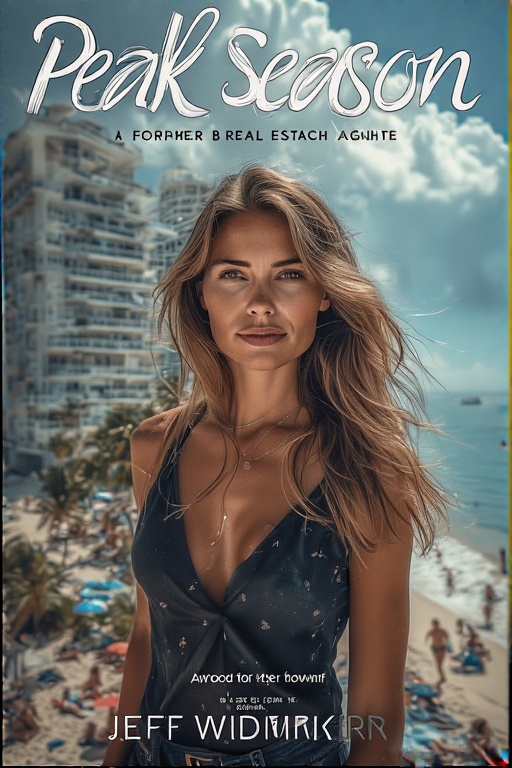
I am thrilled to introduce Peak Season, a novel that captures the electric tension between fleeting beauty and the transformative impermanence of life. Set in a sun-drenched coastal town where every summer day burns with both promise and poignancy, this story follows [Protagonist Name], a determined soul navigating the dizzying interplay of desire, loss, and rebirth. As the town swells with the vibrant energy of peak tourist season, long-hidden family secrets, unexpected romances, and personal reckonings emerge, forcing our heroine to confront the true cost of chasing a dream—even when that dream burns as bright as the midsummer sun.

AI-generated cover

At its heart, Peak Season is a deeply atmospheric exploration of the human spirit. It invites readers to savor the bittersweet cadence of relentless change: the ephemeral thrill of new beginnings and the heart-wrenching inevitability of endings. Through lyrical prose and raw, immersive storytelling, the novel paints an intimate portrait of individuals who, like the turbulent coastal tides, are in constant flux—seeking meaning in moments both fleeting and profound.

I believe that Peak Season will resonate with readers who appreciate literature that not only entertains but also challenges them to reflect on the impermanence and intensity of life. Its richly woven narrative and authentic emotional depth offer a fresh voice in contemporary literary fiction—a voice destined to captivate audiences in today’s dynamic literary landscape.

Thank you for considering this submission. I would be delighted to send you the full manuscript and discuss how Peak Season can find its place among today’s most compelling literary works.

Warm regards,

The transformative impermanence of life? I’ll accept raw, immersive storytelling. Even a fresh, contemporary voice. But literary fiction? A bridge too far, and an inaccurate reading of the tone of the book, which is more Chandler and Evanovich than Proust or Joyce.

But enough of my views. What do you think? Is AI the shortcut to greater productivity and happiness or a Trojan Horse we’ll live to regret?

Ask your computer or phone. They’ll know.

Now Hear This

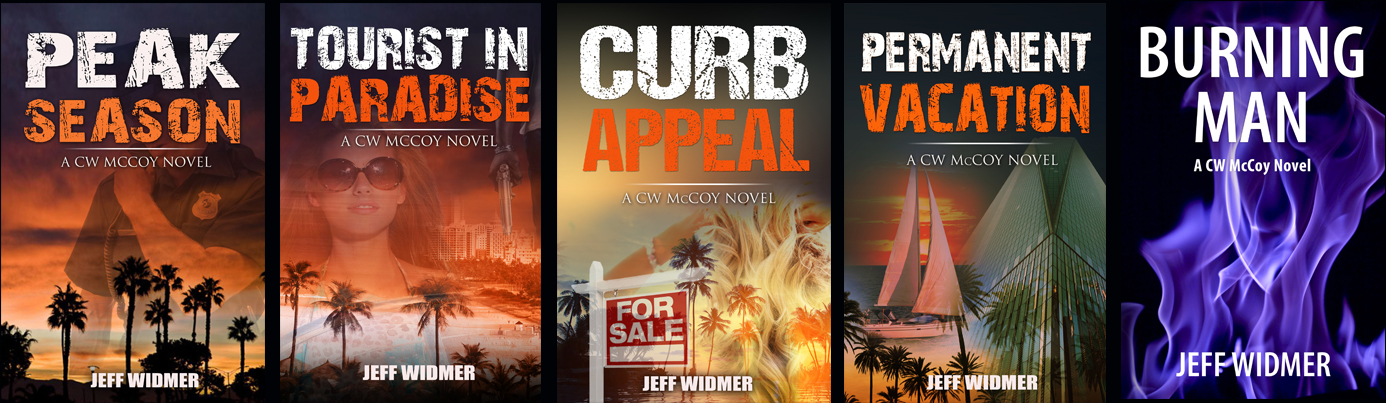
All five books in the CW McCoy/Walter Bishop series of mystery novels are now available in audio from Amazon. And all at less than $10 a piece, a third of the usual cost.

The series follows former police officer and real estate agent Candace McCoy as she tries to balance career and crime with the care of her grandfather. The setting will be familiar to many—a tony beach town remarkably similar to the twin Florida cities of Sarasota and Bradenton.

You’ll find audio, e-book, and paperback versions of the novels here:

Tragedy Transformed: the Writing Life Part 3

B. Aline Blanchard is a writer, sculptor, and visual artist based in Sarasota, Florida. We discussed writing for a presentation to the Kanaya Book Club. This is the conclusion of that Q&A.

Detective stories generally follow a formula. How does being an independent publisher allow you to deviate from that formula?

I don’t follow a formula, but there are general principles that apply to both commercial and independent crime fiction. Start with the end in mind and work toward it. Give your characters challenges but don’t make them insurmountable. Provide subplots that are more personal than professional. And if you raise a question, try to answer it.

The process of setting up an independent publishing company and marketing a book is quite complex. You have now published nearly a dozen books under the imprint of Allusion Books. How does the cover design impact sales?

The goal is to make an independently published book indistinguishable from a commercially published one. That means engaging professionals to edit, proofread, and design the interior and the exterior of the book. As long as the cover looks professional, I don’t know that it affects sales as much as reader reviews.

Your newest book, Distant Early Warning, is based on a flood that took place in 1955. Were you living there at that time?

Yes, but I was too young to know what adults did and why. Unfortunately, I never asked my parents about their experience. I was able to talk to neighbors and share experiences through social media. Memoirs from that period provided more hands-on experience.

Did you interview people to see how it changed their lives?

Every few years, the local newspaper published a special section about the flood. I was assigned to interview a woman whose family had survived by climbing into the attic of their house. The water rose quickly and trapped them. There were no windows, no way to escape. The woman read the Bible and prayed. On the trip back to the office, I passed the creek that had taken so many lives and had the unnerving sensation that the flood could happen again, at that very moment. That story has haunted me for decades.

How much research did you do to write this book?

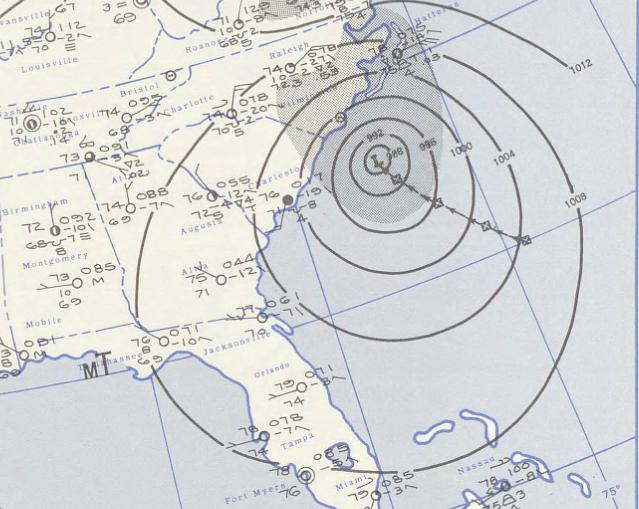
Path of Hurricane Diane as it hit North Carolina

I spent six months reading books about the DEW Line and the 1950s in general. That included government publications about building a fallout shelter and surviving an atomic attack. I watched the movies and television shows young Wil Andersen would have watched to gain more insight into the culture. I watched and read with an eye toward placing myself in the position of the characters who not only coped with the flood but dealt with the challenges of the culture, from clothing and appliances to geography and weather. That even included charting the position of the stars on one fateful night.

Your descriptions of the flood and its devastation brought goose bumps. How did you put yourself into so many characters’ lives?

I interviewed as many people as I could about their lives during and after the flood. I also read personal accounts posted by several Facebook groups. Their stories inspired me to dig deeper into the experience.

The conflict, man against nature, is particularly potent with all the floods we’ve had recently.

Those of us who live in Florida expect major storms. The idea that back-to-back hurricanes could devastate the Northeast is sobering. It’s an object lesson for all of us.

Research for the crime fiction is ongoing. For Distant Early Warning, I spend a good six months reading about the 1950s and watching dozens of movies and television programs from the era. Research into the Flood of ’55 was especially intense, given that my parents had lived through that natural disaster.

Jeff Widmer’s latest book is Distant Early Warning, a novel of the Cold War.

The shadow of an aircraft passes over the Distant Early Warning (DEW) Line, which runs 3,600 miles from Alaska across Northern Canada to Greenland.

Living the Story: the Writing Life Part 2

B. Aline Blanchard is a writer, sculptor, and visual artist based in Sarasota, Florida. We discussed writing for a presentation to the Kanaya Book Club. This is part two of that Q&A.

As a reporter/photographer early on in your career, did you come across many female detectives?

I didn’t meet female officers until I got to Florida. As a journalist, I did have several years on the police beat, and the ear of a very helpful state police commander who helped flesh out the character of Walter Bishop in the CW McCoy novels.

What made you choose the case of the scheming investor in Peak Season?

I was reading the saga of Aubrey Lee Price, who boarded a ferry in Key West, stripped, and dove into the water. The disappearance initially was ruled a suicide. He was declared dead, but not before allegedly stealing millions from investors. Reading this I thought, in this day and age of surveillance, how could anyone disappear? And if he knew his actions were wrong—he penned a rambling confession to his family before vanishing—how could he justify his actions? CW discovers the unfortunate answer in the first book.

Why did you change some of the Sarasota landmarks?

When asked the same question about Santa Barbara, Sue Grafton said she wanted the flexibility to move buildings and streets. For people who are not familiar with Sarasota, I wanted to simplify the landscape. I also didn’t want readers to confuse the corrupt officials in the novels with the people who actually occupy those offices, many of whom helped me to research the books.

Besides being a writer, you are also a musician and a photographer. How did these experiences give authenticity to your writing?

Born Under a Bad Sign is the best example of how a profession can bring nuance and authority to a work. Quinn’s knowledge of music and his obsession with playing Woodstock come directly from my work as a guitarist. Elizabeth’s drive to become a photographer arose from my experience and that of the photographers who mentored me.

Did you also live on the farm you depicted in Born Under a Bad Sign?

I grew up next to a farm owned by our bus driver. He used to let the neighborhood kids swim in the cow ponds in summer and ice skate in winter. Much later, when we built our first house, we became friends with the couple who owned it.

Did your work at an advertising agency give you the material to write Mr. Magic?

Yes, a decade in advertising gave me a mixed view of public relations and marketing, just as my years as a journalist provided the material for Mr. Mayhem, the first of the Brinker books.

How much research do you do for each book?

Research for the crime fiction is ongoing. For Distant Early Warning, a novel of the Cold War, I spend a good six months reading about the 1950s and watching dozens of movies and television programs from the era. Research into the Flood of ’55 was especially intense, given that my parents had lived through that natural disaster.

Next: Transforming tragedy

Jeff Widmer’s latest book is Distant Early Warning, a novel of the Cold War.

Becoming Someone Else: the Writing Life Part 1

B. Aline Blanchard is a writer, sculptor, and visual artist based in Sarasota, Florida. We discussed writing for a presentation to the Kanaya Book Club. This is part one of that Q&A.

How did you get started writing detective stories?

B. Aline Blanchard

I took a class where we had to turn a short story into a news article and an article into a short story. For a journalist, the first part was easy. The second gave me pause. I finally chose an article about Aubrey Lee Price, a Florida Ponzi-schemer hunted by the FBI. He became the inspiration for the character of Bobby Lee Darby in Peak Season, the first novel (of five) in the CW McCoy series of crime novels.

I understand you researched the police work by riding with the police. Which came first , the research or the idea?

The ride-alongs happened about the same time I was writing the first of the McCoy books. As a way of exploring this new place to which we’d just moved, I took a number of classes, including Sarasota County’s Civics 101 to learn about government and a pair of courses to study police procedures—the Sarasota Police Department’s Citizens Academy and the Sarasota Sheriff’s Citizens Law Enforcement Academy (CLEA) program.

How did riding with officers and deputies change your conception of police work?

The ride-along is the final session of the SPD’s Citizens Academy. I saw firsthand the danger and the boredom the officers face. Initially, I wrote a blog post after every class. But after the ride-along, I decided to bundle the posts into a slim volume that tries to encompass some of what lies between those two poles. The result was Riding with the Blues. (Thanks to the SPD for providing the cover art.)

What made you choose a female narrator?

I’d been reading Robert B. Parker’s Spenser series as well as several other novels with wise-cracking, hard-drinking tough-guys at the center. Unfortunately, that kind of character has become a trope of crime fiction. I was fascinated with how women writers—Grafton, Paretsky, Crusie, and Evanovich—transformed that cliché. I wanted to create a well-round character who was both brazen and domestic, someone who took risks but put family first. After talking to a female chief of police about her difficulties in getting recognized and promoted, I realized that in CW McCoy I had a character who could explore that terrain.

Was your detective based on an actual person?

As with many of my characters, CW is not based a single person but a combination of several from whom I’ve borrowed physical attributes, mannerisms, and patterns of speech.

How did you authenticate the female point of view?

For years, I’ve been friends with a pair of real estate agents in Pennsylvania. They were kind enough to let me hang out in their office and observe the nuances of the job. As luck would have it, in buying our house in Sarasota, my wife and I became friends with another pair of agents. They’ve been invaluable in providing operational and personal detail about life as a female agent. For issues that transcend real estate, several women in my writer’s group provide insight and advice. And my wife reads every manuscript for accuracy and consistency.

Next: The mystique of female detectives

Jeff Widmer’s latest book is Distant Early Warning, a novel of the Cold War.

Meeting friends, old and new

I recently had the honor of discussing fiction and publishing with the Kanaya Book Club in Sarasota, Fl. The event also gave me the opportunity to catch up with a friend from our days in the Pocono Mountains of Pennsylvania—B. Aline Blanchard, who founded Pocono Writers circa 1981. Aline, who organized the event, is a writer, sculptor, and visual artist now living in Sarasota. She has a pair of novels, several chapbooks, and a book of poetry to her credit.

We had a lively discussion of Peak Season, my first novel and the first book (of five) in the CW McCoy series of crime novels. Given that our adopted home of Sarasota just suffered a swipe from Hurricane Ian, the conversation migrated to storms and a reading from my latest work, Distant Early Warning, a Cold War novel set in a fictionalized version of my former hometown (Stroudsburg/East Stroudsburg, Pa.) during the devastating Flood of ’55.

Despite the grim complications of crime novels, the conversation turned lively, and a good time was had by all. The wine helped.

Thank you, Aline, for your generosity, and everyone who attended.

From left: Ginny Reck of the Kanaya Book Club, myself, and B. Aline Blanchard

Hail! Hail! Rock ‘n’ Roll

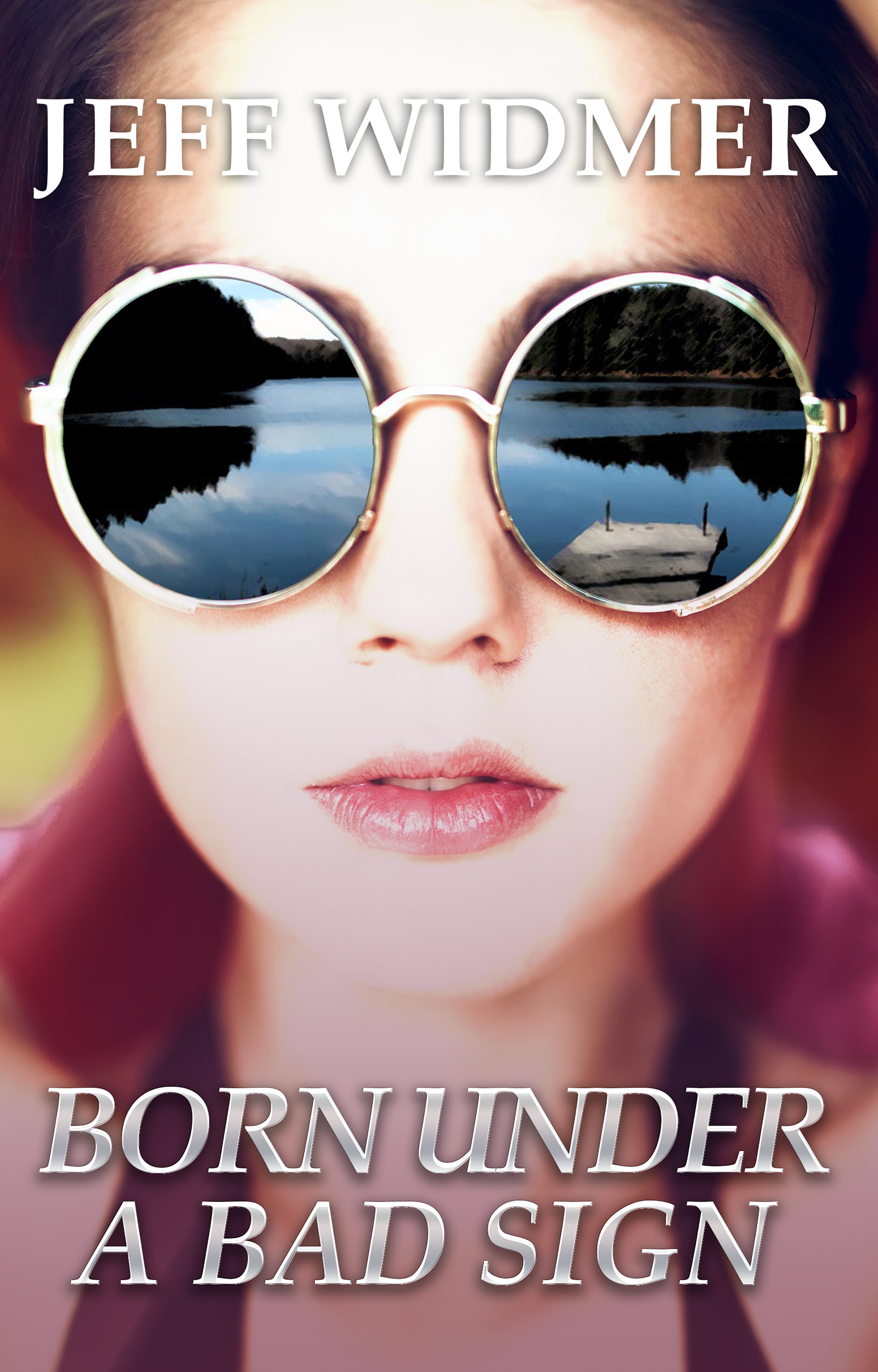
Celebrate the anniversary of Woodstock with a novel that captures the heart and soul of a generation, Born Under a Bad Sign, a gripping story of love and obsession, set in one of the most turbulent times in American history.

Published by Allusion Books for the 50th anniversary of the iconic music festival, Born Under a Bad Sign is available through bookstores and online at Amazon, Apple Books, Barnes & Noble and Kobo.