A Not-So-Distant Warning

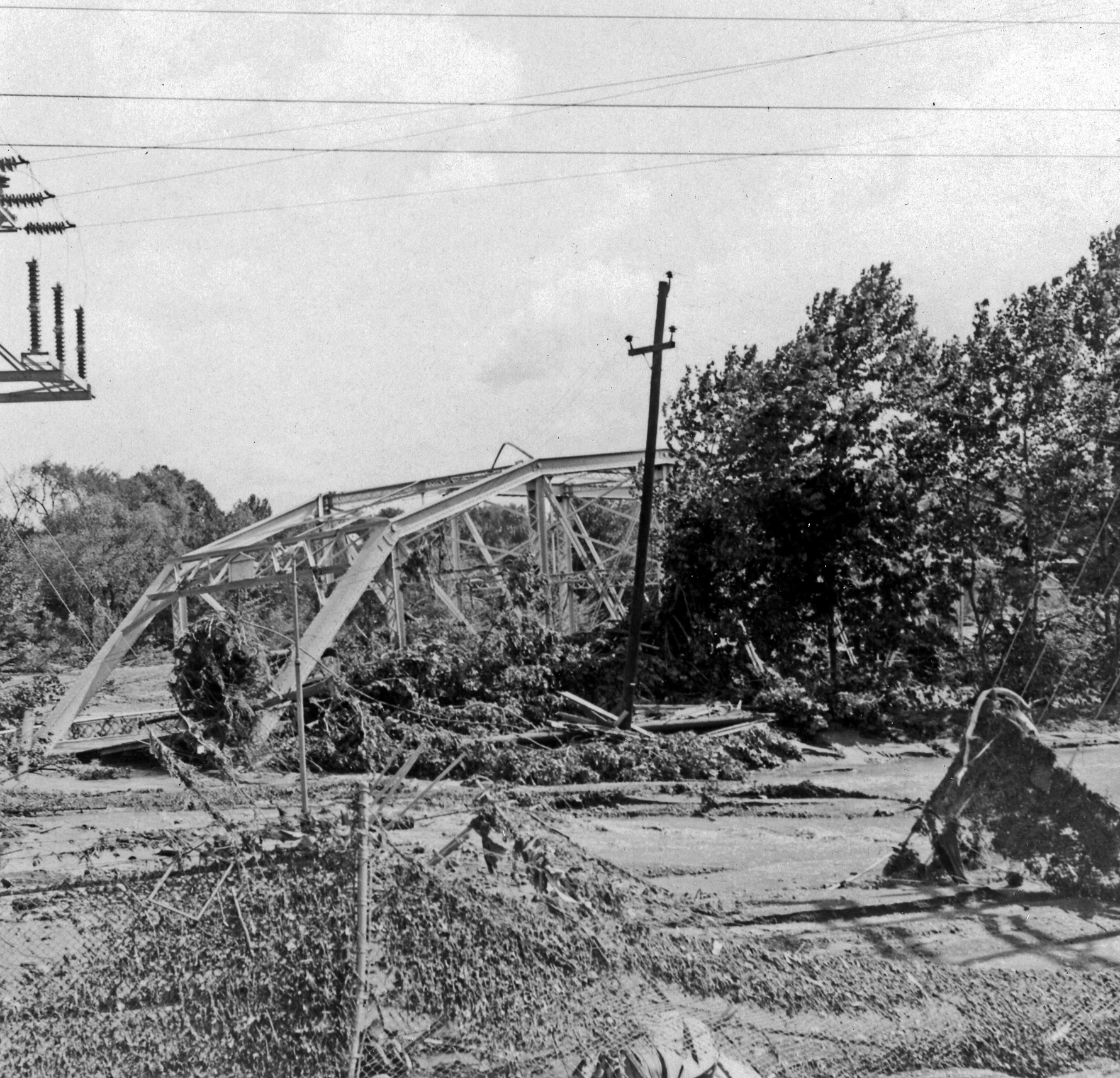
August 18, 1955 is a day that will live in infamy for people of the Northeast. That was the day the Flood of ’55 ravaged our small town. Back-to-back hurricanes Connie and Diane turned peaceful creeks into raging torrents, sweeping aside towns from Pennsylvania to Connecticut and killing hundreds, seemingly in the blink of an eye.

As a child, I don’t remember much of that time, but years later, as a journalist investigating the events of that terrible night, I was stunned by the hardship and heroism of those who survived. With the benefit of hindsight, I decided to explore their stories through a series of novels.

The first book in the trilogy, Distant Early Warning, introduces us to the Andersen family as they struggle to recover from the devastating flood. The novel, and the ones to follow—Cold Fire and Good People—portray the dreams and fears of a family, town, and country as they navigate the promise and perils of Cold War America. Distant Early Warning doesn’t only refer to the DEW Line, the system of Arctic radar stations designed to detect incoming Soviet bombers. The title serves as a metaphor for the internal system that warns us of impending danger, warnings we often ignore.

Russia, rockets, race, and repression—issues the Andersens tried to resolve in the ’50 that revisit us today. As does their struggle for mercy and hope.

Theirs is a journey from darkness to light. Follow it here. Or start with that terrible night of August 18 in this excerpt from Chapter 4.

AT TEN TO NINE, Georgia let Skippy out for a short walk, wiped the dog’s back with a dishtowel, and moved her box into the kitchen. This was Georgia’s time. Switching on the television, she settled on the couch and tried to watch Fear Strikes Out, a movie Marsh would have liked about center fielder Jimmy Piersall. But at 9:30 the lights vanished with a snap. Suddenly blind, she groped toward the telephone. It was out, too. Now there was no way to call Marsh, even if she knew where to find him. And he had taken the car.
       From the street, shouts competed with the swish of tires, then a shudder as something heavy struck the bridge, rattling the house as if the earth had broken in two. The room squeezed her heart. Inhaling through her mouth, she told herself she was responsible for the children and had to think of their welfare. Marsh said that, if the town declared an emergency, the fire chief would blow the siren, and someone would come to their rescue. She could wait for the siren, but not in this stifling dark.
       Groping through a drawer in the kitchen, she found a small flashlight, thumbed the button and, checking that Skippy was safe in her makeshift bed, traced a path upstairs. Awakened by a noise in the street, Wil emerged from his room, still dressed in his life vest and rocket pack, ready to battle whoever he imagined had attacked the house. Cradling Penny—the baby fussed but didn’t cry, the cereal settling for once—Georgia led him downstairs, where she rummaged through another drawer to find their good tapers and a box of matches. Placing the candles on the table, she opened the screen door and peered into the dark. She didn’t need a light to sense the rush of water across their yard. The town’s storm sewers were designed to handle a hard rain. Their home was not.
       Wil noticed it first. Lifting a hand to stay his questions, she listened to the tinny sound of water trickling into the house. Opening the door to the basement, she played the flashlight over a small lake, the surface foaming like root beer. The seasonal items they’d stored bumped against the bottom of the steps—boxes of clothing, Christmas decorations, a pair of lawn chairs Marsh had promised to fix. Within the time it took to identify each object, the water rose to the second step, then the third. In minutes, it would reach the kitchen, sweeping them and their possessions through the front door.
       The playpen sat a good nine inches above the living room floor. She set Penny inside and turned to her son.
       “You’re a big boy now. I need you to help Mommy move some things upstairs.”
       Slipping into her boots, assuring herself that Wil had buckled his, she tottered down the basement stairs, hanging onto the railing, calling for Wil to be careful. The water had risen so rapidly, she had to duck to see under the rafters. Playing the light over the walls, she watched as water gushed between the stones, flooding the furnace and coal bin and inching dangerously close to the fuse box. They’d used the last of their spares, and there was no way, once the power came back, she was going to wade through that water and use a penny to complete the circuit.
       Urging Wil up the stairs, she closed the door and leaned her head against it. Even with the curtains open, the windows appeared blank, the streetlamps dead. The flashlight cast a narrow cone in one direction only. There was no place to set it and see clearly enough to climb the stairs to the bedrooms. Georgia would have to hold the light and the furniture, and her hands were already slick with sweat. She and Wil were able to lift the lamps, books, and ottoman onto the dining room table. The rugs they lugged upstairs and piled into the bathtub. There would be a mess to clean before she could bathe Penny, but it was the best they could do.
       Wil hovered at her side, jittering as if he had to go to the bathroom. “Can we bring Phil upstairs?”
       Marsh had spoken to Wil about how, as people grew older, they said goodbye to their imaginary friends, but now was not the time for a sermon. Besides, the Philco had cost nearly five hundred dollars, more than a tenth of what Marsh earned at the paper, and Georgia wasn’t about to lose it. She and Wil tried to drag the television up the narrow stairwell but couldn’t shove it past the first few steps. They left it on the landing and made their way to the kitchen.
       Where was Marsh, and was he all right? And where were the firemen he was supposed to send? Wil’s bedtime prayer rang in her head.
       Now I lay me down to sleep.
       The radio had died. Rain thrummed against the roof, the sound clotting her ears. She considered leaving, but where could they go on foot? Besides, there was a house between them and the creek and a concrete retaining wall lining one side of the bank. The town must have thought it would hold the water or they wouldn’t have built it.
       I pray the Lord my soul to keep.
       Thunder rolled over the house, rattled the windows, shook the floor. Wil took her hand. Penny issued a startled cry. Lifting her from the playpen, Georgia moved to heat water for a bottle before she realized the appliances were as dead as the lights. Dumb, she thought and dutifully pushed a nipple through its plastic ring, mixed the formula with tepid water from the tap, and let it sit.
       If I should die before I wake.
       The fire sirens came on with the whoosh of a gas burner, the sound oscillating between panic and fear. It cut through her chest. The creek would ignore the warning. Georgia pictured it as a mythic creature rising on stout legs, beat its chest, thundering its demands. She, too, would not be moved. They would ride out the storm until help arrived.
       I pray the Lord my soul to take.
       The sound of rain intensified. It seemed to buckle the walls. Holding Penny and the flashlight, she instructed Wil to jam towels under the back door. That would keep some of the water at bay. The basement posed the real threat. The old stone walls could collapse. Before sealing the cellar, she ventured a last look. Clasping the light to the baby’s back, Georgia aimed at the door. With her free hand, she reached for the knob and hesitated, her fingers suspended in the beam, her body sensing the weight of something trapped below the stairs, the pressure on a dam ready to burst. As if watching herself, she grasped the handle and cracked the door.
       Even as she stumbled back, she knew she’d made a terrible mistake.

A Story for Our Time

Nearly 70 years ago, twin hurricanes devastated our small Pennsylvania community. The flooding was horrific. Overnight, the small creeks and streams we’d taken for granted became raging rivers, crushing towns under a wall of water. Some 78 people died in our area alone.

For those who survived, August 18, 1955, would change their lives.

Our house was spared, but neighbors weren’t so lucky. Days after the event, my father took me on what we’d later call the disaster tour. I remember standing in the blistering sun, a cruel irony after so much rain, to gaze at mudflats that went on for miles, the ground dried and cracked, stones protruding like skulls. Once there’d been woods and houses along the creek. Now, there was nothing but a mocking trickle of water.

I became a journalist and went to work for the local newspaper. Every few years, it would print an issue to commemorate the flood. My editor asked me to interview some of the survivors. I tried to capture their fear and faith, but there’s only so much that will fit into an article. One day, I promised myself, I’d write a truer account of those times, one that put that fear, bravery, and love in the broader context of the Cold War, told through the eyes of a family struggling with the everyday concerns of the 1950s—Communism, polio, bullies, sexual repression, mass consumerism, and the ever-present threat of nuclear war.

It took some time, but I published the first novel in 2022. Distant Early Warning tells the story of the Andersen family—Georgia the housewife, Marsh the ad salesman and fireman, and 10-year-old Wil—as they struggle with the promise and perils of mid-century America. The book takes its title from the DEW Line, a system of radar stations designed to warn America of an impending Soviet attack. The title also encapsulated the idea that all of us have a built-in personal warning system that we often ignore.

To explore the Andersens’ recovery from the flood and the paranoia of the era, I followed that novel with a sequel, Cold Fire, which takes its title from a description of radioactive fallout that. Cold to the touch, fallout burns. So, for the Anderson family, does guilt. Each member carries a secret fear—that they are responsible for the tragedy consuming their lives. Just as each will discover that they alone hold the key to surviving this brave new world. As with the DEW Line, cold fire became a metaphor of the times.

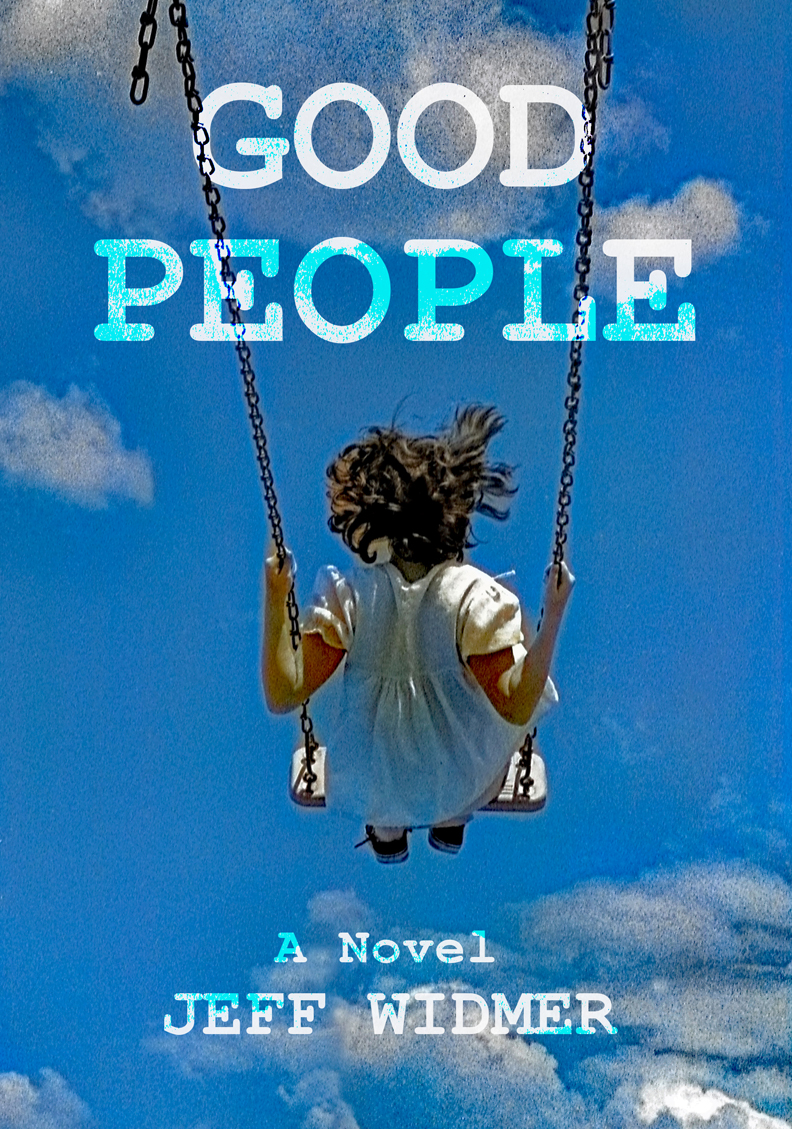
The capstone of the series, Good People, takes place as the family and the country enter the most intense period of the Cold War. Georgia yearns to break free from the isolation and grief that has gripped her for years. Marsh wrestles with a passion for possessions and the redhead next door. And ten-year-old Wil struggles with bullies, a violent cousin, and a surprising attraction to girls.

Conflicts explode as flirtations invite danger, the cousins uncover a spy, and an arsonist targets the town. Yet despite their loss, the Andersens continue to search for the goodness in others—as well as themselves.

Good People lays bare the dreams and desires of 1950s America. A story of trial and triumph, it illuminates a crucial time in history while shedding a light on our own.

Good People is on sale now. You can preview the novel here.

Second Pennsboro novel launches Aug. 18

The long awaited (at least by me) sequel to Distant Early Warning arrives today. Cold Fire continues the saga of the Andersen family as they struggle with the tragic aftermath of the Flood of ‘55. Georgia redoubles her fight to recover from unbearable grief. Marsh yearns for a safer home and the affection of his once-vibrant wife. And ten-year-old Wil retreats into the fantasy of TV to escape the confusing world of bullies, air-raid drills, and the girl next door.

There are new challenges, too, at home and abroad. While Sputnik has launched the space race, America’s conspicuous consumption has fueled a class war. Cold War paranoia pits neighbor against neighbor as word spreads of a spy in their midst. An explosion at the Russian couple’s farm, a near-fatal blizzard, and the death of a close friend threaten to shatter everyone’s peace.

Yet the Andersens’ greatest challenge has less to do with Communists than compassion. Each carries a secret fear—that unyielding fate is responsible for the tragedy consuming their lives. As each will discover that they alone hold the key to surviving their brave new world.

The launch of Cold Fire coincides with the 68th anniversary of the Flood of ’55. You can find both e-book and print versions here: https://amzn.to/44NtUMC

What people are saying about the work:

“Widmer’s writing is compelling, filled with empathy for his characters and sprinkled with gentle wit.”

— Ellen Brosnahan, The Second Mrs. Ringling

“Jeff Widmer is a master at putting the reader in the setting, and his gift for dialogue is unparalleled.”

— Jo Horne, Monica’s War

“Gripping and poignant, a satisfying and enlightening read.”

— Eric Sheridan Wyatt, In Loco Parentis

“A magnificent story. This book deserves a second read. And maybe more.”

Amy’s Bookshelf Reviews

Ten infamous episodes of the 1950s

People living in the 1950s faced a host of existential issues. Many reverberate with us today. Here are ten episodes and influences that shaped the culture, then and now.

10. The Korean conflict

9. Rosenberg executions

8. Hydrogen bomb

7. McCarthy Communist hearings

6. Polio epidemic

5. Flood of 1955

4. Death of Joseph Stalin

3. Building the DEW Line

2. Little Rock Nine

1. Sputnik

What would you choose for your top ten?

Next: 10 significant cultural influences

Jeff Widmer’s latest book is Distant Early Warning, a novel of the Cold War.

Replica of Sputnik 1, the first artificial satellite launched into space, Oct. 4, 1957

The final frontier

George Diller, the voice of NASA’s launch control, provided the commentary for many of NASA’s missions, from the space shuttle to the probes to Jupiter, Saturn and Mars. I interviewed the former Sarasota, Florida resident in 1978 and again a few years ago, as the shuttle program was ending. While Diller has embarked on his final frontier, retirement, his spirit lives on.

He is the voice of launch control. When the space shuttle takes off in a blaze of fire, the sound you hear over the roar of the rockets is George Diller, a former radio journalist turned spokesperson for the National Aeronautics and Space Administration.

I met Diller forty years ago on a runway at the Kennedy Space Center, at the dawn of the space shuttle program, when women and men dreamed of space flight as routine as taking the train to work. As a journalist I’d landed in Florida to cover the construction of the first shuttle that would fly into space, the orbiter Columbia. Diller, a contract public relations specialist assigned to show me the inner workings of KSC, gave me a glimpse at that future, and the vehicle that would take us there.

After thirty years we met again, this time by phone, for an interview about the legacy of the space shuttle program and the future of human space flight. This post was first published on June 12, 2017.

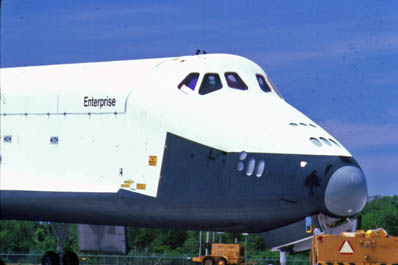
Space Shuttle Enterprise at the Kennedy Space Center (Photo © 2022 by Jeff Widmer)

JW: When people write the history of the space shuttle program, what will they say?

GD: I think it will be recalled as a storied program because the space shuttle has had so many different roles and mission objectives during the thirty years it’s been flying. Initially we looked at it as something that would take everything into space, both commercial payloads as well as NASA’s planetary spacecraft. At that time the International Space Station was still on the drawing boards.

The shuttle started by taking a combination of payloads, commercial payloads on a cost-reimbursable basis and then the other things that NASA wanted to put in low-earth orbit. As a stepping stone to the International Space Station we had Spacelab, designed to lay the groundwork for the space station. Some of our most historic payloads were deployed from the space shuttle bay, and they included the Hubble Space Telescope, the Galileo probe to Jupiter, the Magellan mission to Venus and the Ulysses mission to the sun.

After we resumed flying after the Challenger accident we had a very different objective. We looked to one day commercializing the space shuttle. We would move to the moon or Mars, leaving the private sector to do the lower-orbit missions. That is almost exactly what will happen under President Barack Obama’s mission. The Columbia accident also caused us to think of what the long term mission of the shuttle would be. We divested ourselves of the idea that the shuttle would be a commercial vehicle we could launch every two weeks, more as a delivery truck, and doing space science missions as well. We took it back to being a research-and-development spacecraft.

There are three more launches, including the one on May 14. The final launch will be in November but we’re still talking about one after that. (The last space shuttle launch, the Atlantis orbiter STS-135, launched on 8 July 2011.)

JW: What is the legacy of the shuttle program?

GD: The space shuttle gave NASA and human space flight the flexibility to do things that no other vehicle had done. Because of the size of the shuttle and the volume of payloads it could take into space, nothing else we can see can haul things that weight as much or are as outsized. The shuttle gave us a capability that we never had before and won’t have in the future.

JW: What has the shuttle program contributed to science and society?

GD: That’s what Spacelab was all about. We wanted to prove the kind of science we wanted to do on the International Space Station, in terms of developing new pharmaceuticals, computer substrates and metals. We were also testing whether humans could survive in space for long periods of time—six months or more. That has spun off to us here on the ground. We can take full advantage of that scientific and commercial innovation.

JW: You’re one of the voices of the launch of the shuttle. How do you feel when it takes off?

GD: For me it’s not much different than it was thirty years ago when we launched the first one. It is such an awesome feeling to see that power, to hear the sound and feel its effect on your chest. The visual effect is particularly alluring during a night launch. It is still thrilling to watch, fascinating and breathtaking.

JW: How do you feel when it’s coming in for a landing?

Workers assemble a solid-rocket booster in the Vehicle Assembly Building at the Kennedy Space Center (Photo © 2022 by Jeff Widmer)

GD: It’s pretty neat to watch if it’s in the daytime. You see it coming overhead like a silver streak. It’s dropping like a rock, extremely fast. As the wheels come down and the parachute comes out you’re dropping from thousands of miles an hour to about 200 miles an hour in a few minutes. When it goes by it sounds just like a jet.

JW: Do you get anxious when the shuttle comes in for a landing?

GD: I feel like we have a capability since the Columbia accident to know whether we have anything to be concerned about. I have a little apprehension in the launch control center while we’re waiting for Kennedy to make contact. We don’t have communications until 500 miles out and 12 minutes before landing. When we had Columbia going over Texas we were waiting for that contact to happen. We were having communications problems. We know in reentry there can be brief blackout periods. None of the acquisition systems here at the Cape could pick it up.

JW: What’s next for NASA?

GD: It’s still a little hazy. We know that President Obama has cancelled the Constellation program, which offered a smaller version of the shuttle to go back and forth to the space station and a larger version to go back to the moon. Obama has penciled out the craft to the moon. Astronauts will go on commercial rockets in about five years. Since the moon is not in the president’s vision for the agency, we might be going to an asteroid. But we have to have a vehicle different from the one that would go to the moon.

We’re developing technologies that that would go beyond the moon, and that’s going to take about five years to do. We have to decide what kind of rocket that is going to be, who is going to design it and who is going to build it. We need to develop new propulsion technologies.

The rockets that go to the space station will be owned by commercial interests. In the long term all things will be commercially launched by commercial space taxis. It’s not far from NASA’s mission of twenty-five years ago. It wanted to move on to higher programs. It can’t own and maintain all launch vehicles. Commercial rockets will be reconfigured so they can carry astronauts back and forth to the space station. We’re going to reconfigure Complex 39 and Cape Canaveral Air Force station for commercial low-earth orbits.

JW: What’s the future of human space flight?

GD: In the near term the International Space Station is where it’s at. The capabilities that NASA is going to help the private sector develop will create more human potential in low-earth orbit. Beyond that it’s a little hard for me to see. This change in direction from what we’ve be doing over the past five years is a 180, a completely different approach. You have to design and build a new propulsion system. You have to have funding. The legislative process has to weigh in. The Congress feels we need more answers. We’re going to need more time to see. In the meantime our geophysics loads will continue to be launched on unmanned vehicles. We’ve got some exciting planetary flights and earth observation satellite launches planned. That will all continue without missing a beat.

JW: You were there at the inception of America’s space shuttle program. How do you feel when you look back on it?

GD: I feel like I’m privileged to be with NASA. At some point in history we’ll look back at the shuttle much as we did the Apollo program. I was there for the first one and I’ll be there for the last one.

JW: Thanks. I’ll see you in another thirty years.

Jeff Widmer’s latest book is Distant Early Warning, a novel of the Cold War.

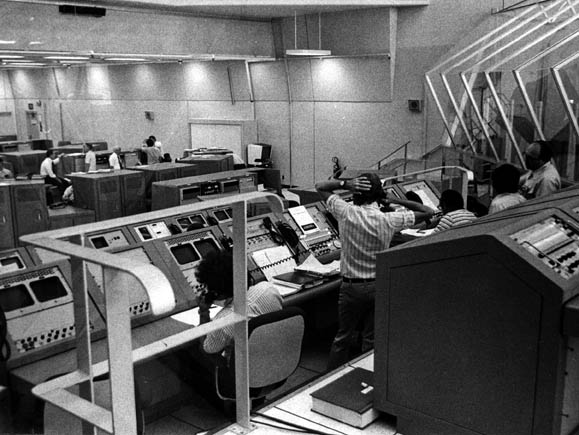
NASA’s firing room No. 2 under construction in 1978 at the Kennedy Space Center (Photo © 2022 by Jeff Widmer)