How many times have you read a novel and fallen in love with the location? (Fans of Ellis Peters and Nevada Barr, raise your hands.)
CW McCoy’s Spanish Point holds the same allure for those of us who, like CW, fled the darkness of the North for Florida’s Gulf Coast. The result is Spanish Point, a fictionalized mashup of the cities of Sarasota and Bradenton that isn’t the paradise it first seems.
Over the few weeks, we’ll look at the places in the region that inspired Curb Appeal, the third book in the mystery/suspense series featuring CW (Candace) McCoy, the former police detective turned real estate agent whose struggles with career and personal issues lead her into dangerous terrain.
While Curb Appeal is fiction, it’s the tragic attacks on real estate agents that form the backbone of the book—that and efforts by the National Association of Realtors to promote awareness and safety.
Each day on social media, we’ll take a look at the homes, boats and watering holes of CW’s friends and enemies as we reconcile the images of paradise with reality. I hope you’ll join us for a guided tour. In the meantime, here are a few deceptively ordinary images from the Gulf Coast.
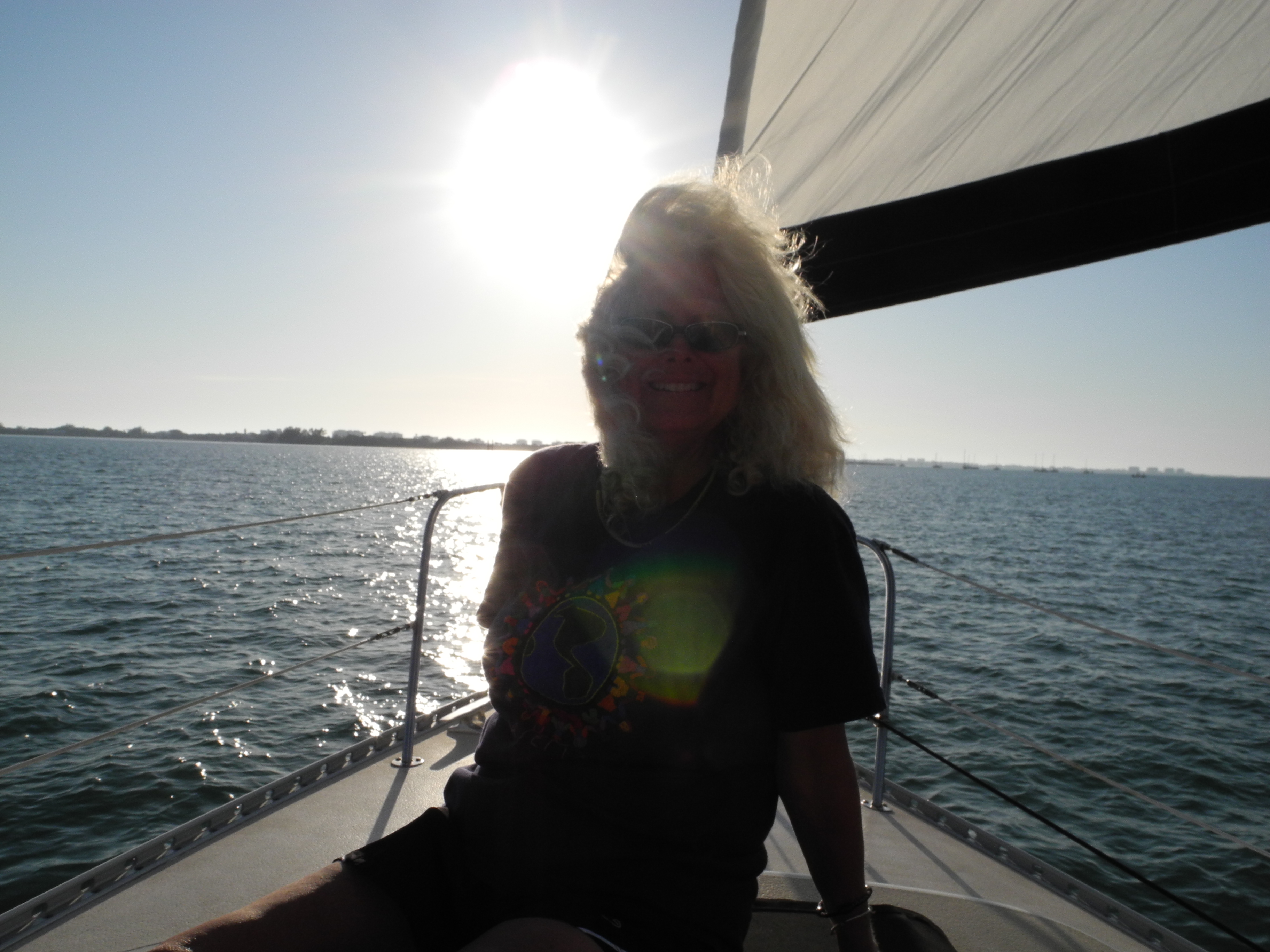
On the Gulf of Mexico near Siesta Key: sailing the high seas near sunset on a day that’s divine—until you turn your back.
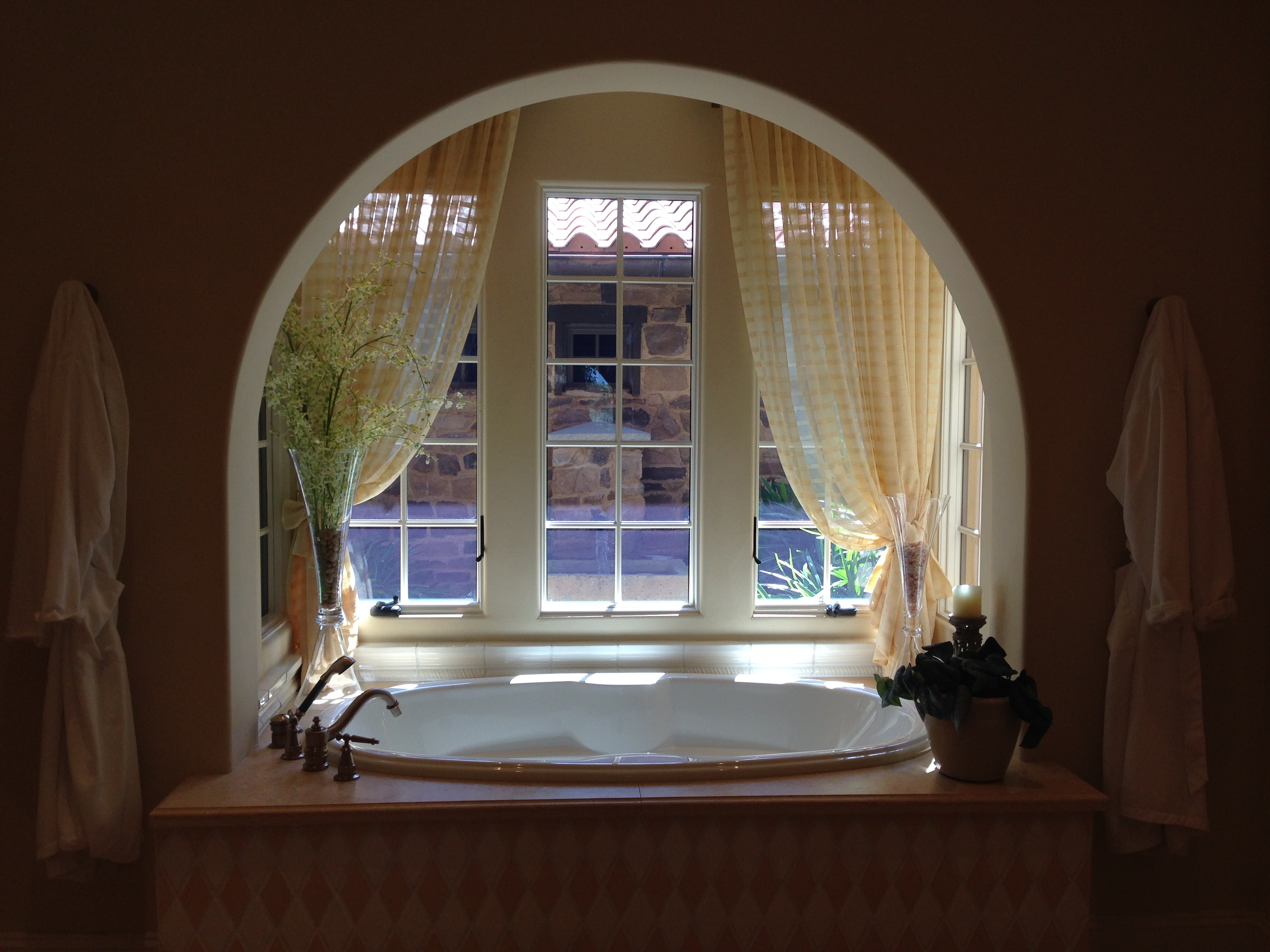
Lakewood Ranch luxury: remember the movie “Play ‘Misty’ for Me”? You may never go near a soaking tub again.
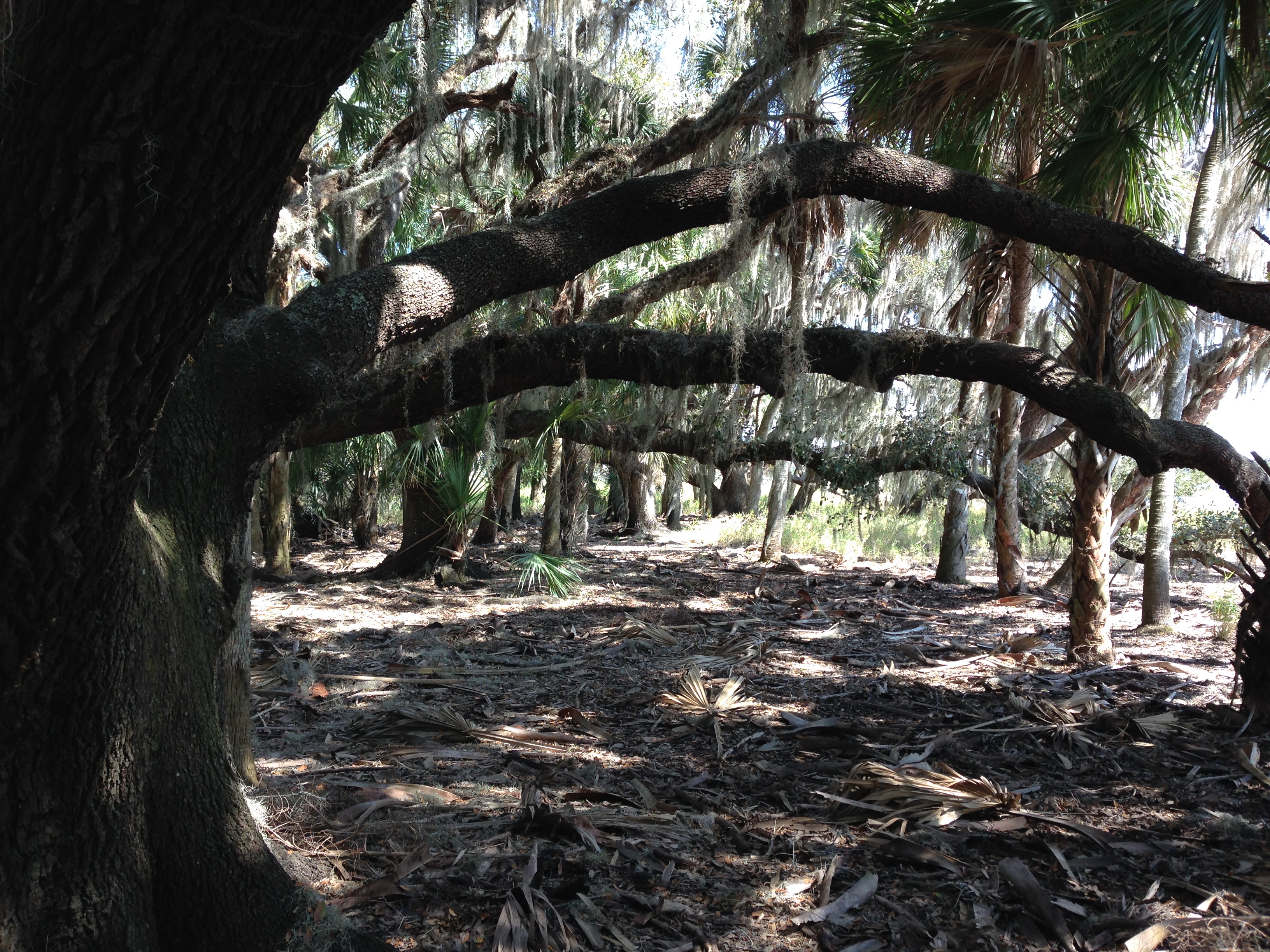
Myakka River State Park: the mysterious woods (and the alligators of Deep Hole) beckon the unsuspecting.
Curb Appeal, the third novel in the CW McCoy series about a detective turned real estate agent, may be fiction but it has its foundation in reality. And while the book isn’t based on a specific crime, it was spurred by a dangerous trend in a seemingly benign industry.
According to the National Association of Realtors (NAR), nearly 40 percent of Realtors report that they have experienced a work-related situation that made them fear for their safety. In 2013, 25 real estate professionals were the victims of homicide, according to the latest figures from the Bureau of Labor Statistics.
Crime against agents is not a new phenomenon. In the decade between 2003 and 2012, the bureau reported an average of 17 real estate homicides per year. It is, however, one that continues to threaten the industry. In the final weeks of 2016, two real estate agents were shot and killed while showing homes in Georgia and Texas, according to the NAR.
Set in a fictional city on Florida’s Gulf Coast, Curb Appeal opens with CW (Candace) McCoy discovering the naked body of a rival real estate agent, a black bra wrapped around her neck. It’s the least of CW’s problems. The hot new cop she’s dating may face assault charges. Relations with both her best friend and mentor have frayed. And back-to-back hurricanes threaten to flatten a city groaning under the weight of over-development.
As the deception and bodies mount, CW must uncover the truth about her friends, her lover and a serial killer bent on murdering fellow agents . . . before she becomes a victim herself.
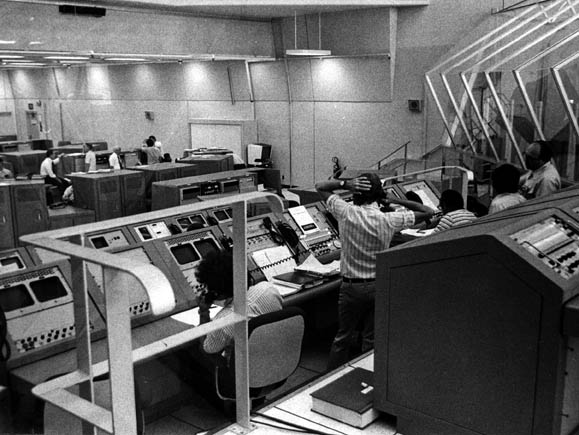
George Diller, the voice of NASA’s launch control, provided the commentary for many of NASA’s missions, from the space shuttle to the probes to Jupiter, Saturn and Mars. I interviewed the former Sarasota, Florida resident in 1978 and again a few years ago, as the shuttle program was ending. While Diller has embarked on his final frontier, retirement, his spirit lives on.
He is the voice of launch control. When the space shuttle takes off in a blaze of fire, the sound you hear over the roar of the rockets is George Diller, a former radio journalist turned spokesperson for the National Aeronautics and Space Administration.
I met Diller forty years ago on a runway at the Kennedy Space Center, at the dawn of the space shuttle program, when women and men dreamed of space flight as routine as taking the train to work. As a journalist I’d landed in Florida to cover the construction of the first shuttle that would fly into space, the orbiter Columbia. Diller, a contract public relations specialist assigned to show me the inner workings of KSC, gave me a glimpse at that future, and the vehicle that would take us there.
After thirty years we met again, this time by phone, for an interview about the legacy of the space shuttle program and the future of human space flight. This post was first published on June 12, 2017.
JW: When people write the history of the space shuttle program, what will they say?
GD: I think it will be recalled as a storied program because the space shuttle has had so many different roles and mission objectives during the thirty years it’s been flying. Initially we looked at it as something that would take everything into space, both commercial payloads as well as NASA’s planetary spacecraft. At that time the International Space Station was still on the drawing boards.
The shuttle started by taking a combination of payloads, commercial payloads on a cost-reimbursable basis and then the other things that NASA wanted to put in low-earth orbit. As a stepping stone to the International Space Station we had Spacelab, designed to lay the groundwork for the space station. Some of our most historic payloads were deployed from the space shuttle bay, and they included the Hubble Space Telescope, the Galileo probe to Jupiter, the Magellan mission to Venus and the Ulysses mission to the sun.
After we resumed flying after the Challenger accident we had a very different objective. We looked to one day commercializing the space shuttle. We would move to the moon or Mars, leaving the private sector to do the lower-orbit missions. That is almost exactly what will happen under President Barack Obama’s mission. The Columbia accident also caused us to think of what the long term mission of the shuttle would be. We divested ourselves of the idea that the shuttle would be a commercial vehicle we could launch every two weeks, more as a delivery truck, and doing space science missions as well. We took it back to being a research-and-development spacecraft.
There are three more launches, including the one on May 14. The final launch will be in November but we’re still talking about one after that. (The last space shuttle launch, the Atlantis orbiter STS-135, launched on 8 July 2011.)
JW: What is the legacy of the shuttle program?
GD: The space shuttle gave NASA and human space flight the flexibility to do things that no other vehicle had done. Because of the size of the shuttle and the volume of payloads it could take into space, nothing else we can see can haul things that weight as much or are as outsized. The shuttle gave us a capability that we never had before and won’t have in the future.
JW: What has the shuttle program contributed to science and society?
GD: That’s what Spacelab was all about. We wanted to prove the kind of science we wanted to do on the International Space Station, in terms of developing new pharmaceuticals, computer substrates and metals. We were also testing whether humans could survive in space for long periods of time—six months or more. That has spun off to us here on the ground. We can take full advantage of that scientific and commercial innovation.
JW: You’re one of the voices of the launch of the shuttle. How do you feel when it takes off?
GD: For me it’s not much different than it was thirty years ago when we launched the first one. It is such an awesome feeling to see that power, to hear the sound and feel its effect on your chest. The visual effect is particularly alluring during a night launch. It is still thrilling to watch, fascinating and breathtaking.
JW: How do you feel when it’s coming in for a landing?
GD: It’s pretty neat to watch if it’s in the daytime. You see it coming overhead like a silver streak. It’s dropping like a rock, extremely fast. As the wheels come down and the parachute comes out you’re dropping from thousands of miles an hour to about 200 miles an hour in a few minutes. When it goes by it sounds just like a jet.
JW: Do you get anxious when the shuttle comes in for a landing?
GD: I feel like we have a capability since the Columbia accident to know whether we have anything to be concerned about. I have a little apprehension in the launch control center while we’re waiting for Kennedy to make contact. We don’t have communications until 500 miles out and 12 minutes before landing. When we had Columbia going over Texas we were waiting for that contact to happen. We were having communications problems. We know in reentry there can be brief blackout periods. None of the acquisition systems here at the Cape could pick it up.
JW: What’s next for NASA?
GD: It’s still a little hazy. We know that President Obama has cancelled the Constellation program, which offered a smaller version of the shuttle to go back and forth to the space station and a larger version to go back to the moon. Obama has penciled out the craft to the moon. Astronauts will go on commercial rockets in about five years. Since the moon is not in the president’s vision for the agency, we might be going to an asteroid. But we have to have a vehicle different from the one that would go to the moon.
We’re developing technologies that that would go beyond the moon, and that’s going to take about five years to do. We have to decide what kind of rocket that is going to be, who is going to design it and who is going to build it. We need to develop new propulsion technologies.
The rockets that go to the space station will be owned by commercial interests. In the long term all things will be commercially launched by commercial space taxis. It’s not far from NASA’s mission of twenty-five years ago. It wanted to move on to higher programs. It can’t own and maintain all launch vehicles. Commercial rockets will be reconfigured so they can carry astronauts back and forth to the space station. We’re going to reconfigure Complex 39 and Cape Canaveral Air Force station for commercial low-earth orbits.
JW: What’s the future of human space flight?
GD: In the near term the International Space Station is where it’s at. The capabilities that NASA is going to help the private sector develop will create more human potential in low-earth orbit. Beyond that it’s a little hard for me to see. This change in direction from what we’ve be doing over the past five years is a 180, a completely different approach. You have to design and build a new propulsion system. You have to have funding. The legislative process has to weigh in. The Congress feels we need more answers. We’re going to need more time to see. In the meantime our geophysics loads will continue to be launched on unmanned vehicles. We’ve got some exciting planetary flights and earth observation satellite launches planned. That will all continue without missing a beat.
JW: You were there at the inception of America’s space shuttle program. How do you feel when you look back on it?
GD: I feel like I’m privileged to be with NASA. At some point in history we’ll look back at the shuttle much as we did the Apollo program. I was there for the first one and I’ll be there for the last one.
For CW McCoy, appearance aren’t just deceptive. They’re deadly. Which is why the former detective turned real estate agent can trust no one, including herself, in Curb Appeal, her third adventure exploring the dark side of the Sunshine State.
While showing a mansion on tony Spanish Key, CW discovers the naked body of a rival real estate agent, a black bra wrapped around her neck.
It’s the least of CW’s problems. The hot new cop she’s dating may face assault charges. Relations with both her best friend and mentor have frayed. And back-to-back hurricanes threaten to flatten the coast.
As the deception and bodies mount, CW must uncover the truth about her friends, her lover and a serial killer bent on murdering fellow agents . . . before she becomes a victim herself.
Curb Appeal will be published on June 7 but you can preorder the e-book version through Amazon, Barnes & Noble, iTunes and Kobo.
UK blogger Natalie Rowe, who gave Peak Season four stars, thinks Mila Kunis should play CW McCoy . . . if Candace and her crew ever make it to the big screen.
Natalie writes, “The thing that is most memorable to me about CW is her quick wit. To me, there is no other person that could give CW this unique sarcasm like Mila Kunis can in her roles. She can play the bad-ass independent lady but also add in a little sass and seductiveness.”
Sassy and seductive. . . . Is that how you see the young former detective who faces down kidnappers, assassins and tourists on a daily basis? And here I was thinking Scarlett Johansson on a motorcycle. Or Six Feet Under’s Rachel Anne Griffiths, or is that over the top?
Who do you think should play CW? Leave your comments here.
“There is only one reason to write,” says Sarasota author Anna Schmidt. “That is because you can’t not write.”
Anna, known to her friends as Jo, has written for therapy, but for most of her career, she’s written for publication. She is the author of several series of inspiration and romance, including ones set during World War II (All God’s Children), in Sarasota’s Pinecraft Mennonite community (A Sister’s Forgiveness) and in the Southwest (The Lawman).
She shared her experience this week with members of Sarasota Fiction Writers.
Her advice for emerging authors?
Build a track record in your genre and develop a following
Don’t chase trends (unless your agent and editor tell you to)
During dry spells, attend events and conferences outside your area of expertise (for Jo, that’s mystery and suspense)
Join book clubs and writers’ groups
Read outside your genre.
She ended the program by giving away copies of her latest book. Surprised by her generosity, the moderator asked why. With a sly smile she said, “The publisher sent me forty copies. What else am I going to do with them?”
Working on Curb Appeal, the third novel in the CW McCoy series (after Peak Season and Tourist in Paradise), I realize that I write backwards.
In school, we learned to organize our material using an outline. I’ve adopted that technique to sort large amounts of material when writing nonfiction. The tool came in handy when I worked for Mack Trucks and had to find a lead buried in hours of interviews. I used a highlighter and flagged passages that were important to the telling of the story, writing subheads for those highlights and prioritizing them so they flowed in a logical way.
Digging out the nuggets from a pile of information seemed a more organic process than writing an outline. The process allowed the structure of the piece to grow from the material, the research and interviews from primary sources. But when it comes to fiction, I seem unable to follow that scholarly advice.
I write backwards.
Yes, I have a solid idea of the nature of the characters and the arc of the story, but I don’t know the exact scope and sequence of the work. I discover that as I write.
And then I write the outline. In fiction, it’s called a synopsis, a summary that’s written with the same flavor as the novel. It’s longer than a logline and shorter than a chapter-by-chapter description of character and action. But, like a GPS device, it can keep me on track.
Location plays a vital part in any novel, especially novels of mystery and suspense. I’ve written about place as character several times but now, thanks to author and blogger Lorna Holland of Northamptonshire UK, my musings on crime scenes in sunny Florida have made it to the other side of the pond.
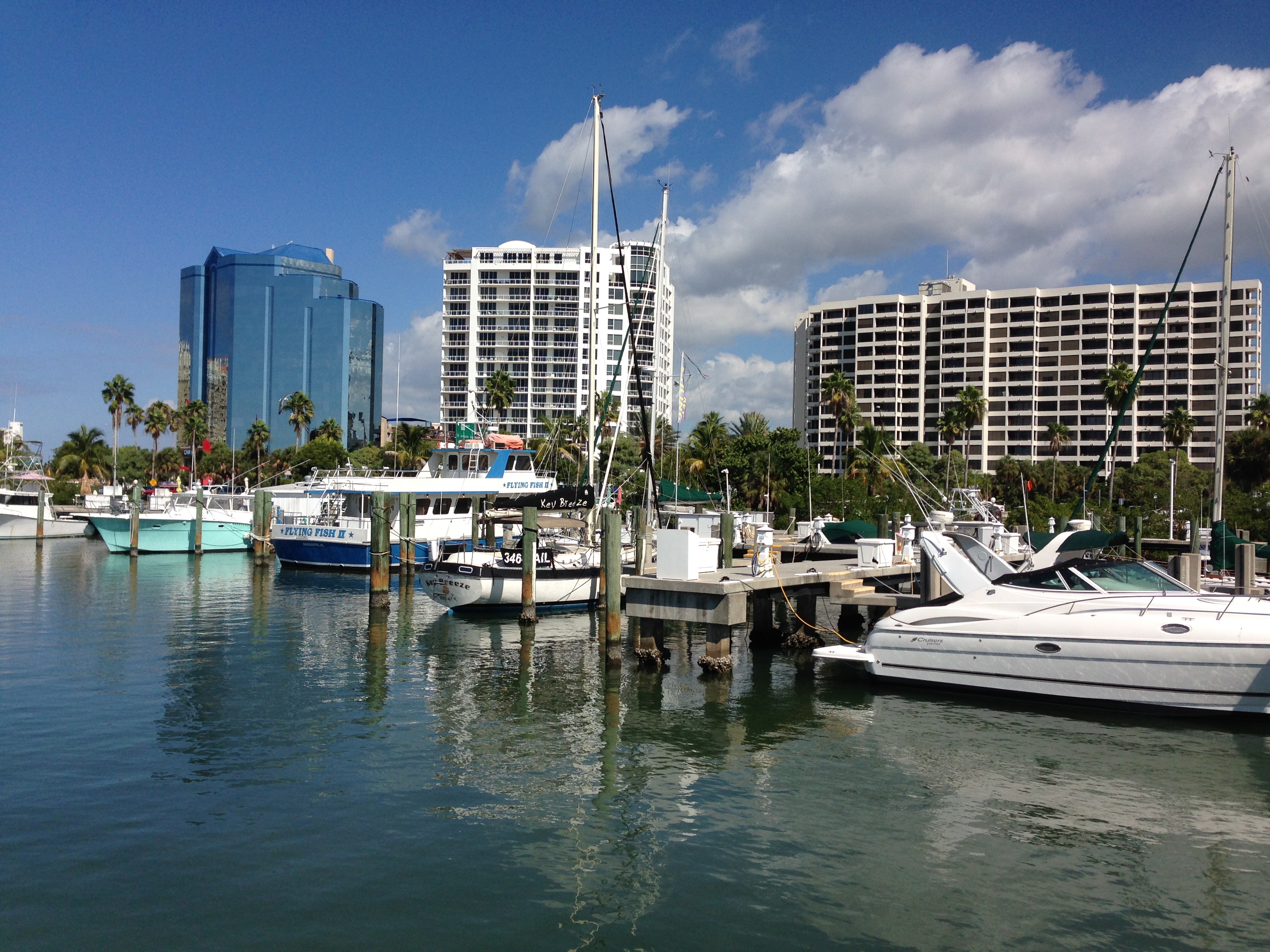
The marina in Sarasota, Florida provided the inspiration for the CW McCoy novels
Sybarite5, the rock stars of the classical world, return to the home of their founder with a week-long residency in Sarasota, Florida. For me, the highlight will be an 8 p.m. concert Thursday, Nov. 10, in the Goldstein Cabaret of Florida Studio Theatre. In honor of their return, I’m reposting a piece I wrote in April of 2013. Enjoy.
Someone left the radio tuned to a station that programs NPR’s Weekend Edition on Saturday mornings. As I reached for the dial to switch to a classical music station, Fred Child, the host of Performance Today, cued up Astor Piazzolla’s “La Muerte del Angel” by the string quintet Sybarite5, recorded live in Holley Hall in Sarasota, Florida.
My wife and I had just seen a series of bracing concerts there, and so I stepped into the shower . . . and back a lifetime to a concert by the Guarneri Quartet, who played Bartok’s String Quartet No. 1 with an intensity that shredded their bows. And here was a quintet whose founder came from Sarasota and who could play with the same nuance and fervor. Not what you would expect from a laid-back city by the sea.
Then Child announced that Sybarite5 had recently recorded an album of Radiohead covers. Time to step out the shower and learn a bit more about the group.
Named after the ancient Greek city in southern Italy now identified with seekers of pleasure and luxury, Sybarite5 is the first string quintet ever selected as winners of Concert Artists Guild International Competition in its 60 year history. The media have compared the group to rock stars who play with missionary zeal. Its members have performed in traditional venues (Carnegie Hall) as well as nontraditional ones (the CBS Early Show).
And while their repertoire includes composers known in the classical world, such as Piazzolla and Mozart, the quartet released a recording of covers of the music of Radiohead called “Everything in its Right Place,” following in the wake of another musical pioneer, pianist Christopher O’Riley, the host of NPR’s From the Top, who has released several transcriptions of Radiohead music.
Sybarite5 was founded by double bassist and former Sarasota resident Louis Levitt. In addition to his work with Sybarite5, Levitt has been featured on chamber music appearances that have included the Aspen Music Festival as well as performances with Grammy winning composer Bob James. He has also performed with the Sarasota Orchestra. He recently became the first ever double bassist to win the Concert Artist Guild Competition.
As for the other members of the quintet, many have a foot in both classical and contemporary worlds:
Laura Metcalf, cello, was featured as a soloist with the One World Symphony playing an arrangement of Messiaen’s Quartet for the End of Time.
Sarah Whitney, violin, led the Cleveland Central Philharmonic Chamber Orchestra as concertmaster on tour to Carnegie Hall.
Angela Pickett, viola, performs with the Princeton Symphony and has played the fiddle with numerous ensembles, including the Chieftains.
Sami Merdinian, an Argentinian violinist, has received worldwide recognition for his performances as a soloist and chamber musician, including his work with the Perlman Chamber Music Workshop, which holds a winter residency in Sarasota.
I’m downloading another of the group’s recordings now, the EP “Disturb the Silence.” It features music by Radiohead and Piazzolla, plus two original works written for the quintet, and made its debut at number 11 on Billboard’s Classical Crossover chart.
In fiction, when does setting become a character? When does location move from background to foreground?
Readers from Pennsylvania to Florida have called out locales they recognize in both the CW McCoy and Brinker series of crime novels. Even with altered geography and names, those places seem to resonate like the voice of a friend.
As they did with me while doing research for Tourist in Paradise, Peak Season and Mr. Mayhem. Here, then, are some of the images that inspired the characters that inhabit those books. As well as the writer.
Sarasota marina, similar to the one where Walter Bishop berths his sailboat in CW McCoy novels
Sansara condos in Sarasota, one of the models for the massive DeSoto Park complex in Tourist in Paradise
Farmers Market in downtown Sarasota, where CW and Tony Delgado meet in Peak Season
The Sarasota skyline inspired creation of CW McCoy’s Spanish Point
Sarasota Police Dept. inspired Spanish Point’s PD where Cheryl, Oz and Delgado work
Drumming the sun down at Siesta Beach, where CW finds a second body in Peak Season
Key Breeze stands in for the galley of the Mary Beth, where CW finds an unconscious Walter Bishop in Tourist in Paradise





 Jeff Widmer