But our intentions were good

Our writers’ group had a discussion this morning about the use of AI to generate content. Is it a high-tech form of plagiarism? Does the work to which it is applied constitute original art? Digitally generated voices have already rendered obsolete the narrators of audio books. Will AI do the same to writers?

To illustrate the dilemma, one of the authors said he was astonished at the accuracy and sophistication of the answers he’d received after asking Microsoft’s AI assistant to summarize the chapters of his memoir. He’s about to pitch the book to an agent and was looking for a convenient way to describe the work.

Another writer said she’d used AI to generate a summary for the back cover of her memoir and felt pleased with the result.

I’ve used AI for research but never for pitching or publication. So, when the meeting ended, I uploaded the text of my first novel and asked Microsoft’s Copilot to write a summary for an agent. It might have taken 18 seconds to get an answer. It wasn’t what I’d expected.

I’ll let you judge whether it’s appropriate. But first, some background.

Peak Season is the first in a series of crime novels featuring a former police officer turned real estate agent and a retired state trooper who virtually lives on his boat along the Gulf Coast of Florida. It is a mystery novel, popular fiction that tackles a number of contemporary issues such as property rights and the environment.

I pitched the manuscript to a number of agents. This was before ChatGPT and other large-language models came into vogue, so my email was entirely human-generated. Here’s what I sent:

Dear [agent’s name redacted]:

She’s the wrong person in the wrong place at the wrong time.

Responding to a domestic disturbance, CW (Candace) McCoy is forced to shoot a fellow police officer to prevent the death of his wife and child. Internal affairs rules the shooting justified. CW can’t and fears she’s inherited the killer gene from her father. Refusing to carry a gun, she quits the force and escapes to Southwest Florida to sell real estate, care for the grandfather who took her in after the murder of her family, and silence the demons that threaten her new life. But even in paradise during peak tourist season, there’s no outrunning bad blood.

Original book cover

Declared dead by the courts, Bobby Lee Darby appears in CW’s office to demand the family friend clear his name in a scheme to bilk millions from investors. When CW refuses, the fugitive financier kidnaps her grandfather and triggers a chain of burglary, assault, and murder that convinces local police the former cop has gone rogue.

Racing to find Darby and her grandfather, CW must confront her violent past, risky affairs, and love-hate relationship with Florida before those personal demons turn her new-found paradise into hell on earth.

A former journalist with Dow Jones, I am the author of The Spirit of Swiftwater and other books, with an eponymous website (jeffwidmer.com) and an extensive social network.

Since you look for new voices in women’s suspense and represent [authors’ names redacted], I think the CW McCoy series would make for a good fit with your agency.

I’ve included the first three chapters below. Would you like to see the complete 72,000-word manuscript and the first chapter of the second book in the series?
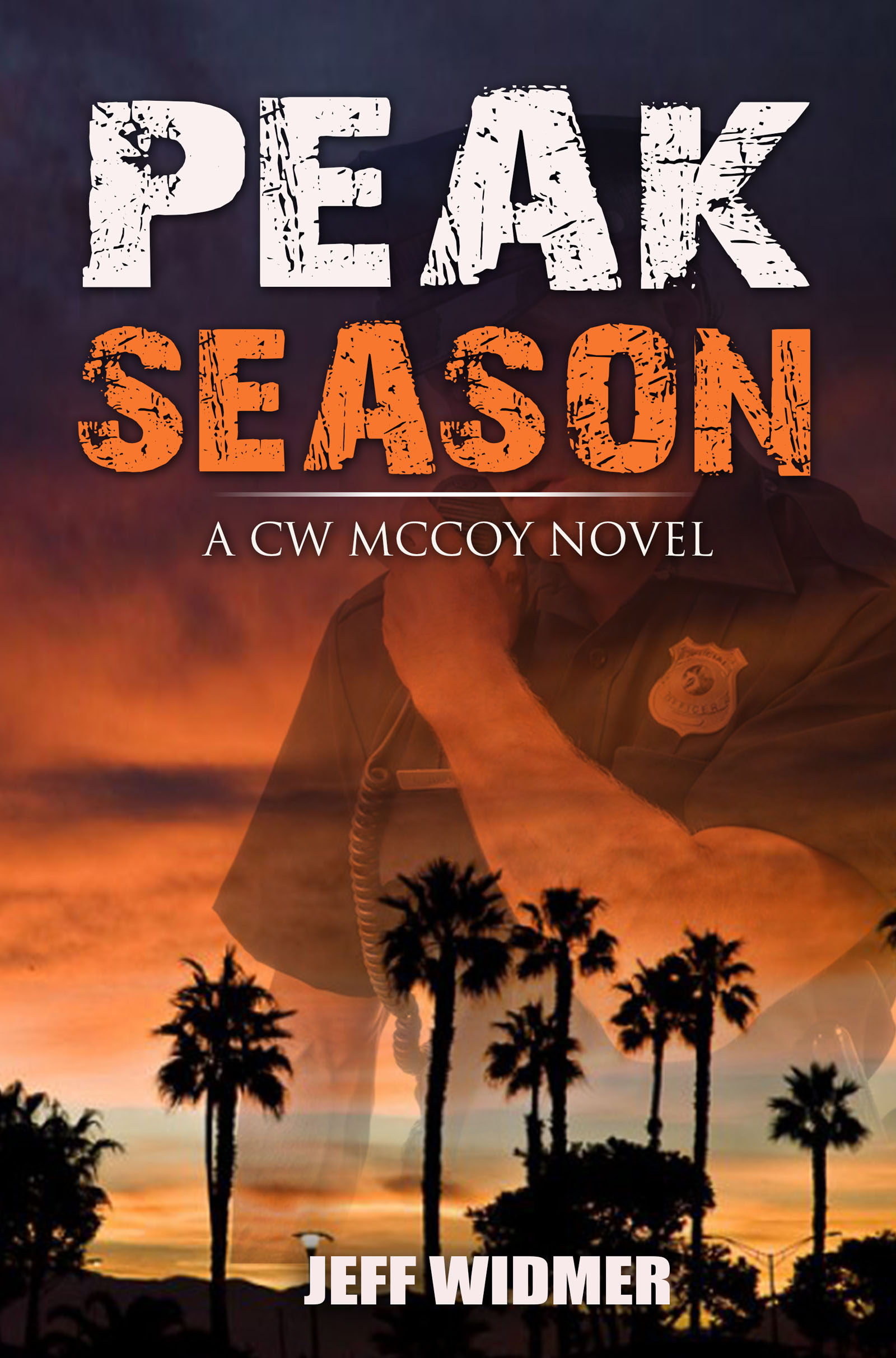
OK. Despite my heroic effort, that letter didn’t work, and I wound up independently publishing the novel in 2014. But what if I were to pitch a rewrite and use AI to generate the query letter? When I fed the text of the entire manuscript into Copilot, I got this:

Dear [Agent Name]:

I am thrilled to introduce Peak Season, a novel that captures the electric tension between fleeting beauty and the transformative impermanence of life. Set in a sun-drenched coastal town where every summer day burns with both promise and poignancy, this story follows [Protagonist Name], a determined soul navigating the dizzying interplay of desire, loss, and rebirth. As the town swells with the vibrant energy of peak tourist season, long-hidden family secrets, unexpected romances, and personal reckonings emerge, forcing our heroine to confront the true cost of chasing a dream—even when that dream burns as bright as the midsummer sun.

AI-generated cover

At its heart, Peak Season is a deeply atmospheric exploration of the human spirit. It invites readers to savor the bittersweet cadence of relentless change: the ephemeral thrill of new beginnings and the heart-wrenching inevitability of endings. Through lyrical prose and raw, immersive storytelling, the novel paints an intimate portrait of individuals who, like the turbulent coastal tides, are in constant flux—seeking meaning in moments both fleeting and profound.

I believe that Peak Season will resonate with readers who appreciate literature that not only entertains but also challenges them to reflect on the impermanence and intensity of life. Its richly woven narrative and authentic emotional depth offer a fresh voice in contemporary literary fiction—a voice destined to captivate audiences in today’s dynamic literary landscape.

Thank you for considering this submission. I would be delighted to send you the full manuscript and discuss how Peak Season can find its place among today’s most compelling literary works.

Warm regards,
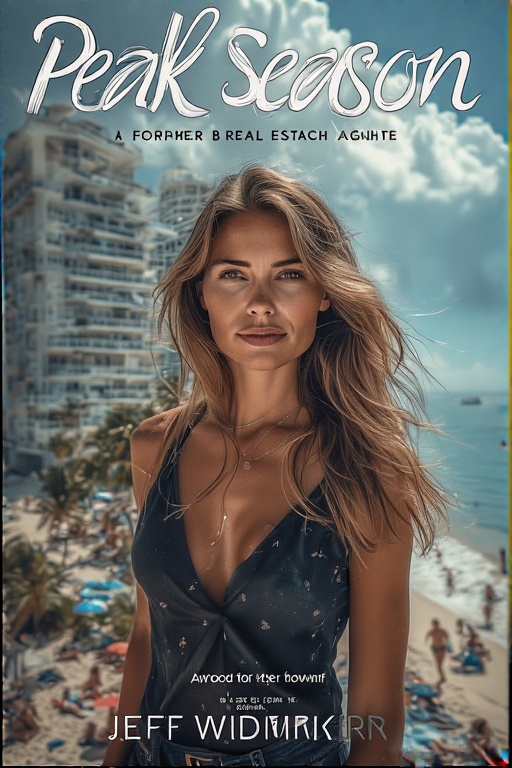
The transformative impermanence of life? I’ll accept raw, immersive storytelling. Even a fresh, contemporary voice. But literary fiction? A bridge too far, and an inaccurate reading of the tone of the book, which is more Chandler and Evanovich than Proust or Joyce.

But enough of my views. What do you think? Is AI the shortcut to greater productivity and happiness or a Trojan Horse we’ll live to regret?

Ask your computer or phone. They’ll know.

Dr. Watson explores the dark side of ‘Mr. Mayhem’

Alan Wade is a busy man. When he’s not teaching theater at The George Washington University, he’s acting in plays (King Lear), movies (The Pelican Brief) and TV (House of Cards Season 4).

He’s also narrating audiobooks, including Mr. Mayhem, the first in my series of crime novels starring a defrocked journalist turned PR whiz named Brinker. And one by another chap, fellow named Watson. Ring a bell?

Alan took some time recently to talk about the influence of stage and screen on audiobook narration.

Alan Wade as the drunken clerk in Shaw’s “Augustus Does His Bit” for the Washington Stage Guild (Colin Hovde Photography)

Alan Wade as the drunken clerk in Shaw’s “Augustus Does His Bit” for the Washington Stage Guild (Colin Hovde Photography)

What’s the most challenging part of audio narration?
Being in a confined space for a few hours. Thankfully, I’m not claustrophobic!

Who are some of your favorite authors and why?
Well, here’s a clichéd response: Shakespeare tops my list. His work simply does not exhaust an exploration of human character and motivation, and it’s the locus for a discussion of an extensive range of ethical, political, and social issues. Samuel Beckett comes in second for me. Clearly, not a popular dramatist, but, like Shakespeare, though with a much narrower social purview, Beckett is sensitive to the richness of human character and motivation. It would perhaps not be a surprise that the first one-person theater show I did was based on Beckett’s prose work (I, from the Prose of Samuel Beckett at Chicago’s Victory Gardens Theater), and that the second was comprised of scenes from Shakespeare’s plays (Shakespeare in Soliloquy).

How do you prepare to perform an audio piece?
I do articulation exercises and drink water. I don’t read the book in its entirety as that would not be “cost-effective.” I skim a chapter before I do it to see what characters are involved.

When you’re narrating a work with multiple characters, how do you differentiate among them?
Let’s take Brinker as an example. There were two traits that led me to his voice, which I will characterize as harsh or “gravelly.” The first is his attitude: he’s a wise-ass. The second is his substance abuse, pretty much of all kinds. This suggested to me that he wouldn’t have a healthy voice (contrast his with my rendition of the Colonel’s voice).

So, a character’s attitude, whether it’s a male or female character, dialect or accent requirements (assuming I can do them credibly), and certain vocal stereotyping of character (a “whiner” might be nasal in vocal resonance).

What new and exciting projects do you have coming up?
Coming up for Audible is a new Sherlock Holmes collection for which I’m delighted to “be in England” as Dr. Watson.

Listen to the second chapter of Mr. Mayhem as Alan Wade brings Brinker and the cast to life:

Veteran actor brings ‘Mr. Mayhem’ to life

Alan Wade is a character. It’s a description he likes, one that has brought him work in theater (King Lear), movies (The Pelican Brief) and television (House of Cards Season 4). And one of the reasons he was drawn to the narration of Mr. Mayhem, the first in my series of crime novels starring a defrocked journalist turned PR whiz named Brinker.

Alan is a veteran of film, television and stage. Actor, writer and director, he has appeared in regional theater and off-Broadway, as well as television (Homicide) and film (The Pelican Brief, Major League II).

For almost four decades he has served as a professor of speech communications and theater at The George Washington University and directed 30 plays there. His professional work has won praise from After Dark magazine and The Washington Post.

For his latest project, Alan drew on his extensive stage experience to bring the dark story of Mr. Mayhem to life as an audiobook, as he explains in this two-part interview, conducted shortly after he finished the narration.

Alan Wade as Sgt. Rough in “Angel Street” for the Olney Theatre Center with Julie Ann Elliott (Stan Barough Photography)

Alan Wade as Sgt. Rough in “Angel Street” for the Olney Theatre Center with Julie Ann Elliott (Stan Barough Photography)

Tell us a bit about the path you took to a career in acting and narration.
I was a freshman in high school when the “bug bit.” I took some after-school courses, went on to Northwestern University’s theater program, to Catholic University’s drama program (M.A.), and back to Northwestern for a Ph.D. in what is now Performance Studies. Intertwined with this academic work was a stint as a resident actor at Center Stage in Baltimore.

You’ve appeared in everything from King Lear to The Pelican Brief. How has stage and television influenced your voice work?
Well, I’m what is thought of, certainly now, as a character actor, which can often involve roles differentiated in part by changes in vocal characterization: dialects, accents, vocal qualities, and other speech mannerisms. My first Equity role was as Billy Bibbitt in One Flew Over the Cuckoo’s Nest at Center Stage. Billy suffers from a pronounced stammer.

How does audiobook narration differ from your other projects?
You’re by yourself and, for someone like me who enjoys the culture of theater and its sociability, this aloneness is a pronounced difference. I’ve done two one-person shows during my stage career, so I’ve had a performance experience that approximates being in a booth alone, but there was always the audience to provide companionship.

What do you like best about voice acting?
In the case of audiobooks, it’s somewhat self-directed (though you do interact with the author and sometimes a producer), so there is a larger creative component to voice acting of this kind.

Next: the challenge of multiple characters.

Listen to Alan Wade bring Brinker to life in the first chapter of Mr. Mayhem:

‘House of Cards’ actor narrates thriller ‘Mr. Mayhem’

Murder is murder, whether it’s in a play by Shakespeare or a popular television show. Which is one of the reasons House of Cards actor Alan Wade agreed to narrate Mr. Mayhem, the first in a series of crime novels I’ve written to feature the defrocked journalist turned PR whiz known as Brinker.

Alan Wade at mike“There were two traits that led me to his voice, which I will characterize as harsh or gravelly,” Wade said. “The first is his attitude: he’s a wise-ass. The second is his substance abuse, pretty much of all kinds.”

Mr. Mayhem has garnered widespread praise from the critics. Kirkus Reviews calls the work “eccentricity at its finest in a detective story, and proof that a flawed protagonist can still earn sympathy.” And My House Our House author Louise Machinist says the novel “socks you in the gut like a shot and a beer. The mayhem never stops in this plot-driven thriller in creepy small-town PA, where there’s not a hero to be found.”

Set in the snowy mountains of Northeast Pennsylvania where I was raised, Mr. Mayhem is published by Allusion Books and available through Audible, Amazon, iTunes, Barnes & Noble, Kobo and my website.

Listen to the audio sample as Alan brings Brinker and his crew to life.

Juggling the multiple voices in our heads

In Part 1 of our interview with  Peak Season narrator Pamela Almand, she talked about how a career in flying helped her second career as a narrator take off. In Part 2 she hones in on the joys and trials of audiobook narration. Pam and I talked about her career and her company, The Captain’s Voice, via email in late October.

Who are some of your favorite authors and why?

I’ve always loved suspense and thrillers. Dave Baldacci, Harlan Coben, Vince Flynn, Grisham, Brad Thor. . . . Unfortunately, male suspense authors don’t often use female narrators unless, like in Peak Season, their protagonist is a woman. I love the opportunity to narrate strong female protagonists like CW McCoy. That is where my strengths and deeper voice can really shine, and I love books where I get to add a touch of sarcasm or sassiness to the character.

I also really enjoy non-fiction from Thomas Sowell, Bill Bryson, Charles Krauthammer and others, but don’t have a lot of time to read them. I’d love to narrate any of their books, though, and that is where a lot of documentary and e-learning work helps me. The non-fiction author has a purpose and motive for writing and my job is to capture his or her passion and enthusiasm for their subject matter. And I’d love to narrate Ann Coulter. Although I don’t always agree with her, I love the combination of dry wit, snarkiness and intelligence with which she writes.

Pam Almand recordingDo you have a favorite book or project?

That’s the toughest question yet, Jeff. I can honestly say I’ve enjoyed just about all my projects as new and interesting learning opportunities, with the possible exception of a very dry, 10-hour narration on rules and regs on the handling of toxic chemicals (but it paid very, very well, so I’m not complaining.)

Which characters are your favorites to play?

Strong female protagonists with many facets to their emotions and personalities . . . and I always enjoy doing over-the-top characters where I can play with crazy accents and dialects.

How do you prepare to perform an audio piece?

Since I love to read, and read fairly fast, many times I’ll have read a book in its entirety before I decide whether to audition for it. If not, I’ll read the book and annotate it at the same time; each character has a distinctive voice, and many times you don’t find out details about it when the character’s first introduced. Halfway through the book, there might be a note that “the slight hint of her German background was obvious when she shouted at him” or “that morning his high whiny voice just drove her nuts.”

I’ll also practice a particular voice I want to use for a character and record a sentence or two for reference and make a separate audio file for each character who doesn’t appear regularly.

Then I jump into the studio and start telling the story, to myself more than the listener.

When you’re narrating a work with multiple characters, how do differentiate among them?

I mark them with individual highlight colors and notations on characteristics I need to know and I kinda try to feel out each major character in different emotions in the voice I’ve chosen for them, if that makes any sense.

And I don’t try to sound just like a man but only to suggest the difference through a bit of gravel perhaps, a flatter delivery, maybe a more resonant delivery. One of the best things I heard from Pat Fraley in a coaching session was that men don’t all have low voices, women don’t all have high voices. Duh. It seems obvious but it’s a common misinterpretation. Pat is a great coach for the sheer number of distinct sounds he can produce from that smiling mouth of his.

What new and exciting projects do you have coming up?

The release of Peak Season in audiobook is the most exciting right now. Lots of marketing and promo for that and a couple of other audiobooks. And I have a documentary piece coming up for a Christian non-profit on sex trafficking as well as a United Nations video directed by a wonderful client in Barcelona. And then the usual smattering of other work that comes up in a normal week.

And, of course, I’m eagerly awaiting CW McCoy’s newest adventures. I love this woman and love getting to live her life vicariously narrating your novels.

Beach-town thriller ‘Peak Season’ debuts in audio

I heard CW McCoy before I saw her face.

The heroine of my first crime novel was listening to a fugitive con artist make the case for clearing his name. CW did what I bet most former police officers would do: she kicked the guy to the curb.

Feisty, I thought, from the low, smooth voice to the Spenser-like banter. Maybe I should take notes.

I did, and the result was Peak Season, a novel set in the tony Florida beach town of Spanish Point. The work came out this summer in ebook and paperback formats. And while that satisfied my itch for publication, I kept hearing the dialog and realized CW wanted her own voice.

She has finally gotten it. After months of preparation, Peak Season is now available as an audiobook through Amazon, Audible and iTunes. The recording sounds just as I envisioned it, thanks to the powerful narration by Pamela Almand, who captures CW’s grit as well as the nuanced voices of her mentor, friends and enemies.

At first I had some doubts. Everyone said that writing from a woman’s point of view would prove challenging. So it felt like a victory to hear Pam bring the fellow risk-taker to life. CW may surrender her gun and badge but she will never surrender her spirit, and Pam’s rich tone and nuanced reading make that spirit sound very real.

If you’re a fan of Lorelei King’s wonderful rendition of the Stephanie Plum books, you’ll enjoy Pam Almand. It’s a voice that will ring in your ears long after she turns the last page.

You can listen to a free excerpt of Peak Season at Audible or iTunes.

Peak Season Audible

Now hear this . . . tips on creating audiobooks

Kids aren’t the only people who like to hear a story.

According to the Pew Research Center, 14% of Americans listened to an audiobook in 2013. Adults with higher levels of education are more likely to have read audiobooks than those who did not attend college. And the vast majority of those who read e-books and audiobooks also read print books.

Good news for writers who like to listen to as well as tell stories.

Convinced audio could prove a way to boost my audience, I contracted with an Amazon service called ACX to produce an audio version of my first novel, Peak Season. ACX connects authors with producers and distributors of digital files, in this case, iTunes and Audible.com. It does not produce CDs.

ACX made it easy to import cover art and relevant details of the novel from Amazon. I completed a form with the specs I wanted–a female narrator with a voice in the lower range, speaking in American English with no regional accent. After uploading a short script that called for multiple voices, I listened to sample readings from producers, asked for auditions and even reached out to friends who have a flair for this kind of work.

Pageflex Persona [document: PRS0000038_00064]Choosing a narrator from the auditions proved difficult. All of them sounded professional. Most handled the multiple voices well, even the male characters. A few got creative and tossed in southern or Jersey accents. Two producers offered to include a short musical segment at the beginning and end of the narration, just as traditional publishers do.

The decision was entirely subjective. At the risk of sounding deranged, it came down to a choice of who sounded most like the voices in my head. I chose Pamela Almand, who does business as The Captain’s Voice. (She’s a former pilot. More on that in a later post.) The Audible.com cover appears at left. The audio version of the book should be listed on Amazon by the end of October.

For those of you who’d like to hear your work produced as an audiobook, a few suggestions:

Research the format before you head over to ACX. These projects take just as much work and time as independent print and e-book publishing. Fellow writer Erika Liodice (Empty Arms) has written a pair of insanely detailed posts on creating and marketing audiobooks, Navigating the Next Frontier in Digital Publishing: Audiobooks and 9 Easy & Inexpensive Ways to Promote Your Audiobook. The posts are encyclopedic.

Read the contracts. ACX says it delivers royalties of up to 40% but one example shows authors receiving a little more than $2 on a $30 audiobook. Audible gives free product to new customers and discounts to members, actions that will reduce the list price of your audiobook, and your royalty. Some producers will accept half of your royalty payments in exchange for their narration. Others want an additional stipend for narrating a book that may not sell enough to earn royalties. And unlike other Amazon services such as CreateSpace for print and Kindle Direct Publishing for e-books, ACX doesn’t allow authors to set the price of their audiobook, so you can’t control the profit margin.

Finally, learn from the experts. Indie author Joanna Penn offers several tips for creating and marketing your work as an audiobook. When it comes to running your writing career as a business, she’s one of the leading voices in the field . . . and well worth a listen.