For Everything There is a Season

Some days I feel I’m living in a parallel universe, as if the decade of the 1960s is repeating itself. That sense of déjà vu is one of the reasons I wrote my first standalone novel, Born Under a Bad Sign.

But it is not the only one.

The Sixties were a time of hope and conflict, of great promise and greater uncertainty. When I came of age, the Vietnam War hung over our heads like a bloody sword. Its protests tore the country asunder. Racial and economic inequity threatened to finish the job.

I grew up in a rural area with its own conflicts, chief among them the fight over the Tocks Island Dam, a project that saw the government condemn homes and evict their owners, only to rent those properties to people seeking an alternative life to the mechanized grind of the city.

For the youth of that small Northeastern Pennsylvania town, the Sixties were a struggle against personal injustice, too, against the conformity and abusiveness of the 1950s. It was a battle to find our own voice, to choose our own path.

The Sixties weren’t all protests and riots. There was peace and hope and goodwill. Ginsberg and Ferlinghetti, Kennedy and King, Beatles and Stones, Leary and Burnett (Carol, that is).
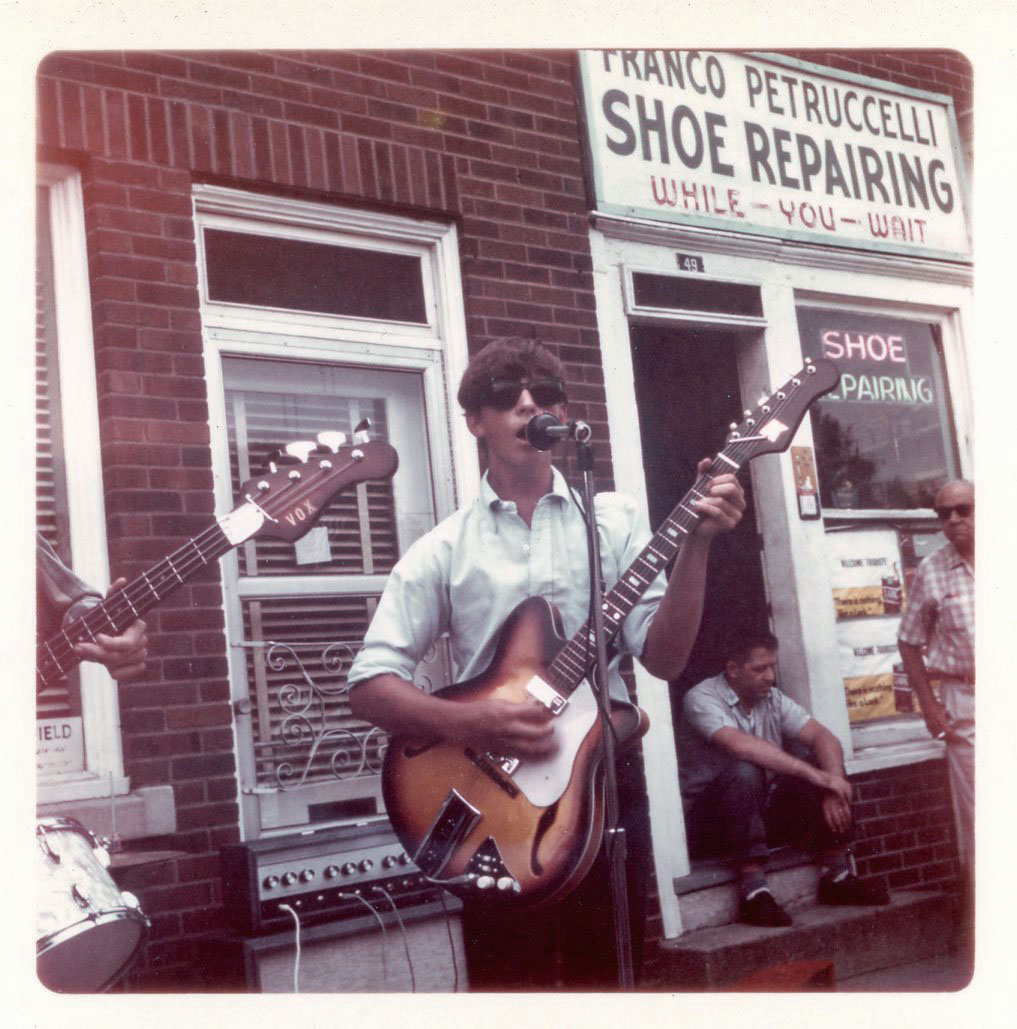
Portrait of the author as a young musician

There were festivals like Monterey and Woodstock, and music that offered an outlet for the raw passion of youth.

There was the beauty of nature, the view from the Appalachian Trail of the Delaware Water Gap and the flow of the river below, holy and bright.

And then there was first love and the great firestorm of emotion lit by that first kiss.

Twenty years ago I decided to write a novel about those experiences. It has taken this long to realize that dream. Am I trying to relive the days many see as carefree? Or am I sifting through memories like an archaeologist, digging for clues to how we became the people we are today?

That and more. I wanted to capture the spirit of the time in a way that, as a journalist, I never could. I wanted to reimagine those years through the eyes of two young people, Elizabeth Reed and Hayden Quinn, who embody the chaos of the late teen years and the excess of the era. They have many decisions—stay or leave, tradition or adventure, comfort or uncertainty. Yet like so many considered wild in their youth, they manage to hold fast to their values, to honor their families and, against all odds, to fall in love.

Writer Anne Lamott says it best. “You’re going to feel like hell if you wake up someday and you never wrote the stuff that is tugging on the sleeves of your heart: your stories, memories, visions and songs—your truth, your version of things—in your own voice. That’s really all you have to offer.”

Born Under a Bad Sign is available through bookstores and online at Amazon, Apple Books, Barnes & Noble and Kobo.

The Delaware Water Gap

Talkin’ ’bout my generation

I came of age in the 1960s, absorbing the culture, learning the music, praying I wouldn’t get shipped to Southeast Asia. While my new standalone novel is fiction, Born Under a Bad Sign is based on a series of historical and personal events that played out in many of our lives, from the war in Vietnam to the fight against the Tocks Island Dam to the dicey gigs our band played to keep the dream alive.

The novel launches today.

Titled after the 1967 hit by blues master Albert King, Born Under a Bad Sign introduces a pair of unlikely heroes, a Quaker and a rocker, Elizabeth Reed and Hayden Quinn—lovers, fighters and opposites in every way. It’s through their eyes that I’ve tried to capture the heady rush of those years. In the run-up to the 50th anniversary of the most famous rock festival of our time, we’ll look at the impact of the Sixties, at Woodstock and Vietnam, at the government’s plan to dam the Delaware River and the people whose homes and lives were demolished by that project.

And, above all, we’ll reconnect with the music. Join me as we revisit an era that shaped a generation.

Born Under a Bad Sign is available through bookstores and online at Amazon, Apple Books, Barnes & Noble and Kobo.


A Change Is Gonna Come

It is the summer of 1969, capstone of an incandescent decade, a time of conflict and hope. Elizabeth Reed and Hayden Quinn have both. The couple are on a mission. Just not the same one.

The daughter of Quakers, Elizabeth is fighting to save the family farm from a dam that will flood the Delaware Valley. Armed with only grit and a camera, she documents the destruction wrought by a government intent on damming the last free-flowing river east of the Mississippi.

Hayden Quinn, the man Rolling Stone calls the next Jimi Hendrix, is committed more to music than Elizabeth, the woman he’s supposed to love. For the guitarist, a genius at fusing disparate genres like classical and rock, liberty is freedom from restraint. His dream is to take his group to Woodstock—if someone doesn’t kill them all first.

An explosion at the band’s homecoming concert, a fire that threatens Elizabeth’s farm, and a series of suspicious deaths plunge them into a race to identify the saboteur, a person closer to the pair than either can imagine.

Their lives are complicated by Quinn’s distrust of tradition, Elizabeth’s aversion to risk, and a youthful passion that blinds them to the dangers they face.

Born Under a Bad Sign, my first standalone novel, tells the story of a young woman torn between duty and love. Alive with the culture and music of the 1960s, the book marks the coming of age of not just a pair of star-crossed teenagers but of a generation.

On sale May 1, the novel is available for preorder through bookstores and online at Amazon, Apple Books, Barnes & Noble and Kobo.


By the time we got to Woodstock

Two years after the Summer of Love and life in the rural town of Pennsboro, Pennsylvania is about to explode. A dam that would flood the valley pits family against family. Protesters riot. Buildings burn. Amid the chaos of 1969, two lovers risk everything to fight for their dreams.

That turmoil forms the setting for my first standalone novel, Born Under a Bad Sign, a book that captures the spirit of the era through the eyes of an unlikely couple—a pacifist Quaker and a rebellious rocker, two people who wield their differences like armor and sword.

Elizabeth Reed has three passions: photography, the river the government wants to dam and a musician who can’t settle on any one person or place. Hayden Quinn, the guitarist Rolling Stone calls the next Jimi Hendrix, feeds a single obsession—to play Woodstock, the biggest concert of his life. He presents Elizabeth with a dilemma: does she stay to save her family farm, or relinquish her dreams to follow Quinn into the unknown?

In a time when her generation trusts no one under 30, Elizabeth must face the greatest risk of all—whether to trust herself.

The story of Elizabeth and Quinn is inspired by real events. I grew up in Northeast Pennsylvania, the site of that proposed dam, and watched the conflict tear apart families and entire towns. Our band never would have made it to Woodstock but we opened for national acts and played some of the holes Quinn’s fictional group plays. And like Elizabeth, I wielded a camera for a small newspaper that covered the crises of the region, including the forced eviction of its citizens and the squatters who claimed their land.

Coinciding with the 50th anniversary of Woodstock, the novel is a portrait of love and loss in the one of the most turbulent times in American history.

With an on-sale date of May 1, Born Under a Bad Sign is available for preorder through bookstores and online at Amazon, Apple Books, Barnes & Noble and Kobo.


A man for all time

The dark lord of marketing is back, and he’s aiming his talents at politics. Can civility survive?

Brinker, the antihero of Mr. Mayhem, has lost his magic. The agency’s CEO wants him to ace the competition. His former girlfriend wants him in detox. And as rival advertising executives disappear, an ambitious state trooper wants him in jail.

At this rate, the PR whiz who turned a serial killer into a national brand may have to vanish himself.

Throw in toxic waste, a nude car wash and a gun-toting presidential candidate and the czar of PR will have to spin some potent magic to escape the snare of lies and greed that threatens to destroy his job, his sanity and the love of his life.

In Mr. Magic, the ad world struggles to cope with Brinker’s insatiable lust for sex, satire and PR events that push the boundaries of legality and taste. The second outing for the defrocked journalist is available through Amazon, Apple Books, Barnes & Noble, Kobo and by special order at bookstores everywhere.

A rising tide floats all buildings

Sometimes reality catches up with fiction.

Yesterday, a Florida Senate committee advanced legislation that would require the state to plan for rising seas. The action comes after storm surge has repeatedly flooded parts of Miami and threatened its infrastructure.

The proposed legislation is unique in that it avoids the politically divisive issue of climate change and addresses the economic aspect of rising sea levels.

Lawmakers aren’t alone in considering the financial impact of coastal development. The economics, and ethics, of building in flood zones form the central premise of Permanent Vacation, a novel set in a fictionalized version of Sarasota and Bradenton, Florida, both of which border the Gulf of Mexico. Central to that issue is whether governments should encourage or discourage behavior that puts people and property at risk.

Permanent Vacation is available from Amazon, Apple Books, Barnes & Noble, Kobo and Smashwords. You can read the story about Florida lawmakers here.

What’s my line?

The logical successor to the Washington Post article on famous last lines in fiction is a piece on opening lines. Since Ron Charles hasn’t written that one yet, here are a few suggestions for the sequel on first lines that pull the reader into a work:

From A.J. Finn’s The Woman in the Window:

Her husband’s almost home. He’ll catch her this time.

From Ray Bradbury’s classic Fahrenheit 451:

It was a pleasure to burn.

From Jonathan Franzen’s The Corrections:

The madness of an autumn prairie cold front coming through. You could feel it: something terrible was going to happen.

If I might add to that body of work the opening lines from Mr. Mayhem, the first of the series of crime novels about a chronically underemployed former journalist with revenge in his soul:

Brinker stood beside the body with its red flannel shirt and black ski pants and two-tone duck boots and smiled. “Couldn’t have happened to a nicer guy.”

What’s your opening line?


Famous last words

Ron Charles has written an intriguing article for the Washington Post on famous last lines in fiction. Intriguing in that the lines summarize the emotional volume of the work. They leave you with a sense of satisfaction, a reward for reading to the end.

Charles leads with an example from the Adventures of Huckleberry Finn, in which the restless Huck foreshadows people as disparate as Jack Kerouac and Cole Porter (you remember 1934’s “Don’t Fence Me In”):

I got to light out for the territory ahead of the rest, because Aunt Sally she’s going to adopt me and sivilize me, and I can’t stand it. I been there before.

Haven’t we all. Which is why I’d like to add a few memorable lines to the list.

From Philip Kerr’s novel The Pale Criminal, in which former Berlin police officer Bernie Gunther takes on the ugly and ironic job of solving crime in Nazi Germany. In the final scene, Gunther watches workers rake and burn leaves in the Botanical Gardens, “the acrid gray smoke hanging in the air like the last breath of lost souls.”

But always there were more, and more still, so that the burning middens seemed never to grow any smaller, and as I stood and watched the glowing embers of the first, and breathed the hot gas of deciduous death, it seemed to me that I could taste the very end of things.

Anna Quindlen also writes about endings in Miller’s Valley—of the drowning of a community and its culture, the loss of the narrator’s family farm and her brother Tommy—but comes to a different conclusion:

I never go over that way, to the recreation area. Never have, in all these years, even when the kids wanted to water-ski or swim. I let them go with someone else. I don’t even drive by there. But every couple of years I have a dream. I dive down into green water and I use my arms to push myself far below the surface and when I open my eyes there are barn roofs and old fences and a chimney and a silo and sometimes I sense that Tommy’s there, too, and the corn can, and my father’s workbench, and a little tan vanity case floating slowly by. But I swim in the opposite direction, back toward the light, because I have to come up for air. I still need to breathe.

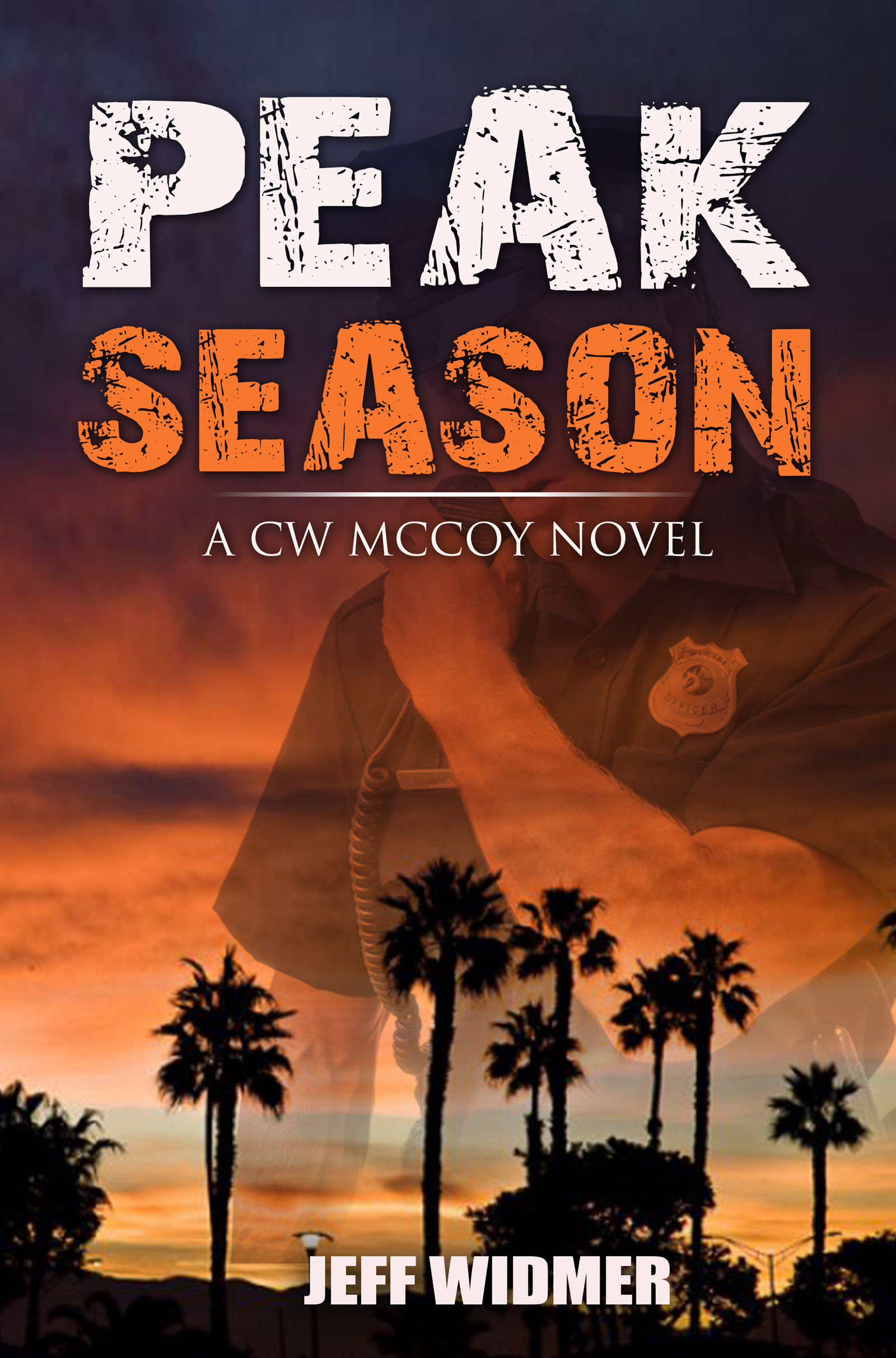
While it cannot compare with Twain or Quindlen or Kerr, a final line from the first in the CW McCoy series of crime novels, Peak Season, carries its own emotional punch. CW has run to Florida to escape her violent past. Here she shares birthday cake and the mission to protect her grandfather with friend and mentor Walter Bishop:

Taking a deep breath I said, “You know what I’d like?”

“Another cupcake?”

“What I came here for . . . peace and quiet.” I pecked him on the cheek. “No more drama. From now on, I’m selling real estate and taking care of Pap.”

He gave me a cracked smile. “We’ll see.”

Isn’t what why we read to the end of anything?

What’s your closer?