The Fifties were more than the happy days portrayed by the entertainment industry, more than a collection of nostalgic tropes like doo-wop, poodle skirts, Elvis, and the Fonz. People faced existential issues ranging from over-consumption to nuclear annihilation in a collision of consumerism and the Cold War that brought us bomb shelters and barbecues, McCarthy and Maypo, strontium and Schlitz.
Americans faced a host of global events that shape our lives to this day, from the Korean War and the Rosenberg spy trial to Levittown, the polio pandemic, and the racial battles embodied by the Little Rock Nine.
Yet Communism was the real focus–some might say obsession–of the decade. America tested its first full-scale thermonuclear device in 1952. A year later, the Soviets tested theirs. During the ensuing years, Russia matched the Americans bomb test for bomb test, then moved the competition into space with the launch of the first man-made satellite, Sputnik, in October of 1957. In response, the U.S. government staged mass evacuations of its cities. It encouraged citizens to build fallout shelters in basements and backyards. It published booklets like 100 Things You Should Know About Communism to aid in the identification of fellow travelers. The phrase “Better Dead than Red” became common currency.
Today, we have coronavirus disease instead of polio; hypersonic weapons in addition to H-bombs; George Floyd on top of Little Rock; Ukraine instead of the Suez Canal.
What do you remember? What would you like to forget?
Woodstock, the granddaddy of music festivals, turns 52 this weekend. Celebrate the historic event with the story of two lovers who hope to make their bones there, building a relationship as well as a career.
Yellow fever doesn’t have the cachet of the Black Death or the Asian flu, but the mosquito-borne disease nicknamed “the American Plague” has tormented the world for centuries.
The U.S. Centers for Disease Control and Prevention estimates the virus causes 200,000 cases and 30,000 deaths each year, and not just in the tropics. The disease first struck New York City in 1668, followed by at least 25 major outbreaks in the Americas, including an 1878 epidemic in the Mississippi River Valley that killed 20,000 people.
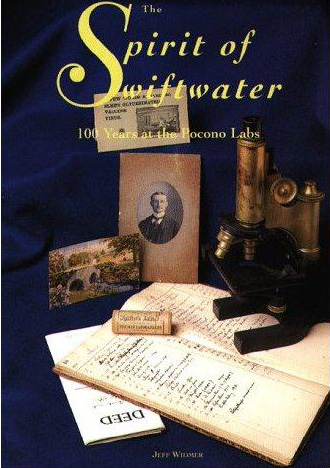
There is a vaccine, developed after the opening of the Panama Canal in 1912 by scientists throughout the world. However, historically it needed to be freeze-dried, a process prone to mechanical issues until it was refined in the early 1950s by National Drug in the small hamlet of Swiftwater, Pennsylvania.
You can read the story of this and other vaccine innovations in The Spirit of Swiftwater, a chronicle of the pioneers of immunization who fought to revolutionize healthcare in America.
It’s wonderful when readers are touched by something I’ve written. As Carla-Donna has given me permission, I thought I’d share her review of my first book, The Spirit of Swiftwater: 100 Years at the Pocono Labs. It chronicles the history of vaccines in the 20th century, through the stories of people who helped to eradicate smallpox, among others diseases. Here’s Carla’s history, and her take on the book.
“I just purchased The Spirit of Swiftwater. The reason being, I was wondering if they were going to start work on a vaccine for the COVID-19 virus. When I looked them up, somehow I was introduced to your book. Long story short, I grew up in Stroudsburg, my home town, and had once applied for a job at Swiftwater during my college years at East Stroudsburg State College. Our friend, Pete Gerard, made it his career working there. It was nice to see his name in the book.
“My name is Carla-Donna (Holmgren) Martin. My father, Donald Holmgren, had a store in Stroudsburg, Donald’s Family Shoes, for many years.
“As it turned out, I became a registered medical technologist and retired from working 40 years in the hospital laboratory at Lancaster General Hospital, Lancaster, PA. My husband and I live in Lititz now and still visit Stroudsburg several times a year.
“Kudos to you for this very informative work on the Swiftwater Lab. Doc Slee was a household name growing up and this book was enlightening on his family and wonderful achievements and the ups and downs of the lab’s growth.
“In light of what we as a nation and the world are going through right now, hopefully a vaccine will be forthcoming from Swiftwater!”
The novel coronavirus is sweeping the world. How does a vaccine-maker meet that challenge?
More than a hundred years ago, Dr. Richard Slee faced a similar situation with another virulent disease–smallpox. His fight provides a window into that process, and a cause for hope.
First, some background on one of the unsung pioneers of medicine. (His story appears in detail in my first book, The Spirit of Swiftwater.) Slee was born in 1867, a golden age of American expansion. He became a physician and went to work for the surgeon general of the Army, later the United States, a forward thinker who was concerned about the spread of smallpox. Pandemics in sixteenth-century Mexico killed 3.5 million people and accounted for nearly 9% of all deaths in nineteenth-century England. By the late 1800s, similar outbreaks were ravaging major cities in the United States.
The irony was, Americans had access to a vaccine. It just had some serious side effects, and that generated a public backlash. The French, on the other hand, had developed a safer version. The surgeon general wanted to manufacture it in the United States, and sent Slee to France to learn the secret.
Slee returned with a glowing report. Not only was the French formula more efficient, it had fewer side effects. As a bonus, it offered a longer shelf life, essential to any medicine that isn’t immediately used.
The surgeon general was so impressed, he encouraged Slee to build his own facility to manufacture the vaccine.
I came of age in the 1960s, absorbing the culture, identifying with the music, praying I wouldn’t get drafted and shipped to Southeast Asia.
The decade began with a revolt against the restrictions of the 1950s and folded back in on itself. Along the way, it bounced from one extreme to another. We marched for peace and rioted for justice. At Woodstock, we celebrated the unifying power of music. Four months later, the innocence died with the concert at the Altamont Speedway.
At the time, none of it made sense. As we approach the 50th anniversary of Woodstock, we have the opportunity to look back, not in anger but with an understanding of the forces that shaped our world.
The 12 brief essays that comprise Finding Woodstock reflect on one of America’s most turbulent times, examining the promise of the era and the decade that shaped our lives. A companion to the novel Born Under a Bad Sign, the collection provides the backstory to a generation that is still trying, as Joni Mitchell once sang, to get back to the garden.
I came of age in the 1960s, absorbing the culture, learning the music, praying I wouldn’t get shipped to Southeast Asia. While my new standalone novel is fiction, Born Under a Bad Sign is based on a series of historical and personal events that played out in many of our lives, from the war in Vietnam to the fight against the Tocks Island Dam to the dicey gigs our band played to keep the dream alive.
The novel launches today.
Titled after the 1967 hit by blues master Albert King, Born Under a Bad Sign introduces a pair of unlikely heroes, a Quaker and a rocker, Elizabeth Reed and Hayden Quinn—lovers, fighters and opposites in every way. It’s through their eyes that I’ve tried to capture the heady rush of those years. In the run-up to the 50th anniversary of the most famous rock festival of our time, we’ll look at the impact of the Sixties, at Woodstock and Vietnam, at the government’s plan to dam the Delaware River and the people whose homes and lives were demolished by that project.
And, above all, we’ll reconnect with the music. Join me as we revisit an era that shaped a generation.
Two years after the Summer of Love and life in the rural town of Pennsboro, Pennsylvania is about to explode. A dam that would flood the valley pits family against family. Protesters riot. Buildings burn. Amid the chaos of 1969, two lovers risk everything to fight for their dreams.
That turmoil forms the setting for my first standalone novel, Born Under a Bad Sign, a book that captures the spirit of the era through the eyes of an unlikely couple—a pacifist Quaker and a rebellious rocker, two people who wield their differences like armor and sword.
Elizabeth Reed has three passions: photography, the river the government wants to dam and a musician who can’t settle on any one person or place. Hayden Quinn, the guitarist Rolling Stone calls the next Jimi Hendrix, feeds a single obsession—to play Woodstock, the biggest concert of his life. He presents Elizabeth with a dilemma: does she stay to save her family farm, or relinquish her dreams to follow Quinn into the unknown?
In a time when her generation trusts no one under 30, Elizabeth must face the greatest risk of all—whether to trust herself.
The story of Elizabeth and Quinn is inspired by real events. I grew up in Northeast Pennsylvania, the site of that proposed dam, and watched the conflict tear apart families and entire towns. Our band never would have made it to Woodstock but we opened for national acts and played some of the holes Quinn’s fictional group plays. And like Elizabeth, I wielded a camera for a small newspaper that covered the crises of the region, including the forced eviction of its citizens and the squatters who claimed their land.
Coinciding with the 50th anniversary of Woodstock, the novel is a portrait of love and loss in the one of the most turbulent times in American history.
With an on-sale date of May 1, Born Under a Bad Sign is available for preorder through bookstores and online at Amazon, Apple Books, Barnes & Noble and Kobo.
George Diller, the voice of NASA’s launch control, provided the commentary for many of NASA’s missions, from the space shuttle to the probes to Jupiter, Saturn and Mars. I interviewed the former Sarasota, Florida resident in 1978 and again a few years ago, as the shuttle program was ending. While Diller has embarked on his final frontier, retirement, his spirit lives on.
He is the voice of launch control. When the space shuttle takes off in a blaze of fire, the sound you hear over the roar of the rockets is George Diller, a former radio journalist turned spokesperson for the National Aeronautics and Space Administration.
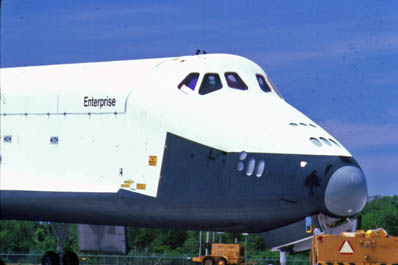
I met Diller forty years ago on a runway at the Kennedy Space Center, at the dawn of the space shuttle program, when women and men dreamed of space flight as routine as taking the train to work. As a journalist I’d landed in Florida to cover the construction of the first shuttle that would fly into space, the orbiter Columbia. Diller, a contract public relations specialist assigned to show me the inner workings of KSC, gave me a glimpse at that future, and the vehicle that would take us there.
After thirty years we met again, this time by phone, for an interview about the legacy of the space shuttle program and the future of human space flight. This post was first published on June 12, 2017.
JW: When people write the history of the space shuttle program, what will they say?
GD: I think it will be recalled as a storied program because the space shuttle has had so many different roles and mission objectives during the thirty years it’s been flying. Initially we looked at it as something that would take everything into space, both commercial payloads as well as NASA’s planetary spacecraft. At that time the International Space Station was still on the drawing boards.
The shuttle started by taking a combination of payloads, commercial payloads on a cost-reimbursable basis and then the other things that NASA wanted to put in low-earth orbit. As a stepping stone to the International Space Station we had Spacelab, designed to lay the groundwork for the space station. Some of our most historic payloads were deployed from the space shuttle bay, and they included the Hubble Space Telescope, the Galileo probe to Jupiter, the Magellan mission to Venus and the Ulysses mission to the sun.
After we resumed flying after the Challenger accident we had a very different objective. We looked to one day commercializing the space shuttle. We would move to the moon or Mars, leaving the private sector to do the lower-orbit missions. That is almost exactly what will happen under President Barack Obama’s mission. The Columbia accident also caused us to think of what the long term mission of the shuttle would be. We divested ourselves of the idea that the shuttle would be a commercial vehicle we could launch every two weeks, more as a delivery truck, and doing space science missions as well. We took it back to being a research-and-development spacecraft.
There are three more launches, including the one on May 14. The final launch will be in November but we’re still talking about one after that. (The last space shuttle launch, the Atlantis orbiter STS-135, launched on 8 July 2011.)
JW: What is the legacy of the shuttle program?
GD: The space shuttle gave NASA and human space flight the flexibility to do things that no other vehicle had done. Because of the size of the shuttle and the volume of payloads it could take into space, nothing else we can see can haul things that weight as much or are as outsized. The shuttle gave us a capability that we never had before and won’t have in the future.
JW: What has the shuttle program contributed to science and society?
GD: That’s what Spacelab was all about. We wanted to prove the kind of science we wanted to do on the International Space Station, in terms of developing new pharmaceuticals, computer substrates and metals. We were also testing whether humans could survive in space for long periods of time—six months or more. That has spun off to us here on the ground. We can take full advantage of that scientific and commercial innovation.
JW: You’re one of the voices of the launch of the shuttle. How do you feel when it takes off?
GD: For me it’s not much different than it was thirty years ago when we launched the first one. It is such an awesome feeling to see that power, to hear the sound and feel its effect on your chest. The visual effect is particularly alluring during a night launch. It is still thrilling to watch, fascinating and breathtaking.
JW: How do you feel when it’s coming in for a landing?
GD: It’s pretty neat to watch if it’s in the daytime. You see it coming overhead like a silver streak. It’s dropping like a rock, extremely fast. As the wheels come down and the parachute comes out you’re dropping from thousands of miles an hour to about 200 miles an hour in a few minutes. When it goes by it sounds just like a jet.
JW: Do you get anxious when the shuttle comes in for a landing?
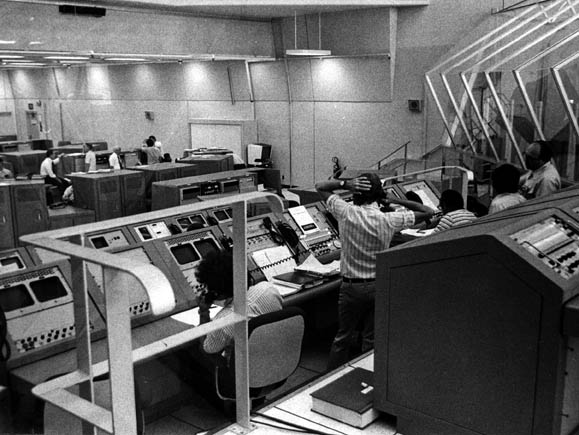
GD: I feel like we have a capability since the Columbia accident to know whether we have anything to be concerned about. I have a little apprehension in the launch control center while we’re waiting for Kennedy to make contact. We don’t have communications until 500 miles out and 12 minutes before landing. When we had Columbia going over Texas we were waiting for that contact to happen. We were having communications problems. We know in reentry there can be brief blackout periods. None of the acquisition systems here at the Cape could pick it up.
JW: What’s next for NASA?
GD: It’s still a little hazy. We know that President Obama has cancelled the Constellation program, which offered a smaller version of the shuttle to go back and forth to the space station and a larger version to go back to the moon. Obama has penciled out the craft to the moon. Astronauts will go on commercial rockets in about five years. Since the moon is not in the president’s vision for the agency, we might be going to an asteroid. But we have to have a vehicle different from the one that would go to the moon.
We’re developing technologies that that would go beyond the moon, and that’s going to take about five years to do. We have to decide what kind of rocket that is going to be, who is going to design it and who is going to build it. We need to develop new propulsion technologies.
The rockets that go to the space station will be owned by commercial interests. In the long term all things will be commercially launched by commercial space taxis. It’s not far from NASA’s mission of twenty-five years ago. It wanted to move on to higher programs. It can’t own and maintain all launch vehicles. Commercial rockets will be reconfigured so they can carry astronauts back and forth to the space station. We’re going to reconfigure Complex 39 and Cape Canaveral Air Force station for commercial low-earth orbits.
JW: What’s the future of human space flight?
GD: In the near term the International Space Station is where it’s at. The capabilities that NASA is going to help the private sector develop will create more human potential in low-earth orbit. Beyond that it’s a little hard for me to see. This change in direction from what we’ve be doing over the past five years is a 180, a completely different approach. You have to design and build a new propulsion system. You have to have funding. The legislative process has to weigh in. The Congress feels we need more answers. We’re going to need more time to see. In the meantime our geophysics loads will continue to be launched on unmanned vehicles. We’ve got some exciting planetary flights and earth observation satellite launches planned. That will all continue without missing a beat.
JW: You were there at the inception of America’s space shuttle program. How do you feel when you look back on it?
GD: I feel like I’m privileged to be with NASA. At some point in history we’ll look back at the shuttle much as we did the Apollo program. I was there for the first one and I’ll be there for the last one.





 Jeff Widmer