By the Time We Got to Woodstock

August 15, 1969, capstone of a tumultuous decade. Life in the rural town of Pennsboro, Pa. is about to explode. A dam that would flood the valley pits family against family. Marchers riot. Buildings burn. Amid the chaos, two lovers risk everything to fight for their home—and a chance to command the stage at a rock festival in a farmer’s field in New York State, an event we now know as Woodstock.

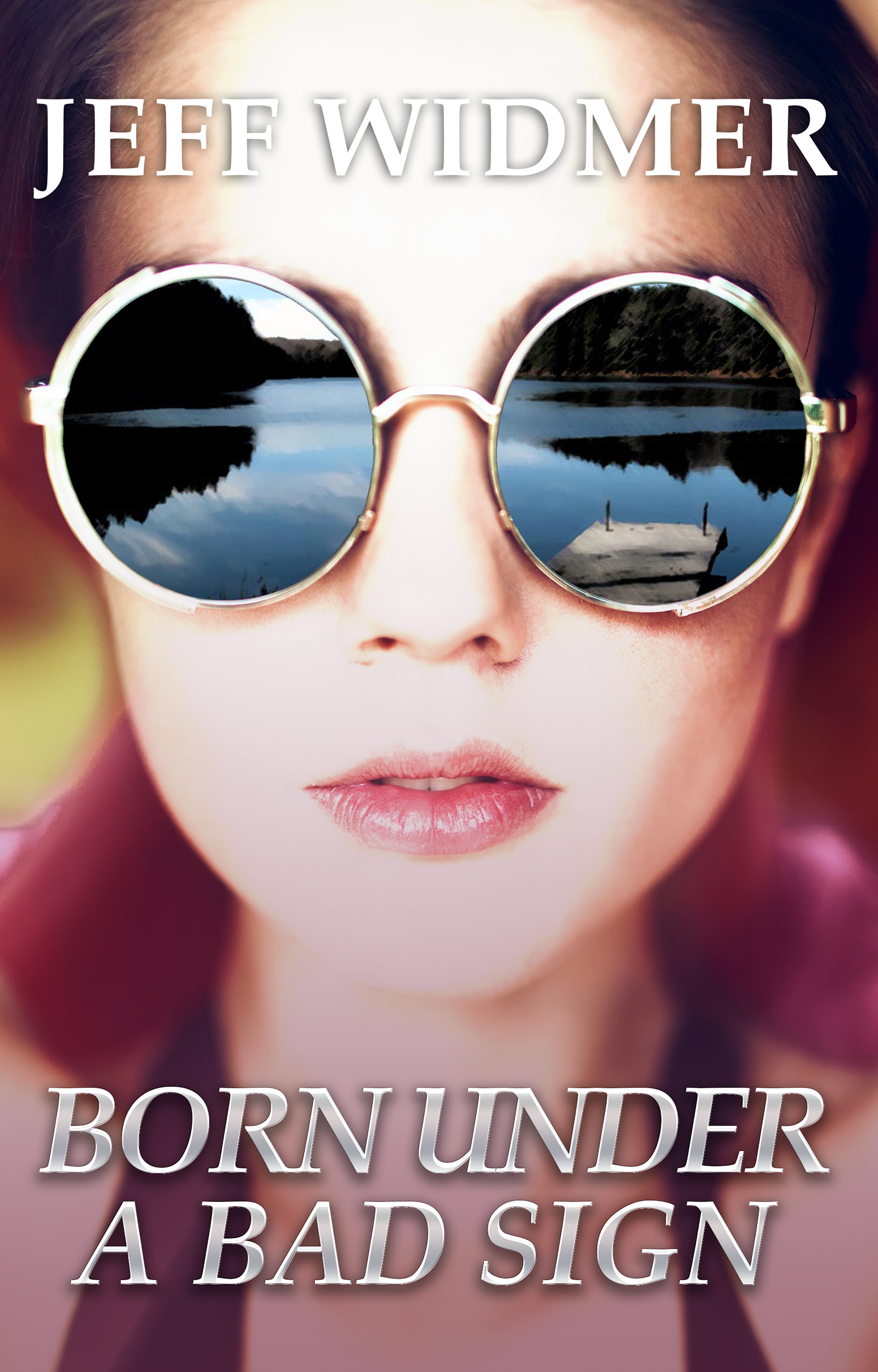
I grew up in those times, in the shadow of an unpopular dam, the government’s eviction of squatters, surrounded by the sounds of peace, love, and revolution. To understand the contradiction, I wrote a novel about those two kids. The result was Born under a Bad Sign, a dramatic and nuanced portrait of love and loss in the Sixties.

It begins, as many of our stories do, with a crush. Elizabeth Reed loves photography, the river the government wants to dam, and a musician who refuses to commit. Hayden Quinn, the guitarist Rolling Stone calls the next Jimi Hendrix, feeds another obsession—to play the biggest concert of his life. He presents Elizabeth with a dilemma: stay to save her family’s farm, or follow him into the unknown.
With saboteurs targeting everyone she loves, Elizabeth faces the greatest risk of all—whether to trust her head or her heart.

You can read the full story of their struggles here. Or start with Chapter 1 and the night the world fell away.

1.
FROM BEYOND THE HILLS came a jagged flash of light. Elizabeth Reed counted five seconds before the sound rumbled across the infield of the raceway, this makeshift venue for the largest outdoor rock concert on the East Coast. Another flash, and another ripple of thunder. In an improvised call and response, the crowd echoed its approval. The tower that held the lights and PA system trembled. So did Elizabeth’s arms and legs. She let the dizziness pass and, willing her stomach to settle, tucked both cameras under her arms and climbed to the sky.
       The warm-up band had just finished, the announcer promising that Orwell, fresh off its national tour, would soon take the stage. A wall of people surged forward. Despite the scalding July heat, this was the group’s homecoming and the locals had turned out in force, thousands of ragged kids with beards and muumuus, jostling each other in a fog of beer and smoke. Two years after Monterey Pop and the festival had come of age. So had the band.
       The tower swayed enough to cause Elizabeth to question her bravado. Despite the knot in her stomach, she climbed past speakers and spotlights for a better view of the makeshift stage, a plywood floor laid across a half-dozen flatbed trailers. The platform had been hastily constructed for the festival, the biggest in Pennsylvania’s Minisink Valley and a warm-up for one she’d heard could be even bigger, next month’s Woodstock Music & Art Fair in nearby New York.
       That was the real object of the evening’s performance, a final rehearsal for Orwell and its leader, Hayden Quinn, the guitarist Rolling Stone had called the next Jimi Hendrix, the man that Elizabeth, fresh out of high school, had followed halfway across the country as the band’s unofficial photographer. It was make or break time for the group. The band’s manager, Elizabeth’s Uncle Morey, had invited the man organizing Woodstock, Michael Lang, to attend the concert. So far, she hadn’t seen anyone fitting Lang’s description.
       As the wind rose to meet the night, Elizabeth realized that, if the crowd pressed closer, the tower could tip. Since her dizziness disappeared if she didn’t look down, she focused on the distance, tracking the Delaware as it wandered between Pennsylvania and New Jersey like a nomad, flowing freely despite the government’s effort to dam the river and drown her family’s farm. With the telephoto lens, she could isolate her property, snug in the rich bottomland of the valley. Camera in hand, river and fields spread below, she felt exhausted, scared, and ridiculously happy.
       Voices below startled her. Dressed in black, two members of the security crew waved her from the tower. The yelling morphed into the sound of hammering. Against the raw wood of the stage, Tommy Reed nailed cardboard cylinders to rows of two-by-tens, preparing the fireworks for the evening’s finale. He seemed dwarfed by the munitions.
       When the sound system kicked in with a recording of “Crossroads,” Elizabeth gripped the metal pipes to maintain her balance. Despite the rush of adrenaline, her arms ached from lugging the heavy Nikons all day. With a normal lens, the weight seemed bearable. But when loaded with a zoom and a motor drive, the outfit felt as if it weighed as much as a bale of hay. Before she descended, she snapped a picture of Tommy as he wired his makeshift rig, the camera hot and slippery in her hands. Heaven help them if she dropped it on his head.
       As soon as she landed, the security officers assumed their positions in front of the stage while the roadies assembled the last of the equipment. Her older brother Robbie frowned as he arranged cymbals and tightened the drumheads, his rusty hair in a deliberately unhip buzzcut. Reaching above his head, Cordell White plugged his bass into a stack of amplifiers and plucked a few notes. Unlike Robbie, who wore his usual white T-shirt and shorts, Del had dressed for show in leather pants, a jacket of purple satin, and a high-crowned Navajo hat with a yellow plume. Both of them looked frustrated, or mad.
       Tommy caught her eye and jerked his head toward the edge of the stage. He, too, appeared angry, a look that was highlighted by chapped lips, hair the color of licorice, and a nose as sharp as a chisel. The only festive thing about him was the tie-dyed headband.
       “Hey, Cuz,” she said, drawing a face that signaled either irritation or fatigue.
       He smelled of oil and mint. As usual, he wore sunglasses so dark that she wondered how he could see to connect the fireworks. Pecking him on the cheek, she took in the rows of rockets, mortars, and Roman candles that crowded both sides of the stage and felt a twinge of concern. “Aren’t they a little close?”
       Tommy scratched his back with a screwdriver. “Close?”
       “To the band.”
       Another crack of thunder and Tommy dragged a tarp over the pods. “Wait and see.”
       As security stopped a ginger-haired man flashing press credentials, Elizabeth regained the tower. One by one, the members of Orwell wandered onto the stage to a cascade of applause. Robbie positioned his cymbals, Del and Quinn hunched over tuning pegs, and Mattie, jiggling her ample ass, asked the crowd how they were doing. As the band struck its first tectonic chord, the audience thundered their approval.
       Mattie belted out the first number with a ferocity that shook the towers, all trace of her Southern accent lost in the ricochet of sound. Robbie thrashed as if he were drowning in one of the cow ponds on the family farm. Even Del, who usually bobbed in place, stalked the boards, his face a darkening cloud.
       Quinn followed with a scorching lead that featured a collision of Bach, Thelonious Monk, and Hendrix. Shirtless now and barefoot, he played with a single-mindedness akin to religious devotion, prowling the stage, slashing his guitar, bending strings until they threatened to snap. He hammered the neck with both hands as if playing a piano, the sound a frenetic cross between Paganini and Robert Johnson, the shaman who’d sold his soul to the devil for his talent.
       From her perch, she tracked the band, feeling more than hearing the smack of the mirror as it lifted to admit the light, the whir of the motor drive as it advanced the frames. Pace yourself, she thought, or you’ll run out of film.
       Like a tsunami, the intensity of the music grew, Quinn hurtling his body into the wave of sound, his head bowed, shoulders hunched, fingers on fire. Dreadlocks flew as he reared, face twisted in ecstasy, the notes tracking across his lips. No matter how many times she’d seen the show, Elizabeth felt stunned, and not just by the acoustical acrobatics. With the flick of his fingers, Quinn guided the music from brave too anxious to calm. Elizabeth felt warmth and humor, sadness and pity, and so much in between. It astonished her that anyone could convey such emotion without the use of a single word.
       The band continued the pace, blazing through songs as if racing to an uncertain end. By the close of the set, their faces shone with euphoria and sweat. Robbie raised his sticks, caught the eye of Quinn and Del, and they miraculously finished on the same beat, even as Tommy launched the first volley of fireworks, burning the night in a shower of red and gold.
       The musicians filtered off stage, waited a beat, and returned to a swelling ovation. With a deep bow, and a nod from Mattie, they launched into one of the medleys Quinn had arranged as an encore. Even before Elizabeth traced their faces through the telephoto, she could tell that, as the music grew more frantic, they struggled to hear. Hitting the final chorus, Mattie looked over her shoulder as if she were lost in the woods. Robbie buried his head in his drum kit. Del and Quinn traded places, Del moving to the monitors along the wing while Quinn arched over the stage to listen to the PA speakers.
       The music had grown so loud that Elizabeth could barely feel the vibration through the camera body as the motor drive cranked through another roll of film, thirty-six exposures in a matter of seconds before she hunched to reload.
       This time, the band didn’t leave the stage. They bowed slightly, as if they’d expended so much energy they had little left for movement, before launching into the second encore, a reprise of their single, “Bomb Babies,” that ended in a cataclysmic version of Tchaikovsky’s 1812 Overture. Quinn had shortened the piece for maximum impact and, when he nodded, Tommy let loose with his final volley.
       From the corner of the viewfinder, Elizabeth watched the skyrockets arc into the night and explode in phosphorescent swirls. She grabbed a shot of Tommy, who timed the bursts to coincide with the downbeat. As the encore hit its crescendo, he quickened the pace, unleashing a white-hot assault that mimicked the original cannon fire. The band fed off the energy, Quinn and Robbie flailing, Del leaning dangerously close to the fireworks while Mattie spread her arms to embrace the crowd.
       Then, as Elizabeth lifted the camera to her face, the stage flashed with a blinding light and the world exploded.

Hail! Hail! Rock ‘n’ Roll

Celebrate the anniversary of Woodstock with a novel that captures the heart and soul of a generation, Born Under a Bad Sign, a gripping story of love and obsession, set in one of the most turbulent times in American history.

Published by Allusion Books for the 50th anniversary of the iconic music festival, Born Under a Bad Sign is available through bookstores and online at Amazon, Apple Books, Barnes & Noble and Kobo.

Burning down the house

It was 1967 and I was a junior in high school, hanging out at the music store after school, trying to learn that slippery instrument called the electric guitar. Across the street sat a record shop, a narrow sliver of a building with a record player in the back where the regulars could listen to LPs before buying them.

Decades before I would create the character of guitarist Hayden Quinn in Born Under a Bad Sign, I pushed aside the curtain that divided the rooms and heard a sound that set my head on fire. Nothing—not Cream, not the Who, not the Yardbirds—prepared me for that assault of Jimi Hendrix. The drums roared, the bass thundered, and the guitar cried with an agony and rage I never could have imagined.

And then there were the lyrics.

“I have only one burning desire,” Hendrix sang. “Let me stand next to your fire.”

With Noel Redding on bass and Mitch Mitchell on drums, the Jimi Hendrix Experience blazed onto the scene with 11 songs on “Are You Experienced” that spoke of the distorted reality of love, confusion and mania.

At that time, the market was dominated by the swirling studio work of the Beatles’ “Sgt. Pepper’s Lonely Hearts Club Band,” the cheerful vocals of the 5th Dimension’s “Up, Up and Away” and the jazz organ of Jimmy Smith. Hendrix arrived like the Big Bad Wolf, blowing away our rigid notions of pop music like a house of straw.

He played like a man possessed. Unlike anyone before him, and unlike few after—Joe Satriani, B.B. King and the late Roy Buchannan come to mind—Hendrix made the guitar sing. He made it weep. He let it cry out in joy and pain.

His image became as outlandish as his music.

Hendrix mimicked the tortured soul of Vietnam-obsessed America during his Woodstock rendition of “The Star-Spangled Banner.” He played louder than loud as he jacked into a wall of amps, picked a Stratocaster with his teeth and set his axe on fire, wailing away in headband and psychedelic clothes.

Assessing his influence has been difficult, although books by Mitchell and Redding have helped. There have been many packages of Hendrix’s hits. Some have offered us a solid look at his fierce style, like Ryko’s “Radio One.” Some have smacked of exploitation. Others, like the four-disc “Lifelines, The Jimi Hendrix Story,” attempt through interviews and excerpts to shed light on that unquenchable fire.

Fifty years after he brought down the curtain on Woodstock, Hendrix remains the benchmark. He is to rockers what Charlie Parker is to jazz, a musician’s musician who shattered boundaries few could even see. Born in Seattle in 1942, Hendrix’s flame burned short but fierce.

He got his first guitar after his father returned to the projects one day to find his son wailing away on a broomstick. After a stint in the Army, Jimi rose from obscure backup guitarist for the Isley Brothers to rock’s standard-bearer. Three years after he exploded onto the pop scene, on Sept. 18, 1970, he died in his London apartment.

For those of us who struggled to learn his moves, his leads proved fascinating and difficult. Each time I played the war whoops that begin “Purple Haze” I felt the soul of a man consumed by demons. Here was a mortal creating the most liberating music I’d ever heard. We tried to copy it but we never found the cool spot at the center of the flame.

The closest I’ve come is with the music of Hayden Quinn, a tribute to the scorching work of the original.

Hendrix died a lifetime ago, but his music still burns. Fifty years after I first heard you, Jimi, I have only one burning desire: let me stand next to your fire.

Born Under a Bad Sign is available through bookstores and online at Amazon, Apple Books, Barnes & Noble and Kobo.

_____________

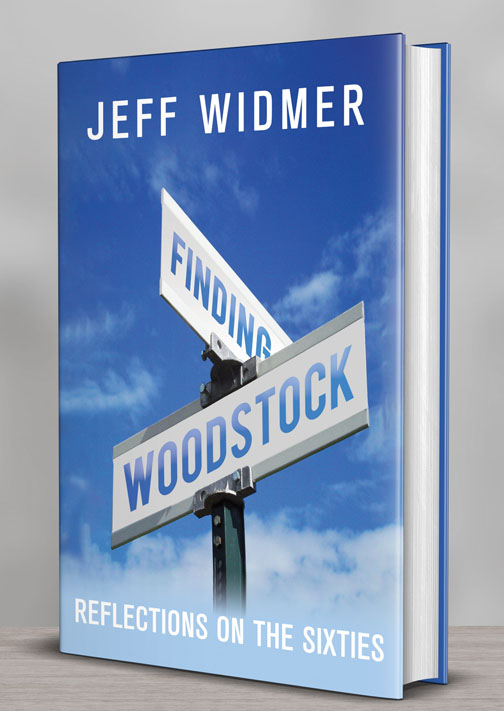
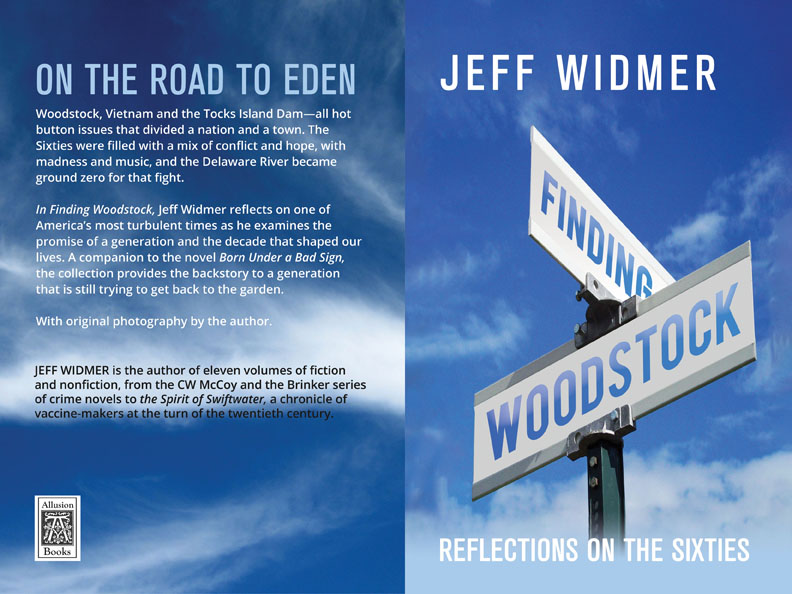
Finding Woodstock is a personal reflection on a decade that changed many of our lives—the Sixties. A companion to the novel Born Under a Bad Sign, the collection of short essays provides the backstory to a generation that is still trying, in the words of Joni Mitchell, to get back to the garden.

With original photography by the author.

Finding Woodstock is available through bookstores and online at Amazon, Apple Books, Barnes & Noble, Kobo and other retailers.


Happy Birthday, Woodstock

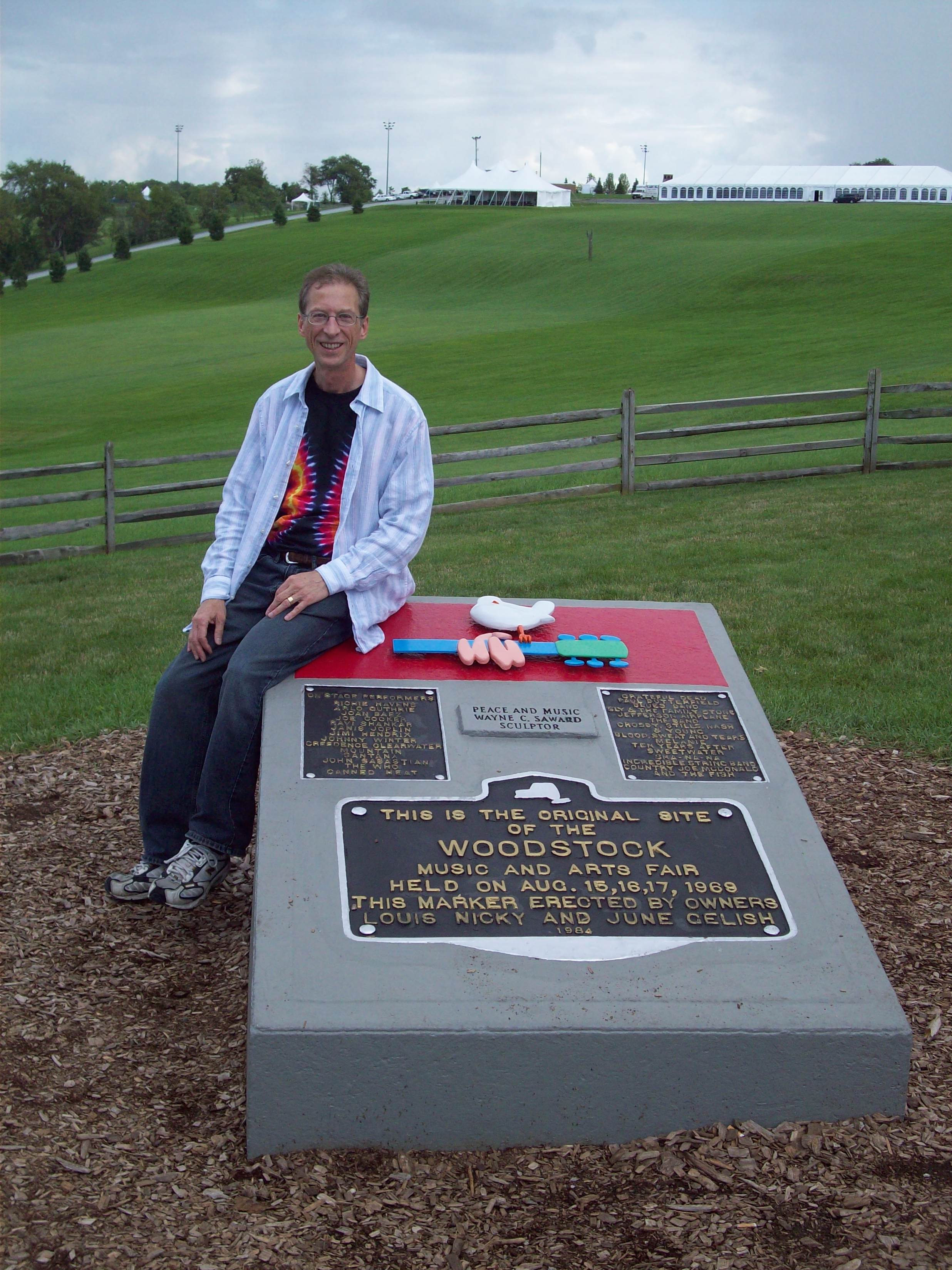
By the time we got to Woodstock, we were half-a-million strong. Minus one. I never did make it to Yasgur’s farm. For a former musician, that counts as a cardinal regret, although writing the novel Born Under a Bad Sign has enabled me to travel back in time for a visit.

The author at Bethel Woods

Years ago, I did tour the Bethel Woods Center for the Arts, the calm and far less crowded tribute to the legendary festival in the Catskill Mountains of New York State. The center nestles on a hill overlooking the original location of the stage. The site features an amphitheater and museum containing historical timelines and a psychedelic bus. The area is surrounded by dense forest bisected by a two-lane macadam road, with fields and post-and-rail fences bordering the road. A green and pleasant land.

Aside from the museum and a plaque at the bottom of the hill, the land hasn’t changed much in 50 years.

From the start, the farm proved an unlikely place for a concert. There were no services within miles. To get there, you drive past abandoned summer camps whose cabin roofs have buckled with time and weather. The nearest town boasts a Walmart, a Super 8 motel and a dog track.

So why did the organizers, including promoter Michael Lang, choose a dairy farm in southeastern New York State to stage a rock festival? Because there was nowhere else to go. In 1969, the town of Wallkill, New York, feared the crowds and other venues didn’t pan out. With less than a month before the August 15 starting date, Lang scouted a farm near the town of Bethel. There, he writes in his book The Road to Woodstock, he found a kindred spirit in its owner, Max Yasgur.

Unlike Orwell, the fictional rock band in Born Under a Bad Sign, my group wasn’t famous enough to play Woodstock. But our drummer, John McAllister, had a pickup truck and an extra ticket and asked if I’d like to go.

I was set to start college in a few weeks—Penn State was on a term system and incoming freshmen were required to report a week early for orientation, which put move-in day a few hours after the close of the festival. It was raining at the site, and already there were reports of crowds and mud. So I did the safe thing: I went to college and, vowing never to look back, have spent most of my life doing that.

Until now.

Born Under a Bad Sign is available through bookstores and online at Amazon, Apple Books, Barnes & Noble and Kobo.

_____________

Finding Woodstock is a personal reflection on a decade that changed many of our lives—the Sixties. A companion to the novel Born Under a Bad Sign, the collection of short essays provides the backstory to a generation that is still trying, in the words of Joni Mitchell, to get back to the garden.

With original photography by the author.

Finding Woodstock is available through bookstores and online at Amazon, Apple Books, Barnes & Noble, Kobo and other retailers.


Celebrate Woodstock with free ebook

To celebrate the 50th anniversary of the iconic music festival, my collection of essays Finding Woodstock is now free. The ebook contains twelve reflections on the music and mores of one of the most turbulent and liberating decades in American history. Each essay is accompanied by the author’s photography.

A companion to the novel Born Under a Bad Sign, the book provides the backstory to a generation that is still trying, in the words of Joni Mitchell, to get back to the garden.

You can download a free copy of Finding Woodstock from Amazon, Apple Books, Barnes & Noble, Kobo and other ebook retailers. Born Under a Bad Sign is available through bookstores and online at Amazon, Apple Books, Barnes & Noble and Kobo.


Where the heart is

For Elizabeth Reed, the primary character in the novel Born Under a Bad Sign, photography is more than an art. It’s a calling. Elizabeth wants her camera to do more than interpret or preserve. She wants to plumb the soul of a person or place. For her, taking pictures is a spiritual act.

As the novel opens, Elizabeth struggles through her last summer before college. She needs to decide whether, after graduation, she will return to help run the family farm, settle in a distant city to practice law or abandon both options by continuing to follow guitarist Hayden Quinn and his band around the country like a groupie with a Nikon.

She wants to do it all (all except the groupie part) but photography has become her first love, and the place she feels compelled to explore is her home in the heart of Pennsylvania’s Minisink Valley. At the center of that home is the magnetic pull of the Delaware River.

Working as a stringer for the local newspaper allows her to expand her skills and subject matter. It also gives her a wildly exciting feeling for which she’s developed a craving—seeing her work in print.

In the mid-to-late 1960s, the period in which Born Under a Bad Sign takes place, news photographers would have used the gear Elizabeth chose, a rugged 35 mm cameras more affordable than exotic brands like Leica or medium-format models like those manufactured by Hasselblad. Her bag would have contained two camera bodies and lenses with at least three focal lengths: wide-angle (28 mm), normal (55 mm) and telephoto (135 mm or larger).

Elizabeth started with a Nikon F Photomic T body. Introduced in 1965, the camera was a TTL model, meaning it metering light through the lens rather than requiring the photographer to use a handheld meter—essential to capturing anything that moved. To the body she added a telephoto lens for portrait and distance work, a motor drive shooting four frames per second to capture action and an electronic flash unit for indoor subjects.

That made for a heavy rig. The camera body weighed 24 oz., the lens 14 oz. and the motor drive 10 oz. for a total of at least three pounds. Bolt to the body one of the early Nikon electronic flash units (affectionately known as potato mashers) and you have a slab of glass and metal that could easily serve as a defensive weapon.

Elizabeth carried smaller cameras for specialized work. She had a rangefinder with a fixed lens and view finder that did not look through the lens. The Konica C35 would have been a logical choice. It offered a 38 mm, f/2.8 lens. A lightweight unit compared to the Nikon, the camera clocked in at 13.4 oz. And while she couldn’t see or compose directly through the lens, rangefinders didn’t use a mirror to direct light into the viewfinder. That made for a smaller, quieter and somewhat unobtrusive camera.

Elizabeth also carried a Kodak Instamatic 100 with a built-in flashgun that took a peanut bulb. Unlike the Nikon, the Instamatic offered fixed focus, aperture and shutter speed. Her father bought it 1963 for $16. It still worked, and was compact enough that Elizabeth could carry it in a pocket. The 126-format film was smaller than 35 mm but the camera would shoot print or slide film, which made it a good backup when she needed stealth.

Which, as a photojournalist, you might sometimes need.

Born Under a Bad Sign is available through bookstores and online at Amazon, Apple Books, Barnes & Noble and Kobo.

_____________

Finding Woodstock is a personal reflection on a decade that changed many of our lives—the Sixties. A companion to the novel Born Under a Bad Sign, the collection of short essays provides the backstory to a generation that is still trying, in the words of Joni Mitchell, to get back to the garden.

With original photography by the author.

Finding Woodstock is available through bookstores and online at Amazon, Apple Books, Barnes & Noble, Kobo and other retailers.


Sympathy for the devil

Guitarists of my generation know Robert Johnson through the song “Crossroads” by the British rock group Cream. Theirs is a cover of Johnson’s “Cross Road Blues,” which purportedly describes the day that Johnson traded his soul to the Devil for the ability to play his axe.

He was the inspiration for Hayden Quinn, the guitarist who sparks awe and rumor of his own unholy alliance in the new novel Born Under a Bad Sign. More on that later.

Johnson was born in Mississippi in 1911 and died in 1938. In those short years, he developed a reputation as one of the finest blues guitarists of all time, mastering the instrument so quickly that contemporaries accused him of having some otherworldly help.

Writers differ on how the legend began. Some, pointing to the lyrics in “Cross Road Blues,” say that Johnson stood at the crossroads not to trade his soul but to hitch a ride. Others say Johnson brought his guitar to a crossroad near a plantation at midnight to meet a large black man who granted him mastery of the instrument. Still others believe the guitarist, seeking solitude, fueled suspicion by practicing in the quiet of a graveyard.

Some of the characters in Born Under a Bad Sign see a similar pattern in Hayden Quinn. As facile as Eric Clapton, as inventive as Jimi Hendrix, Quinn fuses rock, blues, jazz and classical music into a cry of rebellion and pain. While his performances burn and records sell, that obsessive devotion invites rumors of his own compact with Lucifer.

It also plays the devil with his relationships with women, a fact the book’s principal character, Elizabeth Reed, discovers a little too late.

Born Under a Bad Sign is available through bookstores and online at Amazon, Apple Books, Barnes & Noble and Kobo.

_____________

Finding Woodstock is a personal reflection on a decade that changed many of our lives—the Sixties. A companion to the novel Born Under a Bad Sign, the collection of short essays provides the backstory to a generation that is still trying, in the words of Joni Mitchell, to get back to the garden.

With original photography by the author.

Finding Woodstock is available through bookstores and online at Amazon, Apple Books, Barnes & Noble, Kobo and other retailers.


Big battle for a little island

The battle over the Tocks Island Dam, one of two major events in the novel Born Under a Bad Sign, took on a new and dangerous front in 1969 when the U.S. Army Corps of engineers advertised houses for rent in several New York City newspapers.

The Corps had begun buying and condemning property for the dam and now those empty houses and farms stood vulnerable to vandals. Renting those structures along the Delaware River, the dividing line between Pennsylvania and New Jersey, would provide income for the government.

It also would create a conflict as explosive to locals as the Vietnam War.

At first, all looked peaceful. The feds called the renters flower children. They called themselves river people. They settled by the Delaware to grow crops and lead an alternative life. Angry at being displaced from their homes by hippies they viewed as decadent, the locals called them squatters.

By the early 1970s, that anger boiled over. Buildings in the squatter encampment burned. There were reports of drive-by shootings of windows and the killing of farm animals and pets.

The Corps finally acted. In September 1971, armed U.S. Marshals bulldozed six houses and a pup tent in an effort to clear out the trespassers, according to The Pocono Record in Stroudsburg, Pa. A legal battle ensued. In November 1973, a judge gave the river people 30 days to vacate. When they didn’t, in February 1974 about 90 U.S. Marshals staged a predawn raid to evict the 65 squatters who remained in the area of Shawnee-on-Delaware, on the Pennsylvania side of the river.

Steve Drachler, a colleague of mine at the Record, served as the pool reporter for the removal operation. He said that despite local hostility toward the squatters, their eviction by heavily armed U.S. Marshals was surprisingly peaceful.

“It was a very emotional moment, watching as these families, and a number of singles, were taken from the homes they had occupied. As soon as the people were removed the bulldozers began knocking the buildings down.”

Their experience, and those of the residents whose homes were condemned, form the backbone of Born Under a Bad Sign. The novel is available through bookstores and online at Amazon, Apple Books, Barnes & Noble and Kobo.

_____________

Finding Woodstock is a personal reflection on a decade that changed many of our lives—the Sixties. A companion to the novel Born Under a Bad Sign, the collection of short essays provides the backstory to a generation that is still trying, in the words of Joni Mitchell, to get back to the garden.

With original photography by the author.

Finding Woodstock is available through bookstores and online at Amazon, Apple Books, Barnes & Noble, Kobo and other retailers.


All things must pass

Some bands will do anything for a break. Ours happened on Saturday, June 22, 1968, in the tiny Pennsylvania town of Wind Gap.

Ohio Express concert poster

That chance plays out in a pivotal scene in my new standalone novel, Born Under a Bad Sign, a chronicle of the struggles of a group to play what we now consider the granddaddy of all outdoor music festivals in America—Woodstock.

First, some background. In the mid-1960s, fellow high school student Chip Decker formed a band called the Beaux Esprits (beautiful spirits), with Chip on bass and lead vocals. The other members of the band were co-founder Bob Dittman on rhythm guitar, John McAllister on drums and me on lead guitar. Later we added Joey Raynock on keyboards, succeeded by Gene Gorse on the Hammond B3 organ, and a pair of singers, Ron Oney and Don Chase.

Not wanting to sound like fops, we changed our name to the Seeds of Time (not much of an improvement) and later to Shagg. We took the name from the long-pile carpet that was popular in the late ’60s, not from the British euphemism for sex. Luckily no one who booked us recognized the connotation.

What they did recognize was rebellion, a spirit I harnessed for the two principal characters in Born Under a Bad Sign—photographer Elizabeth Reed and guitarist Hayden Quinn.

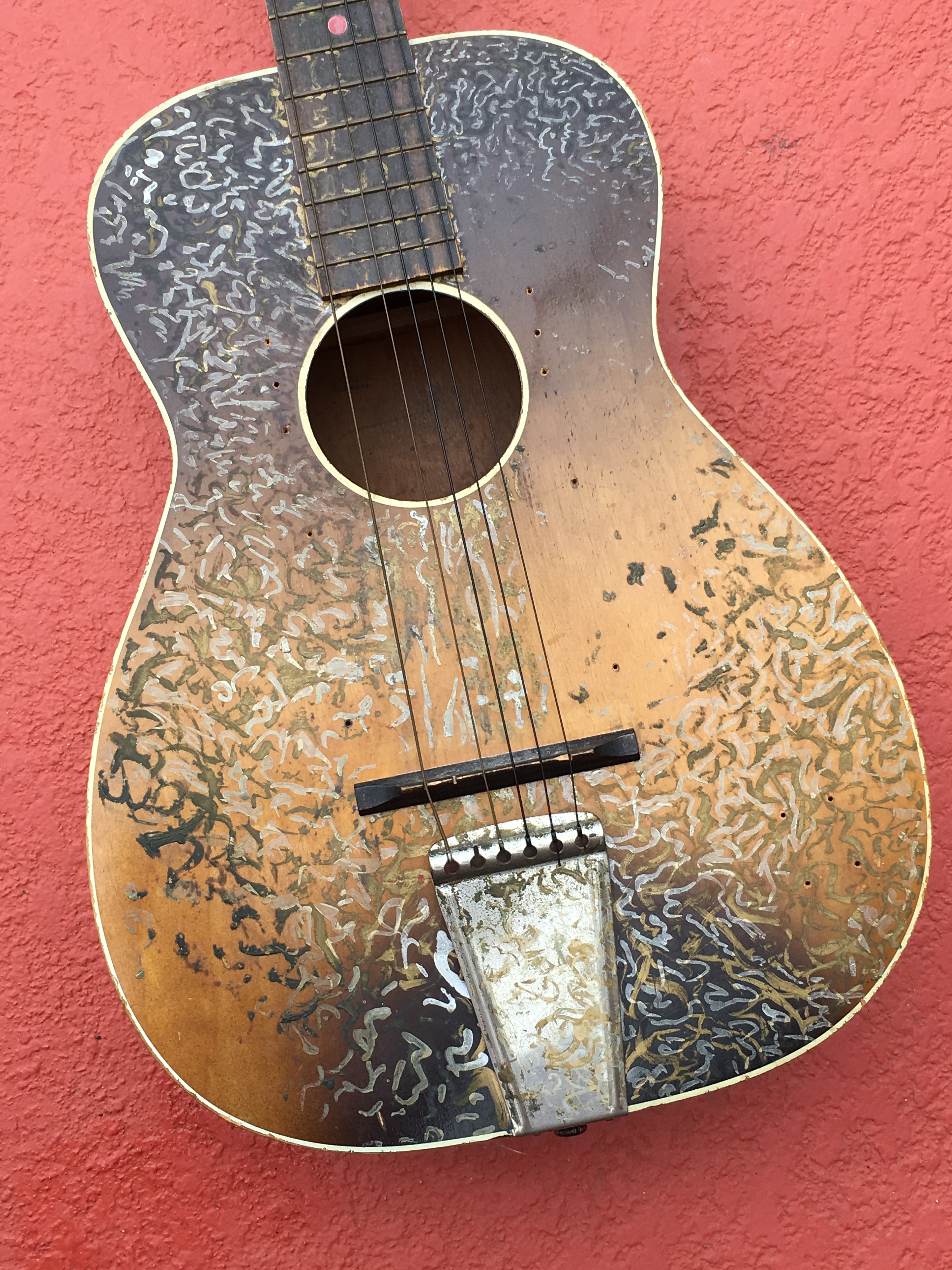
My first guitar

Back to Shagg. In the beginning, we played popular music. But bythe end of the decade, a lot of mush clogged the airwaves, songs like “Crimson and Clover,” by Tommy James & the Shondells, “Judy in Disguise (With Glasses)” by John Fred & His Playboy Band (another unfortunate name) and “I’ve Gotta Get a Message to You” by the people who would almost singlehandedly ruin a decade of music, the Bee Gees.

While still programming commercial music, we admired a less saccharine sound. Otis Redding’s “(Sittin’ On) The Dock of the Bay” sat at the top of the charts, as did “Jumpin’ Jack Flash” by the Rolling Stones and Joplin’s “Piece of my Heart.” We tuned into music that foretold the hard blade of metal to come, embracing the dexterity Deep Purple and the heavy slog of the Vanilla Fudge remake of “You Keep Me Hangin’ On.”

Like Quinn, we championed the holy trio of havoc—Cream, Hendrix and the Who. We played numbers that were aggressive and loud, complex pieces heavy on improvisation and wailing guitars. The sound was fun, and as musicians it enabled us to stretch. But the kids couldn’t dance to it, and at many of our gigs, people just wanted to dance.

We played any place that would hire us: bars, frat parties, high schools and an underground speakeasy called the Hobbit Hole. Our snobbery limited the audience. So when the opportunity came to play the cavernous building called the Hullabaloo Club as the opening act for the Ohio Express, we jumped. Like the Monkees, the band was a creation of recording executives and promoters, an ersatz group that represented the penultimate in the most mindless sound of the times—songs for the preteen market dubbed bubblegum music.

Our job was to warm up the crowd for a band who’d hit the Top 40 hit with the vapid “Yummy Yummy Yummy” (their version of the song reached No. 4 and No. 5, respectively, on the U.S. Pop and UK Singles charts.) We’d cut our teeth on the Kinks and the Doors and knew we’d blow the imposters off the stage.

That confidence evaporated the minute the Ohio Express ran through its sound check.

The musicians didn’t play bubblegum music. They played the real thing. Their version of Cream’s “Sunshine of Your Love” seemed effortless. So did the other numbers. To a bunch of kids struggling to reproduce the music of their heroes, the Express sounded unbelievably good.

Undaunted, we took the stage and, as the crowd burst through the doors, I plugged into the lead guitarist’s Vox, a small amp like the ones the Beatles used, and cranked the volume knob to ten, where it stayed through our finale, the Who’s “I Can See for Miles,” its lines snapping toward a spectacular crash.

As we stumbled off the stage, the Express took its audience to a place we never would—to preteen heaven on a string of hits.

After the concert, in the warm, moist night by the loading dock, the now very real musicians of the Express leaned against their flower-painted VW bus and gave us the unvarnished version of success. Over long necks they complained about how studio musicians had recorded their first album. As the touring band, they were locked into a contract for the next few years. Yes, life on the road stunk and they wanted to play music more complex than “Beg, Borrow and Steal” and the forthcoming “Chewy Chewy.” But the money was good and this was their best shot at fame.

That was a sentiment we understood.

Then they packed and drove into the night. We headed to the Wind Gap Diner.

Shagg lasted another year. College, family and jobs replaced the music. The Ohio Express played out in 1973. Disco replaced bubblegum. The Hullabaloo Club went the way of disco. I think the corrugated steel building later became a blouse mill before those jobs migrated overseas.

All things must pass, but do they have to pass with such regret?

Born Under a Bad Sign is available through bookstores and online at Amazon, Apple Books, Barnes & Noble and Kobo.

_____________

Finding Woodstock is a personal reflection on a decade that changed many of our lives—the Sixties. A companion to the novel Born Under a Bad Sign, the collection of short essays provides the backstory to a generation that is still trying, in the words of Joni Mitchell, to get back to the garden.

With original photography by the author.

Finding Woodstock is available through bookstores and online at Amazon, Apple Books, Barnes & Noble, Kobo and other retailers.


War invades the home front

July 1969 saw the landing of the first humans on the moon. It was a brief time of celebration in a decade of conflict. And chief among those conflicts was the war in Vietnam.

That is the world the characters inhabit in my first standalone novel, Born Under a Bad Sign, a world I knew only too well.

Like one of the book’s principal characters, the guitarist Hayden Quinn, I was of draft age and the Selective Service was hunting for conscripts. Jim, my roommate in college, pulled #3 in the draft’s lottery. I drew #4. We’d heard a rumor that every number south of 130 would wind up in Vietnam. To a pair of kids who’d only handled a rifle in target practice, the news was not encouraging.

Meanwhile, protests spread across the nation. At our university, students marched on a laboratory used as a Naval testing facility. Someone firebombed the ROTC building. Demonstrations became violent. On May 4, 1970 at Kent State University, the Ohio Army National Guard fired on students, killing four and wounding nine.

Jim was called to his physical. If I remember correctly, he rode a bus to a nearby town and took his physical in a gym. While he finished his last term that spring, I headed to Manhattan for an internship at Flying magazine. I felt my life was on hold. Everyone said President Richard Nixon would end the draft. With graduation approaching, the order couldn’t come soon enough.

Finally it did. I was never called. But until those orders came through, I kept a weather eye on the news.

Each night, Americans watched footage of soldiers and civilians, the wounded and the dead, in an endless march across television screens and into our souls. Through protests and coffins, the war had invaded the home front. Even for those immune to the draft, there was nowhere to hide.

Born Under a Bad Sign is available through bookstores and online at Amazon, Apple Books, Barnes & Noble and Kobo.

_____________

Finding Woodstock is a personal reflection on a decade that changed many of our lives—the Sixties. A companion to the novel Born Under a Bad Sign, the collection of short essays provides the backstory to a generation that is still trying, in the words of Joni Mitchell, to get back to the garden.

With original photography by the author.

Finding Woodstock is available through bookstores and online at Amazon, Apple Books, Barnes & Noble, Kobo and other retailers.